A person may wake with a sore jaw, a dull morning headache, and the feeling that sleep never restored any energy. The jaw may click during breakfast, while a partner reports loud snoring or pauses in breathing overnight. That combination naturally raises the question, can TMJ cause sleep apnea?
The answer is more nuanced than a simple yes or no. Temporomandibular disorders, commonly called TMD, and obstructive sleep apnea, or OSA, can occur together, but current evidence doesn't prove that TMJ disorders directly cause OSA. Jaw structure, muscle activity, disrupted sleep, and airway function may overlap in important ways. A careful evaluation should examine both problems instead of assuming that one explains every symptom.
Table of Contents
- When Jaw Pain Meets Restless Nights
- What Research Tells Us About the Link
- How Jaw Structure Relates to Airway Function
- Understanding the Bidirectional Relationship
- Diagnosis and Treatment Considerations
- Why Comprehensive Evaluation Matters
- Taking the Next Steps for Your Health
When Jaw Pain Meets Restless Nights
A typical morning may start with jaw tightness near the ears, facial soreness, or a headache that seems to spread from the temples. The person may also feel exhausted despite spending what seemed like a full night in bed. If loud snoring or restless sleep is part of the picture, it can feel logical to blame the jaw for the breathing problem.
That conclusion may be understandable, but it can be misleading. TMD describes problems involving the jaw joints, chewing muscles, and related tissues. Symptoms can include pain, clicking, limited opening, tenderness, clenching, or difficulty chewing. OSA is different. It occurs when throat tissues relax during sleep and temporarily restrict airflow.
Why the symptoms feel connected
Jaw pain can make it harder to fall asleep or stay comfortable. Poor sleep can increase sensitivity to pain and leave the chewing muscles feeling tense the next morning. Nighttime clenching or grinding may also produce jaw soreness, but bruxism alone doesn't establish that the airway is closing.
The reverse confusion happens, too. A person with OSA may wake with a dry mouth, headache, fatigue, or jaw muscle soreness after repeated nighttime arousals. Those symptoms can look like a primary jaw disorder unless the evaluation includes questions about breathing, sleep quality, and daytime alertness.
Practical rule: Jaw pain deserves a jaw evaluation, and suspected sleep apnea deserves a sleep evaluation. Neither diagnosis should be inferred from the other.
Patients looking for general background on jaw symptoms may also benefit from this resource to find a TMJ specialist Vancouver and learn how a jaw-focused assessment may be structured. The location of a provider doesn't change the central principle. A clinician needs to identify whether the main issue involves the joint, the muscles, the airway, sleep disruption, or several factors at once.
A calm, complete assessment helps prevent two common errors. Treating TMD alone shouldn't be described as an apnea cure, and a sleep diagnosis shouldn't cause jaw symptoms to be ignored. The most useful question is not whether one condition causes the other. It's how each condition may be affecting the patient in that particular case.
What Research Tells Us About the Link
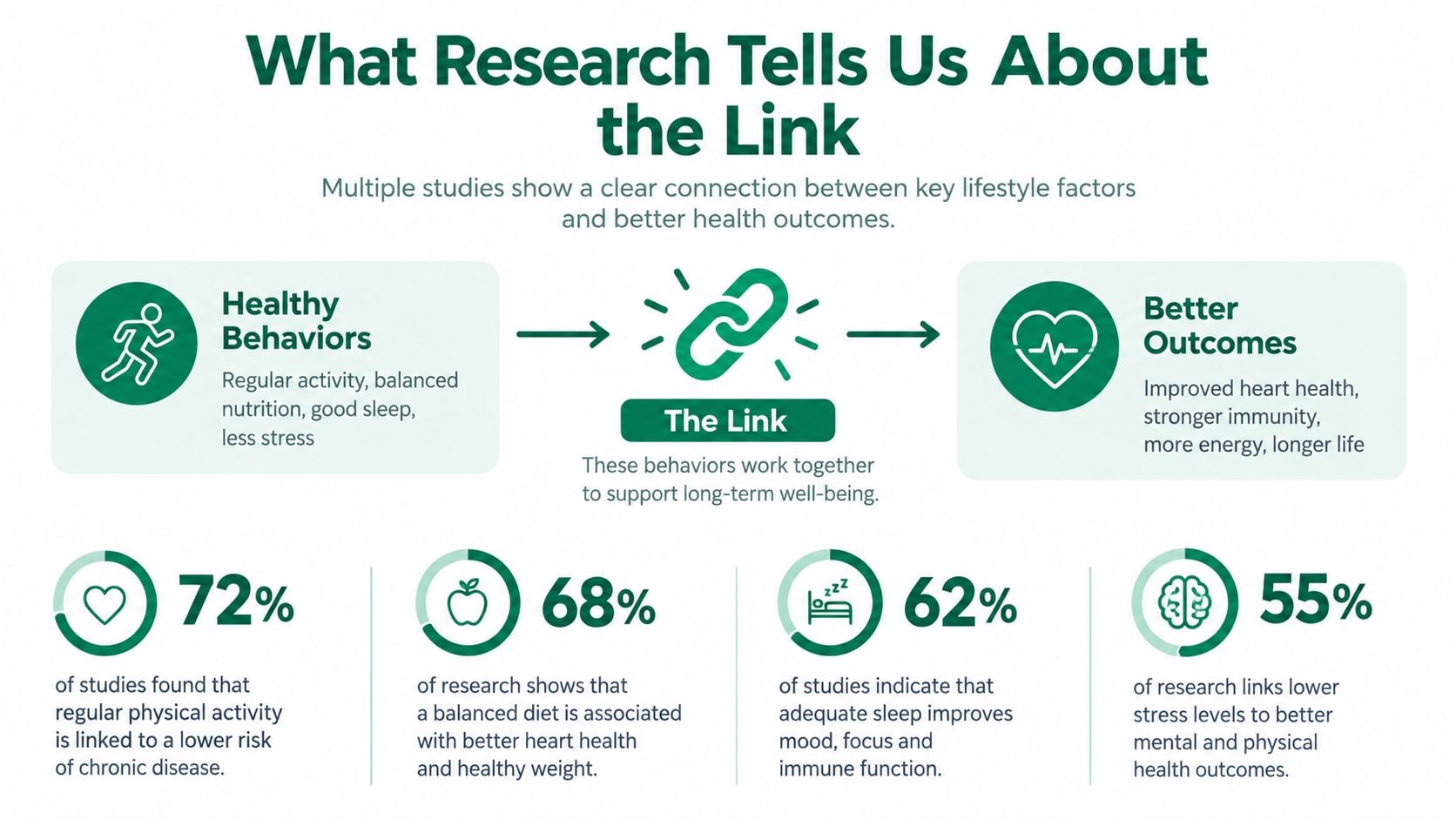
The research supports an association between painful TMD and OSA, but association isn't the same as direct causation. A systematic review found that all included cross-sectional studies reported higher OSA prevalence among people with painful TMD. However, the authors emphasized that causal relationships remain unclear because few studies used polysomnography, standardized TMD diagnostic criteria, and prospective designs. The review is available in the systematic analysis of TMD and OSA.
Cross-sectional research provides a snapshot. It can show that two conditions appear in the same population, but it usually can't establish which condition came first or whether another factor contributes to both. For example, sleep disruption, muscle overactivity, craniofacial anatomy, pain sensitivity, and other health factors may influence the relationship.
What newer evidence suggests
A 2024 Mendelian-randomization analysis reported a significant forward association from OSA to TMD, with an odds ratio of 1.241, a 95% confidence interval of 1.009 to 1.526, and P=0.041. The reverse analysis found no significant causal effect of TMD on OSA, with an odds ratio of 0.975, a 95% confidence interval of 0.918 to 1.036, and P=0.411. These findings point more strongly toward OSA contributing to TMD than TMD causing OSA, although no single study resolves every clinical question. The full analysis appears in this peer-reviewed Mendelian-randomization study.
One possible explanation is that repeated airway obstruction, brief arousals, reduced oxygen levels, and compensatory jaw-muscle activity increase nighttime loading and pain sensitivity. That explanation differs from the idea that a painful jaw joint mechanically blocks the throat.
The clinical conclusion is practical. Clicking, facial pain, limited opening, and bruxism can't diagnose airway obstruction. Patients with snoring, witnessed pauses, gasping, morning headaches, resistant hypertension, or excessive daytime sleepiness need validated OSA assessment and, when appropriate, objective testing interpreted by a qualified sleep physician.
How Jaw Structure Relates to Airway Function
The jaw and airway occupy connected spaces, so anatomy can influence breathing risk without proving that TMD causes apnea. During sleep, throat tissues can relax and collapse inward, temporarily blocking airflow. A shortened lower jaw, the shape of the mouth and throat, and the size of the tongue or tonsils may increase that risk, as described in this Mayo Clinic explanation of sleep apnea signs and anatomy.
The anatomical pathway
A simple way to understand the relationship is to separate structure from symptoms:
-
The lower jaw helps shape the space available for the tongue. A smaller or more backward-positioned lower jaw may leave less room in the oral cavity.
-
The tongue and soft tissues sit near the upper airway. When sleep relaxes the supporting muscles, those tissues may move toward the airway.
-
Airway narrowing can become obstruction. OSA involves repeated interruptions or reductions in airflow during sleep, not merely a sore joint or an audible jaw click.
-
Jaw pain is a separate finding. Pain may reflect joint irritation, muscle tension, clenching, inflammation, or another cause. It doesn't prove that the airway is narrowed.
This anatomy may explain why some people with jaw-related concerns also report snoring or unrefreshing sleep. It doesn't mean every person with TMD has a recessed airway, and it doesn't mean every person with a particular facial structure will develop OSA.
What an evaluation considers
A clinician may review facial and jaw structure, range of motion, muscle tenderness, bite changes, nasal health, medications, weight-related factors, sleep position, and nighttime breathing symptoms. The wider category of sleep-disordered breathing includes more than the jaw itself, so a narrow explanation can miss an important contributor.
The safest interpretation is that overlapping anatomy can increase risk, while TMD symptoms alone don't establish airway obstruction. A jaw examination may identify a painful or restricted joint. It can't determine the severity of sleep-related breathing without appropriate sleep testing.
Understanding the Bidirectional Relationship
The strongest practical model is potentially bidirectional. OSA may contribute to jaw symptoms through fragmented sleep, repeated arousals, changes in oxygen levels, increased muscle activity, bruxism, and heightened pain sensitivity. At the same time, jaw pain, altered muscle patterns, and craniofacial anatomy may coexist with or signal risk for sleep-related breathing problems.
Prospective OPPERA data found that adults with at least two sleep-apnea signs or symptoms had a 73% higher incidence of first-onset TMD, after adjustment for age, sex, race or ethnicity, obesity, smoking, and autonomic factors. The adjusted hazard ratio was 1.73, with a 95% confidence interval of 1.14 to 2.62. A population-based Taiwanese cohort also reported higher subsequent TMD incidence among people with sleep apnea. These findings show association and temporal precedence, not proof that apnea directly damages the jaw joint. The findings are reported in this prospective research on sleep-apnea symptoms and TMD.
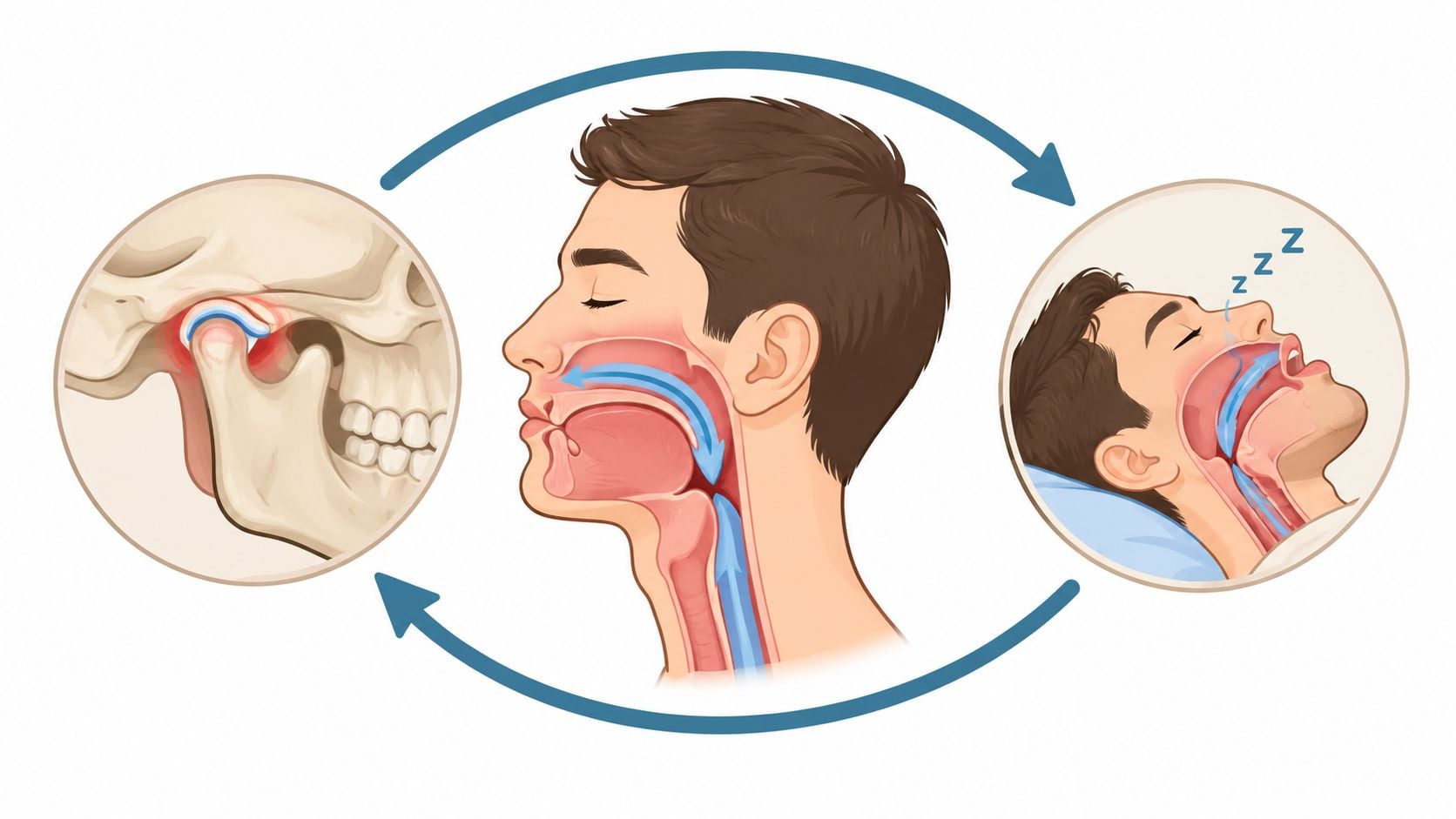
How the cycle may develop
A person with OSA may experience repeated breathing interruptions without remembering them. The body responds with brief arousals and changes in muscle activity, which can increase clenching or jaw loading. Over time, that pattern may add to morning soreness or make an existing TMD problem harder to settle.
A person with TMD may also sleep poorly because pain makes comfortable positioning difficult. Sleep loss can make pain feel more intrusive the next day, even when the jaw isn't causing airway obstruction. Facial structure may add a separate breathing risk, which is why both conditions deserve attention.
Treating the jaw without asking about breathing can leave an important contributor unexamined. Treating breathing without tracking jaw function can create a different gap in care.
Patients researching options for ongoing facial or jaw discomfort may encounter educational material about expert jaw pain relief San Francisco. Regardless of location, the useful standard remains the same: clinicians should distinguish symptoms, investigate likely mechanisms, and coordinate care when the jaw and airway appear to overlap.
Diagnosis and Treatment Considerations
Diagnosis requires two different evaluations. A TMD assessment generally reviews jaw movement, opening, joint sounds, muscle tenderness, pain patterns, bite changes, and functional limitations. OSA assessment focuses on sleep symptoms, breathing events, oxygen findings, medical history, and objective testing.
Sleep testing comes first for suspected OSA
The American Academy of Sleep Medicine identifies attended overnight polysomnography as the standard diagnostic test when adult OSA is suspected. For some uncomplicated adults at increased risk, a clinician may choose a home sleep apnea test. A home test isn't appropriate for every patient, including some people with significant cardiorespiratory disease, neuromuscular weakness, suspected hypoventilation, chronic opioid use, prior stroke, or severe insomnia. The AASM diagnostic testing guideline explains when laboratory testing is preferred.
Sleep-study results are often summarized with the apnea-hypopnea index or respiratory event index. In adults, an index below 5 events per hour is generally considered normal, 5 to 14.9 indicates mild OSA, 15 to 29.9 moderate OSA, and 30 or more severe OSA, as described in this clinical overview of OSA diagnostic thresholds. Snoring volume and jaw pain can't reliably predict those categories.
Treatment requires coordination
Mandibular advancement devices move the lower jaw or tongue forward to help maintain airway space. They may be appropriate for selected adults who prefer an alternative, can't tolerate CPAP, or have a suitable clinical profile. CPAP generally performs better for reducing breathing events and improving oxygen measures, while oral appliances may reduce daytime sleepiness in a way that can be equivalent for some patients. The AASM evidence review on oral appliance therapy supports individualized selection and objective follow-up.
A 2025 systematic review found higher short-term odds of pain-related TMD during mandibular advancement treatment, including an odds ratio of 4.49 for pain-related TMD and 2.90 for TMJ or chewing-muscle pain. The same analysis found lower long-term odds of TMJ or muscle pain, with an odds ratio of 0.21, so early discomfort doesn't necessarily indicate permanent damage or treatment failure. The results appear in this systematic review of mandibular advancement devices and TMD symptoms.
A qualified provider should document baseline jaw function, fit the device carefully, advance it gradually, and reassess breathing and jaw symptoms. General information about custom night guards at Ultra Smile DentalSpa may help patients understand why a device designed for clenching isn't automatically the same as an appliance designed to treat OSA. Adjunctive options, including low-level laser therapy for TMJ, also require an individualized evaluation.
Why Comprehensive Evaluation Matters
A person with chronic jaw pain and daytime fatigue may have TMD, OSA, both conditions, or another explanation for the symptoms. A single symptom rarely identifies the root cause. Morning headaches, for example, can occur with disrupted breathing, muscle tension, poor sleep position, medication effects, or other health concerns.
A thorough evaluation reduces the risk of treating the most visible symptom while overlooking the process that keeps it active. The assessment may include:
-
Jaw function: Range of motion, joint sounds, muscle tenderness, chewing tolerance, and locking or catching.
-
Breathing clues: Loud snoring, witnessed pauses, gasping, dry mouth, morning headaches, and persistent daytime sleepiness.
-
Sleep context: Non-restorative sleep, frequent awakenings, sleep position, nasal congestion, and reports from a bed partner.
-
Medical factors: Medications, cardiovascular history, neuromuscular conditions, weight-related factors, and other issues that affect testing or treatment decisions.
Conservative care has a role
Many treatment plans begin with non-invasive measures when clinically appropriate. These may include education, jaw-supportive habits, orthotic therapy, muscle-focused care, breathing retraining, sleep hygiene, and coordination with medical providers. The right combination depends on the examination and confirmed diagnoses.
Surgery shouldn't be the automatic first response to overlapping jaw and sleep symptoms. Conservative care doesn't mean ignoring serious breathing problems. It means selecting the least invasive appropriate option while ensuring that suspected OSA receives objective evaluation and medically guided management.
A coordinated team can also monitor whether a jaw device changes pain, bite, joint movement, snoring, or sleep-study results. That information is more useful than assuming one treatment will solve every symptom.
Taking the Next Steps for Your Health
Patients with jaw pain and disrupted sleep can begin by recording symptoms in a simple, consistent way. Notes may include morning jaw tightness, headaches, snoring, witnessed breathing pauses, gasping, dry mouth, daytime fatigue, nighttime clenching, and episodes of locking or limited opening.
A practical evaluation sequence
-
Schedule a clinical assessment. A jaw-focused provider can examine the joints and chewing muscles, while a medical or sleep professional can assess breathing risk.
-
Ask whether sleep testing is appropriate. Snoring alone doesn't establish OSA, and jaw symptoms can't confirm or exclude it. A physician-led evaluation determines whether a home test or polysomnography fits the clinical situation.
-
Share both symptom groups. Patients should mention jaw pain during a sleep consultation and breathing symptoms during a TMD consultation. That information can change the safety and timing of treatment.
-
Review device choices carefully. A mandibular advancement appliance may help selected patients with confirmed OSA, but baseline jaw function, gradual titration, fit, and follow-up matter.

When to seek prompt attention
Escalating joint pain, jaw locking, inability to open normally, or a persistent bite change after appliance use warrants prompt reassessment. Loud snoring accompanied by witnessed pauses, gasping, morning headaches, resistant hypertension, or significant daytime sleepiness also deserves professional attention.
Patients in Newark and Wilmington, Delaware, or Bryn Mawr and the Philadelphia Main Line can seek an evaluation that considers jaw function and sleep health together. Information about a sleep apnea mouth guard dentist near me should be treated as a starting point for questions, not as a substitute for diagnosis.
The central answer is clear. TMD doesn't automatically cause sleep apnea, but the conditions can share anatomy and influence one another. Objective sleep testing, a careful jaw examination, and coordinated follow-up offer a safer path than assuming that either condition explains the whole picture.
Pain and Sleep Therapy Center evaluates TMJ-related pain, sleep-disordered breathing, snoring, and related oral-function concerns, with care led by Dr. Ryan Robinson, a triple board-certified specialist in craniofacial pain and dental sleep medicine. Patients can visit Pain and Sleep Therapy Center to request an appointment or take the Sleep Quiz, or call (302) 239-1757 to discuss the next appropriate step.