Jaw pain often starts as something easy to ignore. A person notices a click while eating, wakes with a sore cheek, or develops a dull headache near the temple. Days become weeks, chewing feels tiring, and the jaw begins to catch or ache, yet the discomfort still seems too minor to justify an evaluation.
That pattern matters because temporomandibular disorders, or TMD, can involve the jaw joint, the chewing muscles, daily habits, sleep, the neck, and broader pain sensitivity. Learning how to treat TMJ pain starts with finding the likely pain generator, then choosing the least invasive treatment that fits the diagnosis.
Table of Contents
- Understanding the Root of TMJ Pain
- The First Step in Treatment Is a Comprehensive Evaluation
- Starting with Conservative Home Care Strategies
- Exploring Orthotics and Professional Physical Therapy
- Why Irreversible Dental Treatments Should Be Avoided Initially
- Connecting TMJ Health with Sleep and Airway Issues
Understanding the Root of TMJ Pain
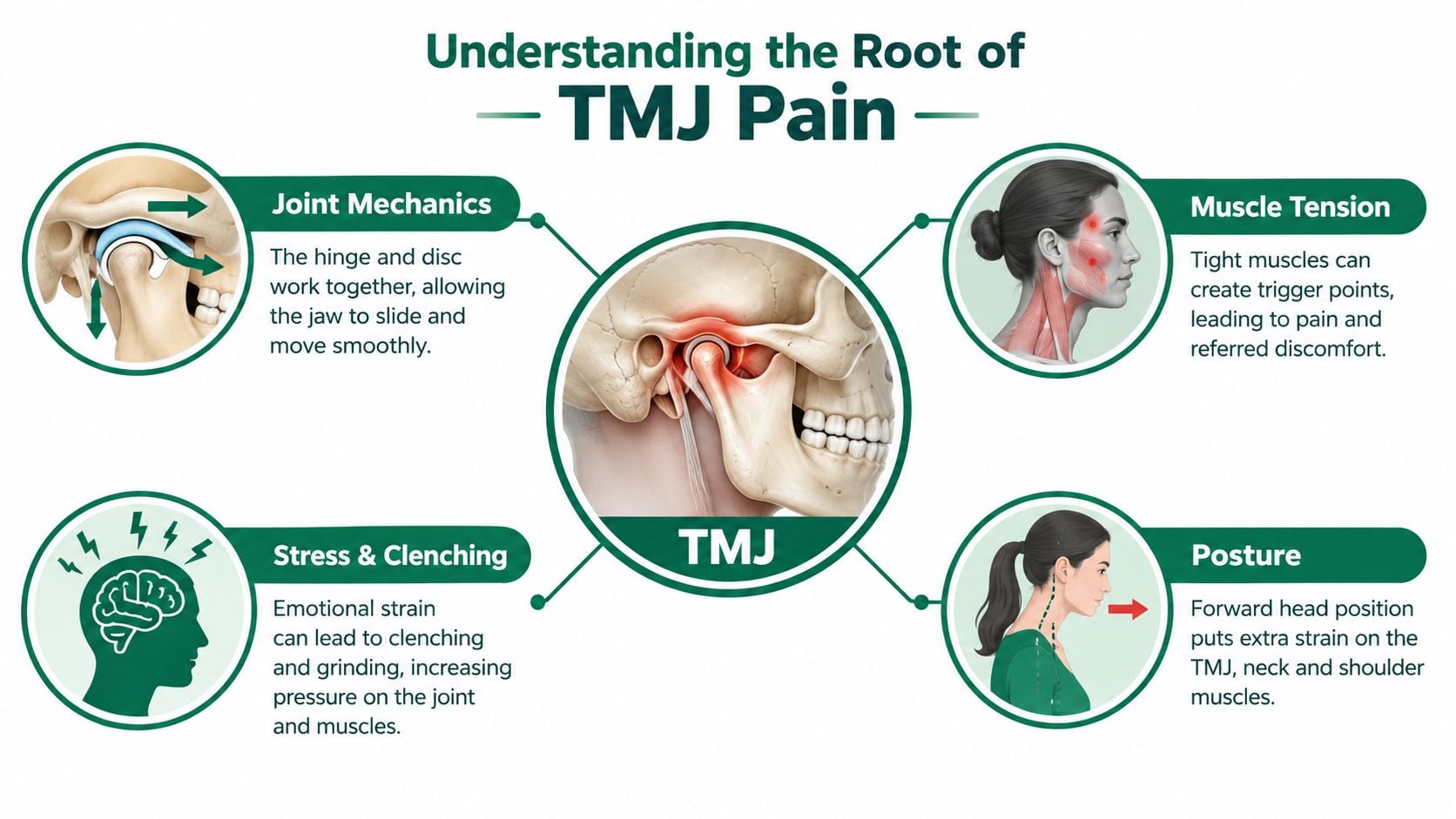
A familiar scenario involves a person who notices jaw clicking but continues chewing gum, clenching during concentration, and sleeping poorly. Later, headaches and facial soreness appear. The person may assume the joint has moved out of place, although the painful structure may instead be an overworked muscle or a combination of joint and muscle problems.
The temporomandibular joint connects the lower jaw to the skull and works as both a hinge and a sliding joint. Internal derangement describes a problem with the position or movement of structures inside that joint. Myofascial pain comes from muscles and the connective tissue around them, often producing tenderness, fatigue, referred pain, or trigger points that send discomfort toward the temple, ear, teeth, or neck.
A joint sound isn't automatically the source of pain. A click, scan finding, or mild movement difference needs to be interpreted alongside the history, examination, and functional pattern. Guidance for TMD evaluation also recognizes that jaw symptoms may overlap with headaches, neck symptoms, sleep concerns, and other facial pain conditions. Clinical guidance on temporomandibular disorders supports selective assessment rather than assuming every symptom comes from the joint.
Habits can keep the muscles activated
Bruxism means repetitive clenching or grinding of the teeth, whether awake or asleep. Some people clench while driving, working, exercising, or managing stress without realizing that their teeth should normally remain slightly apart when the jaw is relaxed.
Occlusion means the way the upper and lower teeth meet. Although the bite can influence loading in selected situations, it shouldn't automatically be treated as the root cause. Forward-head posture, sustained screen use, poor sleep, emotional strain, and protective muscle guarding may all change how the jaw is held and used.
The practical conclusion is straightforward. Lasting relief generally requires more than treating a joint image or covering pain with a device. A clinician needs to determine whether muscle tension, joint mechanics, behavior, sleep, the neck, or several factors are maintaining the symptoms.
The First Step in Treatment Is a Comprehensive Evaluation
Treatment should begin with a diagnosis, not a procedure. A useful evaluation identifies what hurts, what provokes it, how the jaw moves, and whether the symptoms fit a muscle disorder, an intra-articular joint disorder, another facial pain condition, or a combination.
What the appointment should establish
A clinician will usually begin by mapping the symptoms. Important details include the location of pain, its quality, the activities that trigger it, morning versus evening patterns, locking, trauma, dental procedures, headaches, ear symptoms, sleep quality, and habits such as clenching. A physical assessment may include opening and closing, side-to-side movement, joint sounds, muscle tenderness, neck function, and signs of inflammation or injury.
The evaluation should also consider whether the pain resembles a different condition. Facial pain involving burning, electric sensations, unusual numbness, or a pattern that doesn't match jaw function may require assessment for a nerve-related disorder. A focused explanation of the distinction between jaw disorders and trigeminal neuralgia is available in this TMJ and facial pain resource.
Imaging isn't automatically required. It may be considered when the history and examination suggest structural joint disease, significant trauma, persistent locking, or another finding that would change management. A scan can show anatomy, but it doesn't always identify which structure is generating pain.
Questions that improve the diagnosis
Patients can prepare by recording:
- Pain triggers: Note chewing, yawning, speaking, waking, exercise, and stressful tasks that change symptoms.
- Jaw function: Record catching, locking, limited opening, or a rapidly changing bite.
- Related symptoms: Include headaches, neck pain, fatigue, snoring, witnessed breathing pauses, and morning jaw soreness.
- Recent changes: Mention injury, infection symptoms, dental treatment, medication changes, or new neurological symptoms.
Prompt medical assessment is appropriate for fever or swelling, new trauma, neurological symptoms, unexplained weight loss, severe limitation of opening, or a rapidly changing bite. These findings don't prove a serious cause, but they shouldn't be managed as routine muscle tension without an examination.
Diagnostic principle: The most useful treatment is the one matched to the tissue and behavior driving the pain.
Starting with Conservative Home Care Strategies
A sore jaw after chewing, clenching, or a rough night's sleep often improves when the joint and surrounding muscles are given a break. Reversible home care is the first stage because it lowers repeated strain while the underlying pattern is being identified.
Reduce unnecessary jaw loading
For a short period, softer foods can reduce chewing load, especially if symptoms flare with meals. Cut food into smaller pieces, avoid gum, chewy foods, nail biting, pen chewing, wide yawns, and the habit of checking a painful click. Resting the jaw does not mean holding it rigid. Lips can rest together, the teeth stay apart, and the tongue sits lightly against the palate without force.

Heat and cold can help in different situations. A cold pack wrapped in fabric may ease a flare after activity, while moist heat may relax tight muscles before gentle movement. Protect the skin and stop either method if it worsens discomfort.
Change the habits that keep pain active
Awareness usually helps more than force. Phone reminders, unclenching cues, slower eating, and breaks from prolonged screen posture can reveal how often the jaw is working without need. Gentle neck and jaw exercises should be chosen carefully. Repeated stretching or opening wide to test range can aggravate an irritable joint.
Sleep habits belong in the plan too. A regular sleep schedule, a comfortable sleep position, and attention to snoring or unrefreshing sleep may reduce morning clenching and muscle fatigue. Some patients benefit from medication, but nonsteroidal anti-inflammatory drugs or paracetamol are not suitable for everyone. A physician or dentist should review medical history, other medicines, and safe use.
The joint health advice from Lake City Physical offers practical guidance on protecting joints through movement and daily habits. For persistent symptoms, home care should support, not replace, a structured examination and individualized rehabilitation.
A major clinical guideline reviewed evidence across 59 interventions and recommends starting chronic TMD pain care with conservative, reversible measures such as education, activity modification, exercises, massage, heat or cold, physiotherapy, mindfulness-based approaches, and medication when clinically appropriate. The guideline's evidence review supports a staged plan rather than immediate surgery.
Exploring Orthotics and Professional Physical Therapy
Persistent symptoms after sensible home changes often point to a problem that needs hands-on assessment. Physical therapy can examine jaw movement, neck mechanics, muscle guarding, posture, and habits that are difficult to judge alone. Treatment may include supervised jaw exercises, neck and postural work, manual mobilization, massage, and trigger-point care. The plan should match the findings, particularly when opening is limited or the joint is irritable.
A therapist-assisted jaw mobilization technique uses controlled movement to improve function without forcing an inflamed or sensitive joint. Manual trigger-point treatment addresses tender muscles that can refer pain into the face, temple, or head. A major clinical guideline identified therapist-assisted mobilization, manual trigger-point therapy, and cognitive behavioural therapy with relaxation or biofeedback as approaches associated with meaningful reductions in chronic TMD pain. Read the full clinical guideline
Where an oral appliance fits
An oral appliance, also called an orthotic or splint, can have a role when examination suggests muscle overuse, parafunctional loading, or a need for temporary stabilization. It should have a clear purpose and a review schedule. Adjust or stop it if pain, function, comfort, or the bite worsens. A splint should support a broader treatment plan, not replace assessment of muscle tension, behavior, sleep, or neck dysfunction.
The evidence does not support giving every TMD patient an appliance. A 2024 Cochrane review examined 57 studies involving 2,846 participants and found that splints may reduce chewing-related jaw-muscle pain compared with no treatment, although the evidence was very uncertain. It found insufficient evidence that occlusal interventions reliably improve TMD symptoms overall. The Cochrane review of occlusal treatment therefore supports case-specific, monitored use rather than routine placement.
Cold laser therapy may be offered as an adjunct after the examination has clarified the likely pain source. It should not replace exercises, habit changes, physical therapy, or medical review. In a randomized, double-blind, placebo-controlled study of 40 people, active low-level laser therapy was compared with placebo over eight sessions, delivered two to three times weekly. Both groups changed in pain, opening, and clicking, but differences between groups were not statistically significant. The placebo-controlled laser study found no advantage over placebo for functional TMJ pain in that study. Further background appears in low-level laser therapy for TMJ symptoms.
Clinic communication also affects rehabilitation follow-through. Systems that automate PT clinic calls may help staff respond consistently, while clinical decisions remain with the treating team.
Why Irreversible Dental Treatments Should Be Avoided Initially
A patient may arrive after months of jaw pain, convinced that the bite must be permanently changed. That conclusion can be premature. TMD symptoms often arise from muscle overuse, clenching, stress-related habits, sleep disruption, or neck dysfunction rather than a tooth position that requires reconstruction.
Extensive reshaping, crowns, orthodontic movement, or surgery can change tooth contacts and joint loading. Those changes are difficult to reverse, and they may complicate care if the original pain source was muscular or behavioral. A permanent procedure should address a clearly identified structural problem, not uncertainty about the diagnosis.
Why a bite change can miss the problem
Pain and inflammation can make the chewing muscles tighten and alter how the jaw closes. If teeth are adjusted while that temporary pattern is present, the new bite may not suit the patient after the muscles settle. Permanent dental work can also make it harder to judge whether improvement came from natural recovery, habit changes, exercises, or the procedure itself.
The 2024 Cochrane review describes very uncertain evidence for splints in muscle-related pain and does not establish a dependable reason to make permanent occlusal changes. The evidence summary on occlusal treatment supports testing reversible measures first, with a defined review point and clear treatment goals. A monitored appliance is a different decision from removing tooth structure.
Where surgery belongs
Surgery has a narrower role. The chronic pain guideline places joint procedures after an appropriate trial of conservative treatment and recommends caution with several invasive or irreversible approaches. The BMJ clinical practice guideline supports reserving procedures for carefully selected patients whose symptoms remain disabling despite suitable non-surgical care.
Before consenting to permanent treatment, ask which diagnosis it is intended to treat, what reversible options remain, how success will be measured, and what the plan is if pain continues. Track jaw opening, chewing tolerance, sleep quality, headaches, and daily function alongside pain intensity. This staged approach protects healthy teeth while giving muscle and behavioral causes time to respond.
Connecting TMJ Health with Sleep and Airway Issues
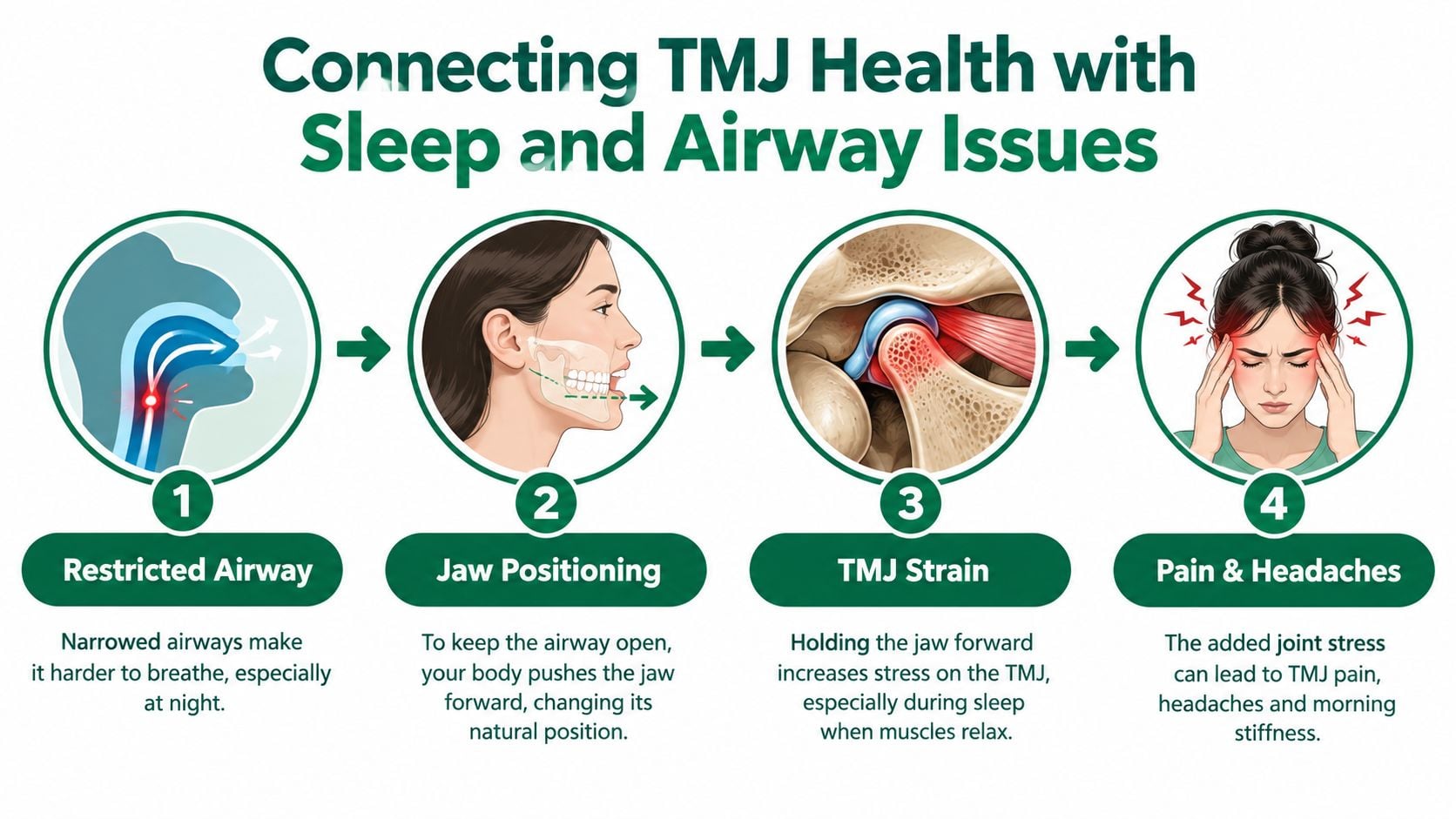
Jaw pain may coexist with snoring, restless sleep, morning headaches, daytime fatigue, or witnessed pauses in breathing. Those symptoms don't prove that a jaw disorder caused a sleep disorder, and TMD treatment shouldn't be presented as a cure for sleep apnea. They do justify a broader evaluation when the patterns overlap.
During sleep, clenching, muscle activity, breathing effort, and jaw position may interact. A person who wakes with sore chewing muscles and headaches may need both a jaw assessment and a sleep assessment. Neck discomfort, poor sleep, and persistent facial pain can also reinforce one another without a single structure explaining every symptom.
Sleep apnea requires objective testing
Snoring and fatigue alone can't establish whether obstructive sleep apnea, or OSA, is present or how severe it may be. The American Academy of Sleep Medicine identifies polysomnography, commonly called an overnight sleep study, as the standard diagnostic test for adults suspected of having OSA. A type 3 attended cardiorespiratory sleep study is also recognized in relevant clinical pathways. AASM guidance on diagnostic testing and oral appliance care supports physician-directed evaluation before treatment.
Oral appliance therapy may be appropriate for some adults with confirmed OSA who can't tolerate continuous positive airway pressure or prefer an alternative. The device should be custom and titratable, provided by a qualified dentist under a sleep physician's prescription, with follow-up sleep testing after final fitting and adjustment to confirm therapeutic benefit.
Tongue mobility, oral function, breathing habits, and airway anatomy may also warrant assessment when symptoms suggest a broader pattern. These findings need individualized interpretation rather than assumptions about causation. A focused discussion of the overlap appears in TMJ and sleep apnea evaluation.
Pain and Sleep Therapy Center evaluates TMJ, head, and facial pain alongside sleep and airway concerns, using conservative care, physical therapy, monitored orthotic therapy, and dental sleep medicine when appropriate. Patients in Newark and Wilmington, Delaware, Bryn Mawr, and the Philadelphia Main Line can visit Pain and Sleep Therapy Center to request an appointment, or call Newark at (302) 239-1757.