If teeth grinding explains every TMJ flare-up, why can jaw pain worsen after poor sleep even when chewing habits haven't changed? The answer often involves the jaw muscles, joints, sleep, stress, and the nervous system working together, rather than a single damaged part.
TMJ means temporomandibular joint, the joint on each side of the head that connects the lower jaw to the skull. TMD, or temporomandibular disorders, describes conditions affecting these joints and the muscles around them. Understanding what causes TMJ flare ups starts with noticing when symptoms appear, what happened beforehand, and whether the pattern has changed.
Table of Contents
- Common Triggers Behind a TMJ Flare-Up
- How Clenching and Chewing Overload the Jaw
- How Stress and Poor Sleep Keep Pain Going
- Matching Your Flare-Up Pattern to a Likely Driver
- Warning Signs That Need Prompt Medical Care
- Book a Root-Cause Evaluation for Your Flare-Ups
Common Triggers Behind a TMJ Flare-Up
A jaw can handle ordinary activity comfortably until several small demands add up. Clenching during concentrated work, chewing through a long meal, and sleeping poorly may each contribute to irritation without a new injury.
The National Institute of Dental and Craniofacial Research explains that the precise cause of TMD is unclear in most cases. Genetic susceptibility, psychological and life stressors, and differences in pain processing can all contribute. Injury can cause some disorders, but it doesn't explain every flare.
Common TMJ flare-up triggers and how they affect the jaw
The patterns below are clues, not diagnoses. A symptom may fit more than one row, and a familiar trigger doesn't rule out another condition.
| Trigger | How It Affects the Jaw | Typical Pattern |
|---|---|---|
| Teeth clenching | Sustained muscle tension without chewing | Jaw ache building through the day |
| Nighttime grinding, or bruxism | Repeated tooth contact during sleep | Morning jaw soreness or tired temples |
| Gum chewing or nail biting | Keeps jaw muscles active for long periods | Pain after long chewing sessions |
| Stress and anxiety | Raises muscle tension and pain sensitivity | Flares during deadlines or emotional strain |
| Poor sleep | Lowers pain tolerance and can increase clenching | Pain after several fragmented nights |
| Bite or joint changes | May add structural load to the joint | Clicking, catching, or uneven opening |
| Head or neck injury | Impact or whiplash disturbs joints and muscles | Pain starting after a fall or collision |
| Sleep-disordered breathing | May involve nighttime arousals and associated clenching | Snoring or unrefreshing sleep |
Bruxism, the term for repetitive clenching or grinding, has a strong association with jaw symptoms. A 2023 BMC Oral Health study of Turkish adults found that 46.8% of participants reporting TMD symptoms also reported bruxism, compared with 10.9% without TMD symptoms; the study reported a 3.14-fold higher risk of TMD symptoms among those with bruxism.
That association doesn't establish what caused an individual's pain. Someone who grinds may also have disrupted sleep, muscle tenderness, or a joint problem that needs separate attention.
Practical rule: The most useful clue is often the sequence of events, not the presence of one habit.
This table works best as a starting map. Several contributors may overlap, and a repeated pattern is more informative than assuming every flare has the same cause.
How Clenching and Chewing Overload the Jaw
Jaw muscles held tight resemble a rope kept under tension. Even without large movements, continued pulling can strain the structures attached to it. Muscles need periods of rest, not just a break from hard foods.
Clenching holds pressure without chewing. Grinding adds repeated tooth contact and movement, while gum chewing and nail biting extend the time the muscles spend working. These behaviors can occur during waking hours, and sleep-related activity may happen without the person knowing.
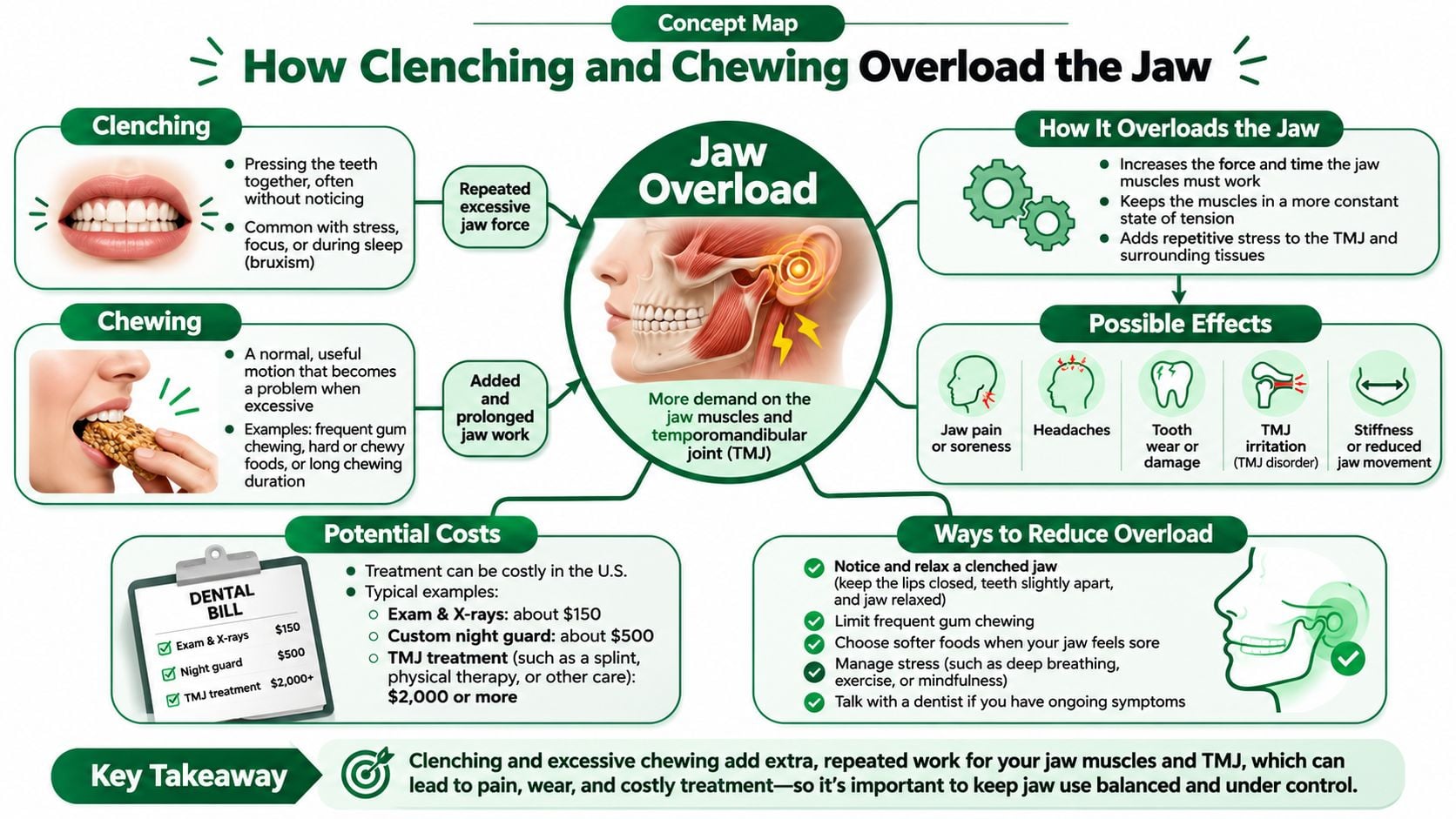
Mayo Clinic's TMJ overview lists clenching, grinding, gum chewing, and nail biting among habits associated with TMJ disorders. It also explains that pain can involve a cushioning disc that shifts or wears down, or ligaments and other soft tissues that become sprained or strained.
A 2023 study published in the Journal of Medical University of Warsaw reported that 60% of participants identified clenching and 30% identified bruxism as factors positively associated with TMJ pain and myalgia, meaning muscle pain. Those findings support checking oral habits, but they don't make clenching the explanation for every painful joint.
Reducing unnecessary jaw work
During a flare, the aim is to reduce irritating activity without forcing the jaw into a new position.
- Notice resting tooth contact. During reading, driving, or screen work, check whether the teeth are pressed together when no chewing is happening.
- Allow a relaxed resting position. The teeth can remain slightly apart, with the lips gently closed and the tongue resting lightly against the roof of the mouth. Nothing should feel forced.
- Choose softer foods and smaller bites. Eggs, oatmeal, soup, and cooked vegetables require less effort than tough meat or chewy bread.
- Pause repetitive habits. Stopping gum chewing and nail biting for several days may help reveal whether prolonged muscle activity contributes to discomfort.
A person who notices afternoon aching during focused work may benefit from reminders placed near a screen or steering wheel. The reminder should prompt relaxation, not repeated test bites or forceful stretching.
The jaw-clenching remedy guide offers additional context for managing this habit. Persistent pain, locking, or restricted opening needs a professional assessment, particularly when reducing jaw workload doesn't help. Repeatedly forcing a catching jaw open isn't a substitute for finding the cause.
How Stress and Poor Sleep Keep Pain Going
Stress-related jaw pain is real physical pain. Stress can increase muscle tension and change how strongly the nervous system responds to discomfort. Poor sleep can make pain harder to tolerate, while pain itself can interrupt sleep.
A TMD review summarized by CoxHealth reported bruxism prevalence ranging from 45% to 87%, with significant associations with myofascial pain, meaning pain involving muscles and their surrounding connective tissue. The same review reported poor sleep quality in 40% to 75% of TMD patients, with poorer sleep correlating with greater pain severity.
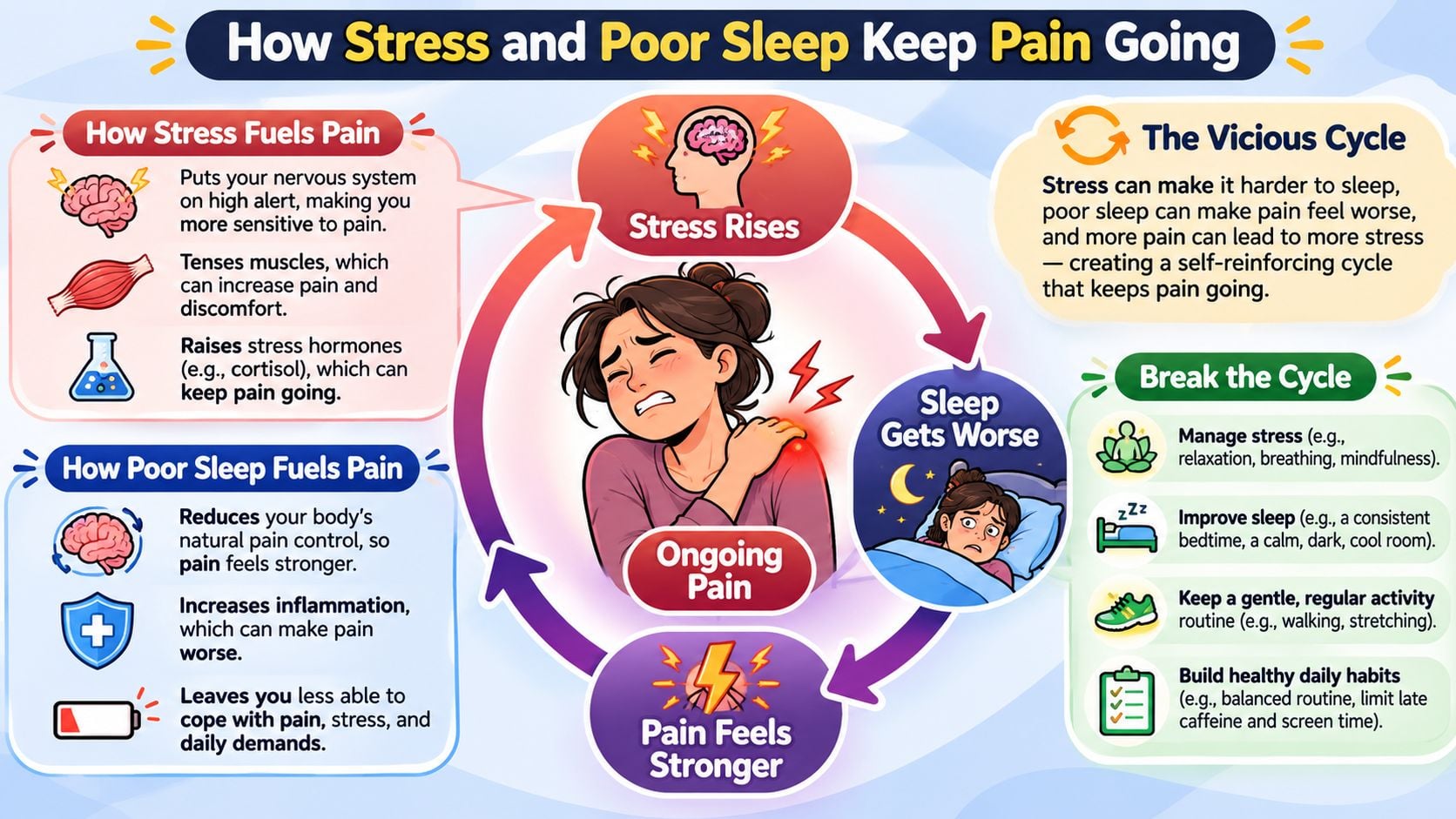
The relationship is also visible in a 2024 Scientific Reports study: psychological stress occurred in 53.3% of TMD patients who bruxed, compared with 30.3% who did not, while sleep issues occurred in 50.0% versus 24.2%, respectively. These are associations, not proof that stress or poor sleep caused each person's symptoms.
Distinguishing tension from a breathing concern
Say jaw soreness appears during a demanding work period. Daytime tooth contact, restless nights, and morning muscle fatigue may all deserve attention, rather than treating the deadline as the entire explanation.
Loud snoring, gasping or choking during sleep, unrefreshing sleep, and daytime sleepiness raise a different question: whether breathing is repeatedly disturbed overnight. The relationship between snoring and TMJ symptoms can be worth discussing during an evaluation. A physician diagnoses sleep apnea using a sleep study, not jaw symptoms or a questionnaire alone.
Stress deserves attention as a contributor, never as a reason to dismiss pain.
The NCBI clinical review of temporomandibular disorders links muscular dysfunction with stress, bruxism, anxiety, depression, and abnormal posture. That supports considering sleep, mood, and neck tension alongside the jaw examination.
For evenings dominated by worry, Therapy with Ben's UK counsellor's tips for anxious evenings provide a separate emotional-support resource. Such strategies complement clinical care; they don't establish the cause of jaw pain or replace sleep assessment.
Habits that may help many patients include:
- A consistent bedtime. Keeping a regular sleep schedule makes changes in sleep quality easier to recognize.
- A short wind-down routine. Quiet reading or another low-stimulation activity can separate work demands from bedtime.
- Brief breathing exercises. Gentle, unforced breathing may help reduce tension before sleep.
None replaces an evaluation when symptoms persist.
Matching Your Flare-Up Pattern to a Likely Driver
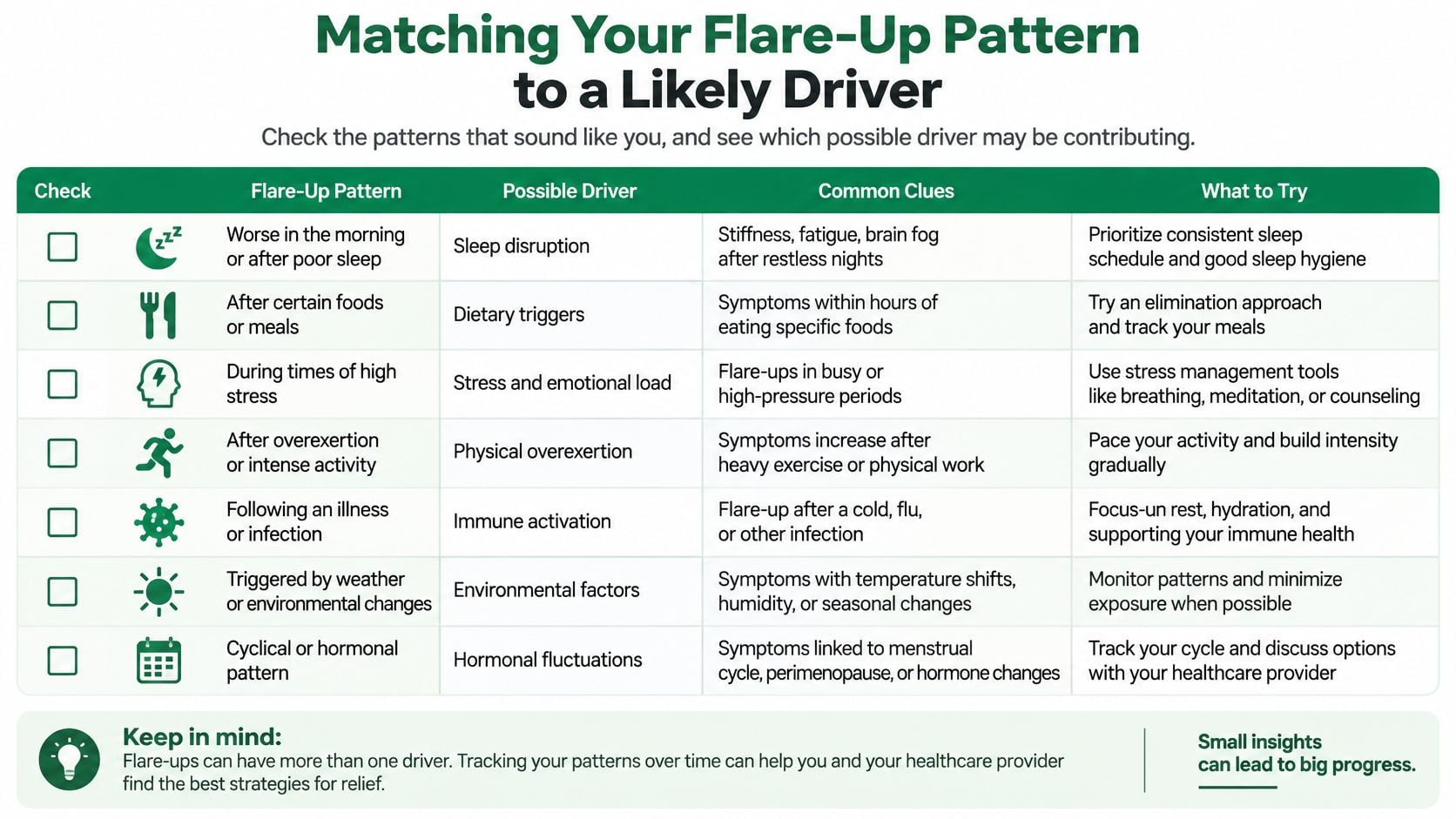
Similar jaw pain can come from different sources. One person may have muscle overload, another a joint problem, and another a headache disorder or a condition unrelated to TMD. The timing and sequence of symptoms help guide the examination.
A 2014 literature review describes biomechanical contributors, including excessive loading, grinding, joint instability, and repetitive small injuries, alongside head or neck trauma and psychological contributors. That range supports evaluating the whole pattern before choosing treatment, rather than assuming bite alignment explains everything.
A short symptom log
A two-week log can organize observations for an appointment. Useful entries include the time pain began, its location, the activity beforehand, sleep quality, stress rated from 1 to 10, and any clicking, catching, or locking.
The log is a practical tracking exercise, not a diagnostic test. There's no need to provoke symptoms to complete it, and worsening restriction shouldn't wait until the log is finished.
Flare-up patterns and what they may suggest
| Pattern | What It May Suggest | Next Step |
|---|---|---|
| Pain after chewing or long talking | Muscle overload | Log meals, talking, and chewing sessions |
| Morning jaw or temple pain | Overnight clenching or grinding | Ask a sleep partner about grinding sounds |
| Clicking, popping, or catching | Possible joint involvement | Request a joint examination and imaging if needed |
| Headache or facial pain without jaw movement | Headache disorder or another source | Review headache history with a clinician |
| Restricted opening that is getting worse | Joint or other medical cause | Seek prompt evaluation |
Pain and Sleep Therapy Center evaluates chronic headaches, jaw and facial pain, and clicking or popping through a patient history, interview, physical examination, range-of-motion assessment, and assessment of joint sounds or vibrations. Joint hard-tissue images may also form part of the evaluation.
In some cases, the process includes a 3D cone-beam computed tomography scan, commonly called CBCT, to assess jawbone detail. Sleep diagnostics or hospital-based soft-tissue imaging may be needed when the findings call for them. Different tests answer different questions, so a scan alone doesn't explain every painful symptom.
Headaches or facial pain that occur independently of jaw movement warrant a headache-history review. Their timing, duration, associated symptoms, and relationship to jaw activity can help a clinician decide whether another source needs attention.
Warning Signs That Need Prompt Medical Care
A familiar jaw ache doesn't automatically mean every new symptom is another routine flare. Most flares are uncomfortable rather than dangerous, but TMD-like symptoms can rarely reflect a condition that needs different care.
Clinical guidance published in the British Dental Journal identifies warning signs that call for prompt assessment. Recognizing them helps patients seek appropriate care without assuming the worst.
Signs that shouldn't be managed as an ordinary flare
- Facial or neck swelling, especially when new or increasing.
- Fever, particularly with jaw pain or swelling.
- Unexplained weight loss alongside persistent symptoms.
- Progressive, severe restriction in how far the mouth opens.
- Numbness, weakness, or other neurological changes, meaning changes in nerve function.
- Persistent mouth ulcers that don't heal.
- New jaw pain while taking bisphosphonate-related medicines, which are used for certain bone conditions.
Sudden weakness or other acute neurological symptoms warrant emergency assessment. Trouble breathing or swallowing also requires urgent medical attention rather than a routine dental appointment.
Safety reminder: A symptom that is new, steadily worsening, or unlike previous episodes deserves fresh assessment.
Persistent symptoms also deserve attention
A timely professional visit is appropriate when pain lasts longer than the person's usual flare, worsens despite home care, or interferes with eating and daily activities. There isn't one universal flare duration that makes continued pain safe to ignore.
Locking or catching that doesn't resolve, and headaches that keep returning, also need review. The guide to causes of jaw locking explains why restricted movement can have more than one explanation. A jaw that becomes increasingly difficult to open shouldn't be repeatedly forced or stretched at home.
Witnessed pauses in breathing or severe daytime sleepiness should be discussed with a physician. A sleep study is needed to establish whether sleep apnea is present, and anyone struggling to stay awake should avoid driving.
This list supports conversations with a clinician; it doesn't replace one. A patient's description of what changed can be important even when the symptom doesn't fit neatly into a checklist.
Book a Root-Cause Evaluation for Your Flare-Ups
Repeated flare-ups can leave a person choosing between avoiding more foods, trying another device, or waiting. A root-cause evaluation offers a more useful starting point: identifying which contributors are most relevant and deciding what can be addressed safely.
Conservative, non-invasive options generally come before surgery. Treatment should match the examination findings and the patient's goals, rather than follow automatically from the presence of clicking, headaches, or an uneven bite.
What care may involve
Pain and Sleep Therapy Center's treatment plans may include lifestyle modifications, orthotic therapy for joint stabilization and bite support, cold laser therapy as an adjunct, and collaborative care with other healthcare professionals. Sleep evaluation may be included when indicated. These options may help many patients, but no appliance or therapy guarantees relief.
A useful plan also establishes how progress will be assessed. Comfortable movement, eating ability, symptom frequency, and sleep concerns can all matter to the individual patient. Continued or changing symptoms may require reassessment rather than repeating the same approach.
Preparing for an appointment
A patient can bring practical information that makes the visit more focused:
- The symptom log, including activities before pain and any changes in jaw movement.
- Current habits, such as gum chewing, nail biting, or daytime tooth contact.
- A medicine list, including prescriptions, over-the-counter medicines, and supplements.
- Sleep concerns, including snoring, gasping, fatigue, or morning symptoms.
- Partner or family observations, particularly grinding sounds or breathing pauses that occur during sleep.
Pain and Sleep Therapy Center is led by Dr. Ryan Robinson, who is triple board-certified in craniofacial pain and dental sleep medicine. Its offices in Newark, Delaware, and Bryn Mawr, Pennsylvania, serve patients from Newark and Wilmington, Delaware, and Bryn Mawr and the Philadelphia Main Line.
An evaluation doesn't require a patient to arrive with the cause already figured out. The purpose is to turn observations into a clearer clinical picture and a personalized next step.
Pain and Sleep Therapy Center offers root-cause evaluation of jaw, head, and facial pain, with attention to sleep concerns that may accompany flare-ups. Visit Pain and Sleep Therapy Center to Request an Appointment or Take our Sleep Quiz, or call the Newark office at (302) 239-1757 to arrange an evaluation.