
You wake up with a jaw that feels tired before the day even starts. Maybe breakfast feels harder to chew, maybe your temples ache, or maybe you catch yourself pressing your teeth together while reading emails, driving, or trying to fall asleep. That pattern is common, and it usually points to an overworked masseter muscle, the thick chewing muscle at the side of the jaw that helps close the mouth.
Table of Contents
- Why Your Masseter Keeps Tightening
- Set Up a Relaxed Resting Jaw
- Gentle Self-Massage and Trigger-Point Work
- Exercises and Posture Shifts That Unload the Jaw
- Address Awake Clenching and Sleep Drivers
- A Two to Ten Week Tracking Plan
- Questions Readers Usually Ask Next
Why Your Masseter Keeps Tightening
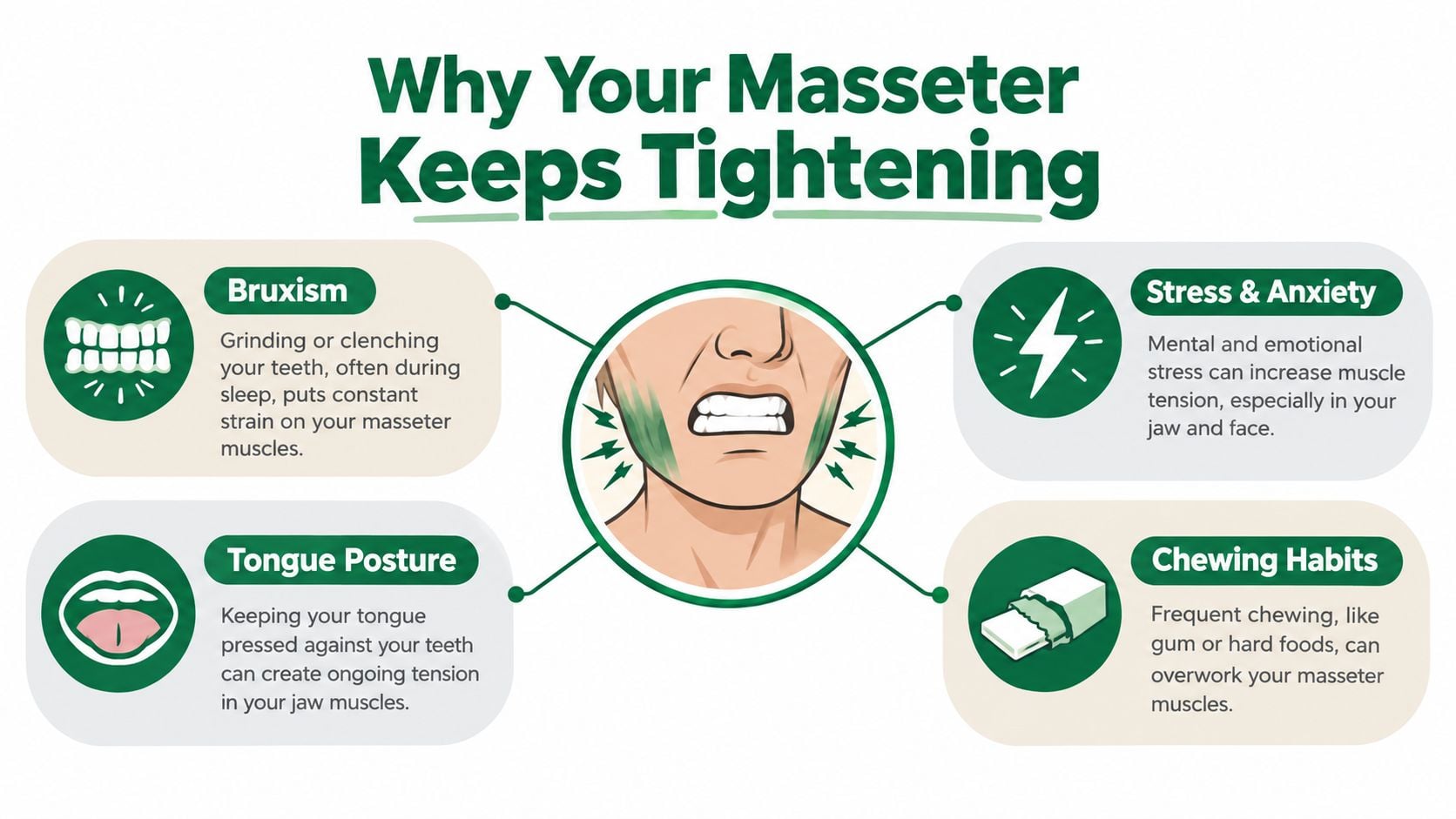
The masseter does a lot of heavy lifting, so it makes sense that it gets irritated when the load never really stops. Repetitive clenching, gum chewing, wide yawning, chewy foods, and daytime tooth contact all keep the muscle active longer than it should be. Conservative temporomandibular-disorder care starts with reducing that repeated loading, not with forcing the muscle to work harder.
Muscle tension is not always the joint
A tight masseter can create cheek pain, temple pain, and a heavy, fatigued feeling when chewing. That doesn't automatically mean the jaw joint itself is the main problem. Muscle overload and joint irritation can overlap, but they're not the same thing, and the difference matters because treatment choices change based on the pattern.
Practical rule: If clenching, chewing, or stress makes the pain worse, muscle overactivity is part of the picture until proven otherwise.
Daytime clenching is especially easy to miss because it happens during concentration. The teeth can touch briefly and repeatedly without any big dramatic movement. Over time, that silent habit can keep the masseter contracted and sore even when a person isn't eating.
Sleep adds another layer. Some people grind or clench at night, so the muscle never gets a full recovery window. That's one reason masseter relaxation should be treated as a root-cause habit change, not a quick rub-and-go fix.
For readers looking for a practical starting point on nighttime grinding, solutions for grinding teeth at night can be a useful companion resource while a clinician evaluates the bigger pattern.
Conservative care comes first
The National Institute of Dental and Craniofacial Research recommends starting TMD care with simple, conservative steps, because symptoms may improve without invasive treatment and the evidence for many more aggressive options is limited. That approach fits masseter care well. Soft foods, heat or cold with gentle exercises, less clenching, and relaxation work are reasonable first steps while the cause is sorted out.
Persistent pain, locking, restricted opening, or swelling should not be pushed through with forceful self-massage. Those signs deserve an evaluation, because a tight masseter is sometimes only one piece of a wider jaw problem.
Set Up a Relaxed Resting Jaw
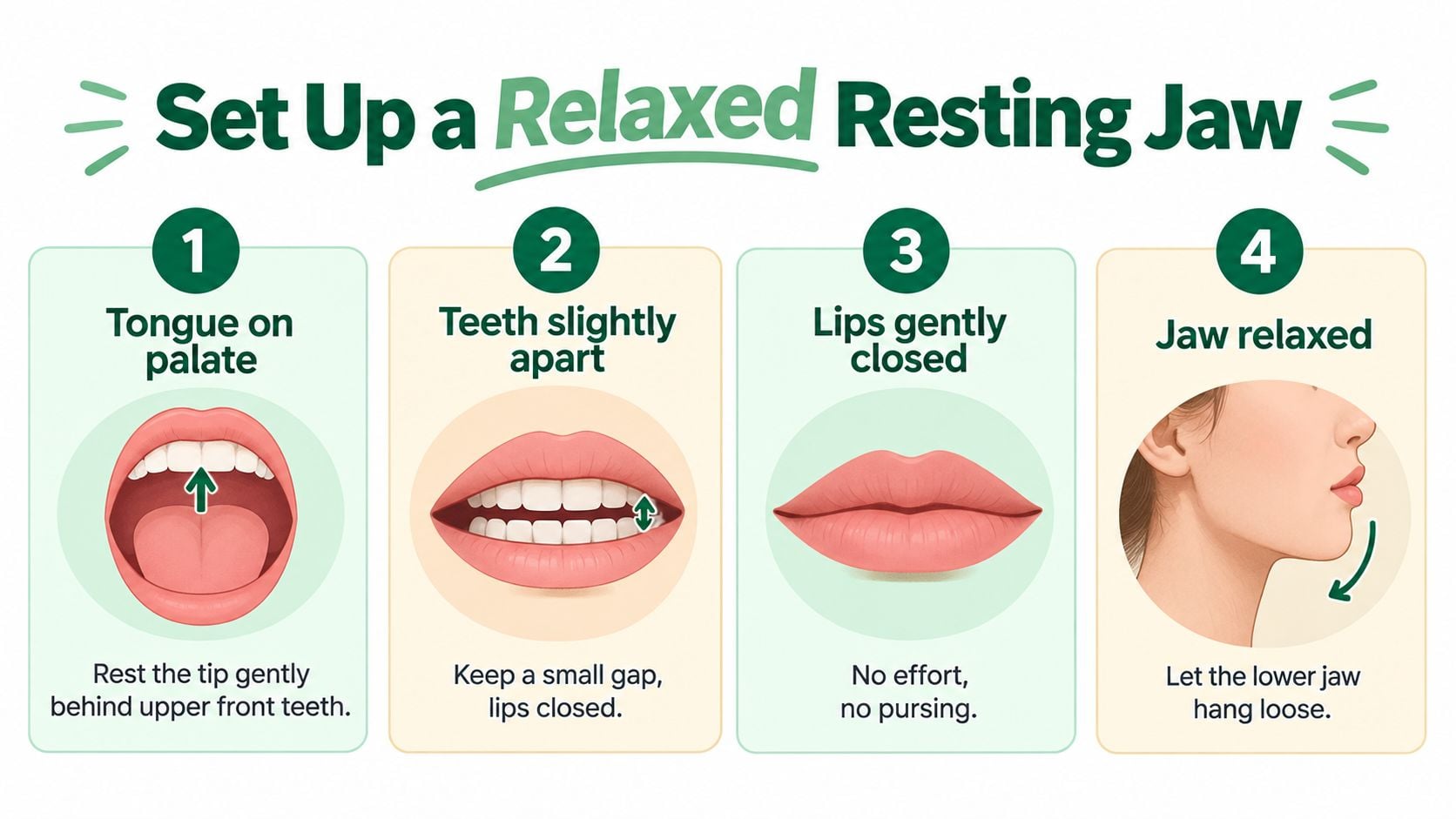
A relaxed resting jaw is simple, but it takes practice. The tongue rests gently on the palate, the teeth stay slightly apart, and the lips close without effort. Mayo Clinic also advises cutting back on habits that overload the chewing muscles, including gum chewing, nail biting, and teeth clenching.
Build the habit into ordinary moments
The easiest way to remember the position is to tie it to things that already happen. A phone alarm, smartwatch alert, sticky note on a monitor, or a quick check every time email opens can all work. The point isn't to obsess over the jaw, it's to interrupt unconscious clenching before it becomes a day-long pattern.
A short self-check works well at a desk. Ask three questions. Are the teeth touching? Is the tongue resting gently on the palate? Are the shoulders braced? If any answer is yes, let the jaw soften and let the teeth separate.
Softening the jaw often goes hand in hand with softening the rest of the face and neck. A person who is staring at a screen with the shoulders lifted usually needs both a posture reset and a jaw reset. That's why masseter relaxation is rarely just a mouth issue.
Cut back on the biggest irritants first
Not every habit deserves equal attention. The fastest wins usually come from removing the things that create the most repeated loading.
- Gum and chewy candy: These keep the masseter working for long stretches.
- Ice chewing: Hard chewing can aggravate both muscle and joint tissues.
- Nail biting and pen caps: Small habits, repeated often, add up.
- Tooth contact while concentrating: This is one of the most overlooked drivers.
The relaxed jaw is not a fixed pose. It's a brief check-in done many times a day.
For patients who need a broader conservative framework, the general TMJ approach at TMJ care and treatment options fits this same logic, reduce load first, then add other treatments only if needed.
Gentle Self-Massage and Trigger-Point Work
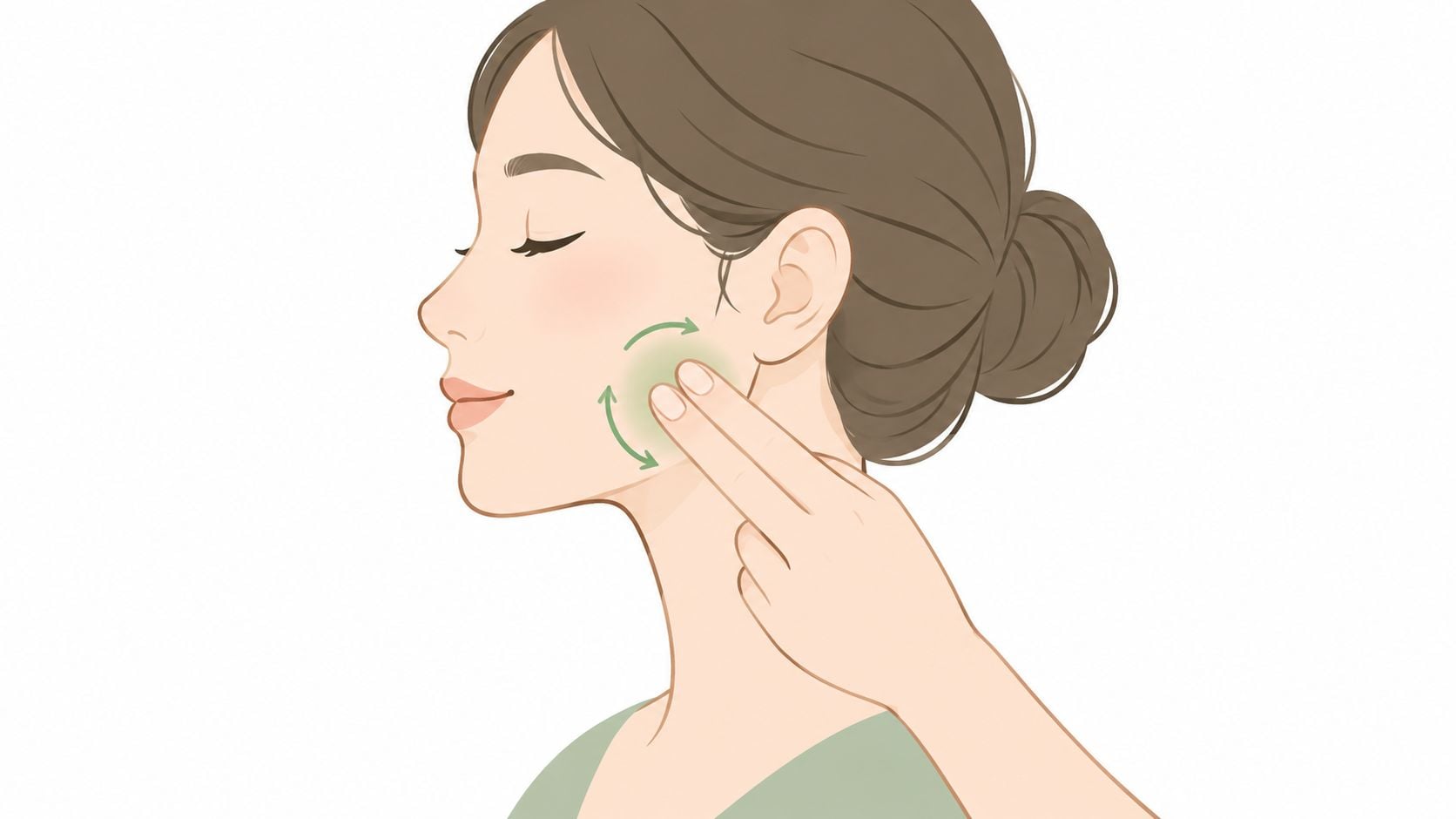
A tight masseter often responds to touch, but the pressure has to stay gentle. The muscle is easy to locate, it bulges near the back of the cheek when the teeth clench lightly, and it may feel tender in one precise spot when it has been overworked. That spot can behave like a trigger point, a tight area that reproduces familiar pain when pressed.
Use pressure that feels useful, not punishing
Two fingers, slow circles, and light-to-moderate pressure are usually enough for home care. The goal is sustained comfort, not deep digging. If the muscle feels looser afterward, the pressure was probably right. If pain spikes, the jaw tightens, or the area stays more irritated after the session, the pressure was too strong.
A warm compress can make massage easier. Moist heat helps some people settle the muscle before they work on it, especially if the jaw feels stiff in the morning or after long computer work. Keep the massage brief and unhurried.
A clinician can show safer myofascial release techniques explained if the muscle is highly sensitive or if the pain spreads beyond the jaw. That matters because forcing a painful muscle often adds more guarding instead of easing it.
Stay away from the wrong targets
Sharp joint pain is different from muscle tightness. If pressing near the joint causes pain, locking, or a catching feeling, the masseter may not be the only problem. Self-massage also should not be used right after dental work or on a jaw that feels blocked.
Comfortable pressure is therapeutic. Aggressive pressure is just another load.
If a short home trial does not settle the muscle, therapist-guided care is the better next step than increasing force. Manual treatment can be adjusted to the tissue that is irritated and checked against the jaw's response. That is a safer approach than trying to break up tension on your own.
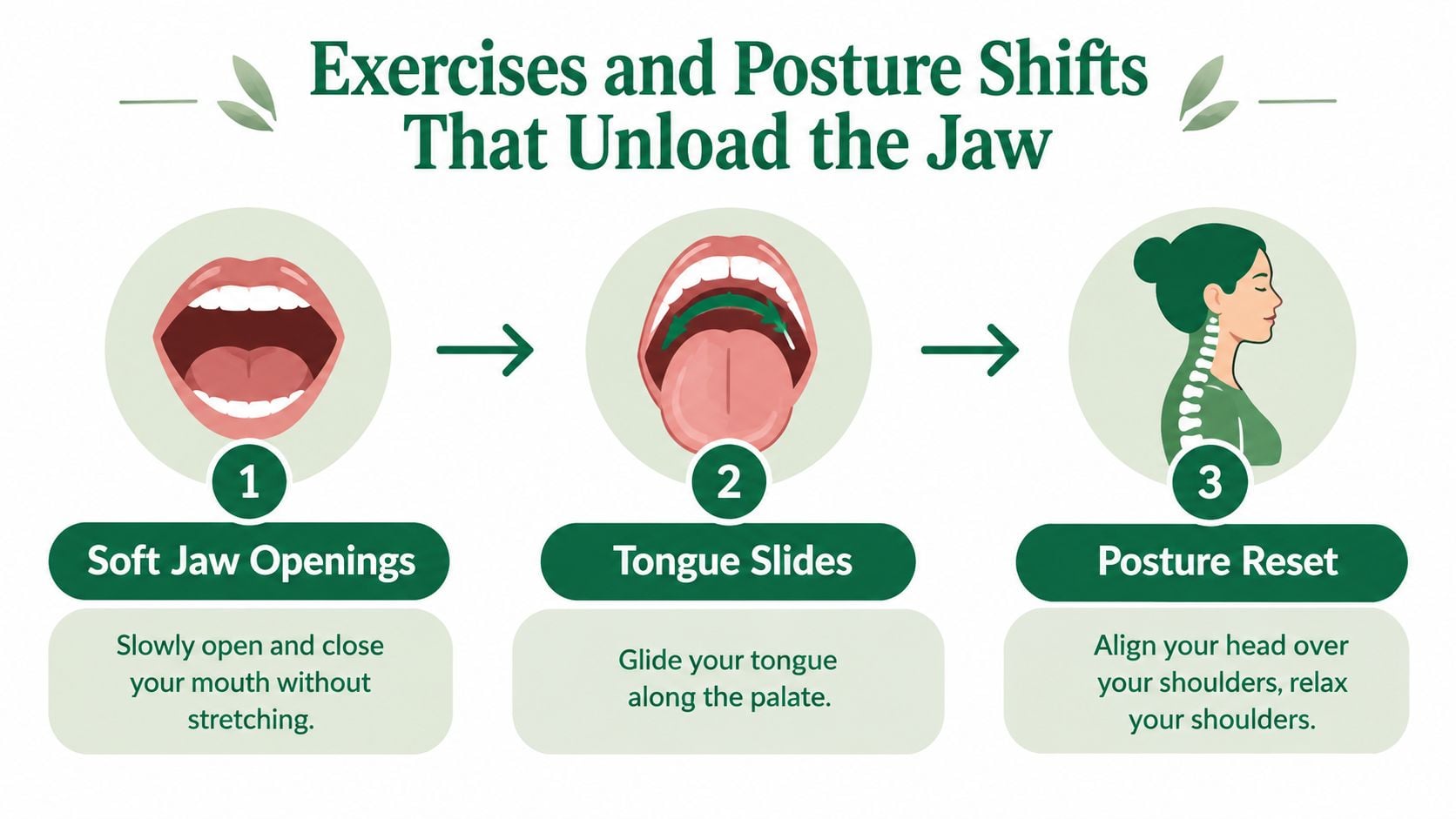
Exercises and Posture Shifts That Unload the Jaw
Once the muscle is calmer, the next goal is better control. Gentle jaw movement should stay inside a comfortable range. It is meant to restore smooth motion, not stretch the jaw hard or chase soreness. A conservative plan also has to address the habits that keep reloading the masseter, especially daytime clenching and sleep-related strain.
Keep the movements easy
A pain-free jaw routine usually starts with controlled opening, small lateral glides, and posture resets. The movements should feel smooth and unremarkable, which is the point. If they create sharp pain, more guarding, or a worse bite feeling afterward, they are too aggressive.
Clinical research supports that self-management can do more than a long exercise list when it is followed consistently. In a randomized clinical trial of 54 adults with DC/TMD-defined masticatory muscle myalgia, self-management reduced pain, improved opening, and helped function, with gains showing up early and lasting through 10 weeks. Adding home exercises did not produce a clear short-term advantage over self-management alone, which is a reminder that unloading habits matter more than piling on drills.
Posture changes jaw load
Head position changes jaw load. A forward head, tight shoulders, or a chin jutting toward a screen can retrigger clenching. A simple chin-tuck reset, head stacked over shoulders, and relaxed shoulder position can reduce pressure on the jaw muscles without forcing the bite.
For some readers, body-based calming also helps the jaw stay softer during the day. A practical body-based relaxation guide for therapy clients can complement jaw work when overall tension runs high, as long as the jaw itself stays in a pain-free range.
The same logic applies at a workstation and at night. A pillow that forces the neck into a strained position can keep the jaw braced. Small setup changes often do more than a long stretch routine.
Use function as the guide
A massage can feel good and still be too much if it causes next-day soreness. Exercises should be judged the same way. If opening gets easier, chewing feels less tiring, and the jaw rests more calmly, the plan is working. If symptoms worsen, the load needs to come down.
For a fuller walkthrough of this conservative sequence, see TMJ care and treatment options.
The practice at Pain and Sleep Therapy Center in Newark and Bryn Mawr uses this same conservative logic in jaw care, with exercise, manual therapy, and root-cause assessment folded into one plan when appropriate.
Address Awake Clenching and Sleep Drivers
Some masseters keep tightening because the habit is happening all day, and some keep tightening because sleep is part of the problem. Awake bruxism is a stress- and focus-related motor behavior, which means people brace their jaw during concentration, not just during visible stress. A 2025 clinical study found that awake bruxism was independently associated with perceived stress, with an odds ratio of 1.15 per unit increase in stress score. That study also found that TMD patients with sleep bruxism had more severe symptoms, poorer sleep quality, and greater psychological distress.
Daytime clenching can be monitored
Awake clenching is one of the easiest things to modify because it can be noticed in real time. A cue-based routine works better than trying to remember the problem once a day. Set a reminder, notice tooth contact, relax the tongue, and reset the jaw several times during tasks that usually trigger bracing, like emails, driving, or concentration-heavy work.
That kind of monitoring helps separate what can be changed quickly from what probably needs a broader evaluation. If the jaw softens during the day but still feels sore every morning, nighttime factors deserve more attention. If pain is strongest during stressful meetings or screen work, awake clenching is probably a major contributor.
Don't guess about sleep apnea
Jaw tightness alone cannot diagnose obstructive sleep apnea. The American Academy of Sleep Medicine says diagnosis should happen with a thorough sleep evaluation and follow-up, and adults with signs of possible moderate-to-severe obstructive sleep apnea may need laboratory polysomnography or an adequate home sleep apnea test in the right clinical setting. If a home test is negative, inconclusive, or technically inadequate, polysomnography is recommended instead. Sleep apnea testing guidance matters because jaw symptoms can overlap with sleep problems without proving them.
Know which symptoms deserve a sleep evaluation
A few patterns deserve extra attention.
- Loud snoring, witnessed pauses, or gasping: These are stronger sleep-breathing clues than jaw tension alone.
- Persistent morning headaches: These can overlap with sleep fragmentation and bruxism.
- Visible tooth wear: This may suggest ongoing grinding.
- Unrefreshing sleep or excessive daytime sleepiness: These are not explained by a tight masseter on their own.
For readers who also notice head pain, the question is often broader than jaw tension. The jaw can be part of the headache pattern, which is why the topic of jaw clenching and headaches deserves attention when the symptoms travel beyond the cheek.
A Two to Ten Week Tracking Plan
A useful masseter plan needs checkpoints, or it turns into guesswork. Day one should establish a baseline for pain, maximum comfortable opening, and the main functional triggers. That way, changes over time are visible instead of vague. Conservative TMD care often works best when it's followed consistently and adjusted as the jaw responds.
Start with a simple log
The first note should be short. Rate pain from 0 to 10, note how far the mouth opens comfortably, and record what tends to trigger clenching. That might be computer work, chewy food, stress, or morning soreness. The point is to make the pattern measurable without turning self-care into a full-time job.
At the two-week mark, review the same three items. Pain should feel less intrusive, opening should feel less guarded, and the jaw should catch less often during the day. If nothing is changing, or if symptoms are worsening, that's a sign to stop improvising and get evaluated.
Check the pattern again at six and ten weeks
At about six weeks, the question shifts to posture, sleep, and habits. Is daytime clenching improving? Is the jaw softer in the morning? Is sleep still fragmented? If symptoms are still tied to nighttime issues, a sleep and jaw evaluation can be more efficient than adding more home tricks.
By ten weeks, persistent pain, locking, reduced opening, swelling, or bite changes should not be ignored. Those features belong in a professional exam, not in a longer self-treatment loop. Conservative care is still the right starting point, but it has a limit when the pattern isn't improving.
Stop and get evaluated if the jaw locks, the bite changes, or opening gets worse instead of better.
Patients in Newark, Wilmington, Bryn Mawr, and the Philadelphia Main Line often do well with a root-cause review when the problem has become chronic. That review can sort out muscle overuse, joint irritation, sleep-related bracing, and other contributors before the pain becomes the new normal.
Questions Readers Usually Ask Next
A sore masseter after massage should settle, not spiral. Mild tenderness for a short time can happen, but pain that keeps increasing, locking, swelling, or a changing bite needs a clinician's attention. A day or two of mild soreness is different from a jaw that feels worse every time it's touched.
Online night guards can be a mixed bag. Some people feel temporary protection, but a poorly fitting appliance can add strain or mask a bigger issue. A custom approach is safer when clenching, headaches, or jaw symptoms are ongoing.
Braces or bite adjustments are not a shortcut for masseter tension. The muscle usually needs behavior change, load management, and often a broader TMD evaluation. Changing the teeth without understanding the cause can miss the reason the jaw is bracing in the first place.
A tight masseter does not mean sleep apnea is inevitable. It can be a clue that sleep needs a closer look, especially when snoring, witnessed pauses, or morning headaches are also present. For readers who notice jaw popping too, this overview of jaw popping can help separate joint noise from muscle tightness.
Pain and Sleep Therapy Center helps patients in Newark, DE and Bryn Mawr, PA sort out jaw tension, headaches, clenching, and sleep-related contributors with conservative, root-cause care. If the masseter keeps tightening despite good self-care, visit Pain and Sleep Therapy Center or call Newark at (302) 239-1757 to Request an Appointment or Take our Sleep Quiz.