Does jaw pain after a dental appointment mean the bite was changed, or could the muscles be sore from holding the mouth open? That distinction matters because similar symptoms can need very different care.
TMJ means temporomandibular joint, the joint connecting the lower jaw to the skull. TMD, or temporomandibular disorders, describes problems involving that joint, the chewing muscles, or both. TMJ pain after dental work deserves attention, but it doesn't automatically mean the joint was damaged or that teeth need permanent adjustment.
Table of Contents
- How Long Jaw Soreness After Dental Work Should Last
- Self-Care Steps for the First Two Weeks
- Why Dental Work Can Set Off TMJ Pain
- What to Check With Your Dentist About Your Bite
- How to Protect Your Jaw at the Next Dental Visit
- Conservative Options Clinicians May Consider
- Book an Evaluation If Symptoms Persist
How Long Jaw Soreness After Dental Work Should Last
| Timeframe | What is usually expected | When to contact your dentist or clinician |
|---|---|---|
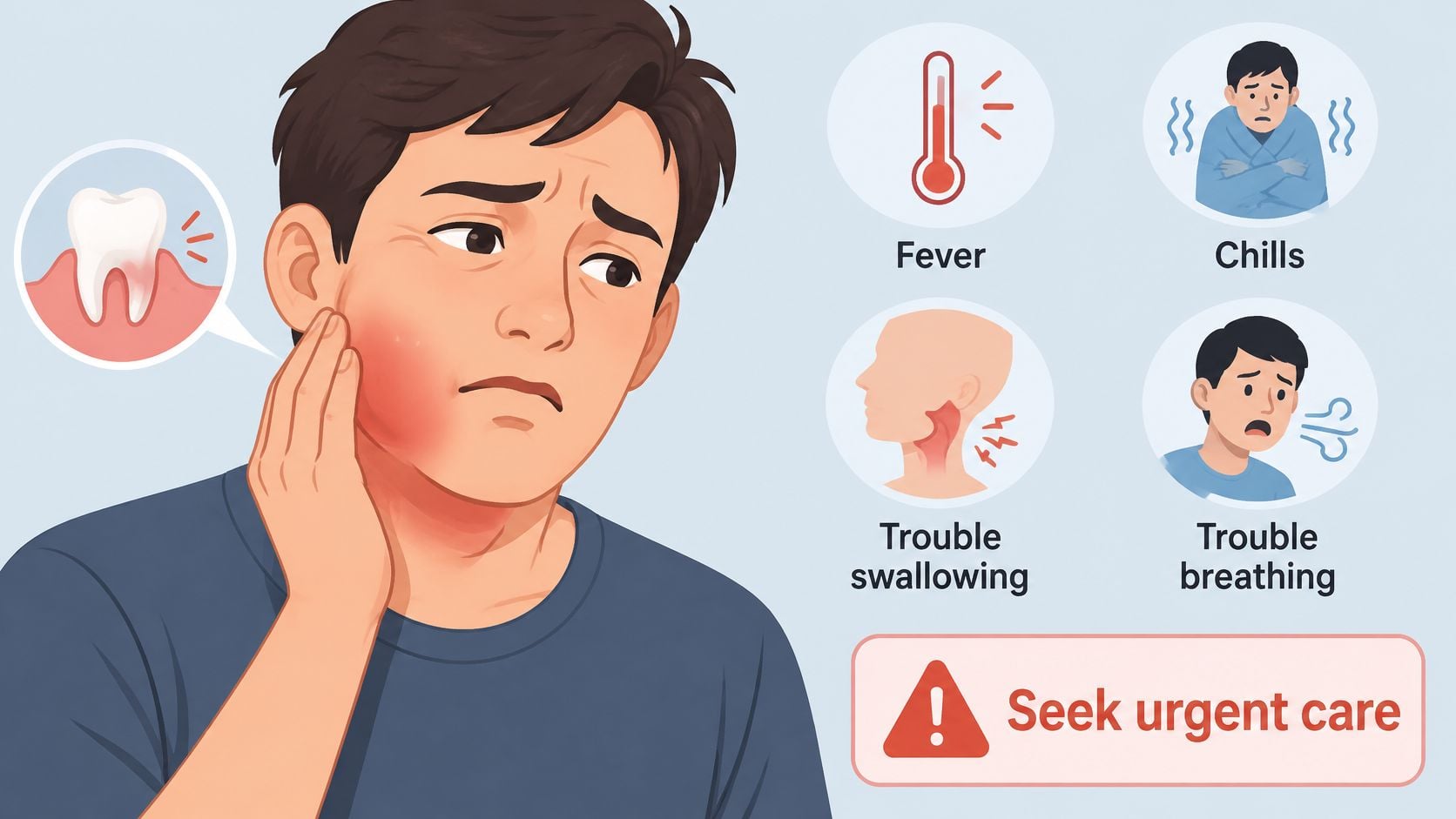
| Days 1–3 | Tenderness after a long appointment, wide opening, injections, extraction, or a deep filling; soft foods may make eating more comfortable | Pain is rising, swelling is growing, or fever, spreading swelling, or pus develops. Trouble breathing or swallowing requires emergency care |
| Days 4–14 | Soreness should generally trend downward as comfortable chewing returns, although procedure-specific healing continues | Pain isn't improving, a tooth hurts when biting, the bite feels newly uneven, or eating remains difficult |
| Weeks 3–6 | Occasional stress- or clenching-related flares may occur, but should be less intense than the early discomfort | Pain persists or still limits eating, talking, or sleep |
| After 6 weeks | Most straightforward procedure-related soreness has settled; remaining pain may involve another or pre-existing condition | Request a full evaluation rather than continuing to wait |
These windows count from the appointment day. The table is a guide, not a diagnosis or a deadline for healing. An extraction, a deep filling, and muscle strain don't heal in exactly the same way, and the treating dentist's procedure-specific instructions take priority.
The most useful distinction is improvement versus deterioration. Less tenderness, easier meals, and more comfortable opening suggest progress. Increasing pain, a tooth that hurts with every bite, or steadily shrinking mouth opening deserves a call sooner, regardless of the calendar.
Why persistent pain needs a different approach
A peer-reviewed review available through the National Library of Medicine estimates persistent postsurgical pain after dental surgery at approximately 4%–5% overall and reports that 3.4% of cases in a review of root-canal-treated teeth involved non-tooth pain lasting at least six months. These findings describe persistent pain, not the expected duration of ordinary soreness after every dental appointment.
Pain can remain even when no continuing tooth disease is found. Possible contributors include muscle pain, an existing TMD, or nerve-related pain, so repeating dental treatment without identifying the source may miss the problem.
Practical rule: A worsening symptom matters more than whether a particular recovery window has passed.
The center's explanation of how long TMJ pain lasts provides additional context about variable recovery. Recording the procedure date, symptom onset, and changes on a calendar gives the clinician a clearer timeline at the visit.
Self-Care Steps for the First Two Weeks
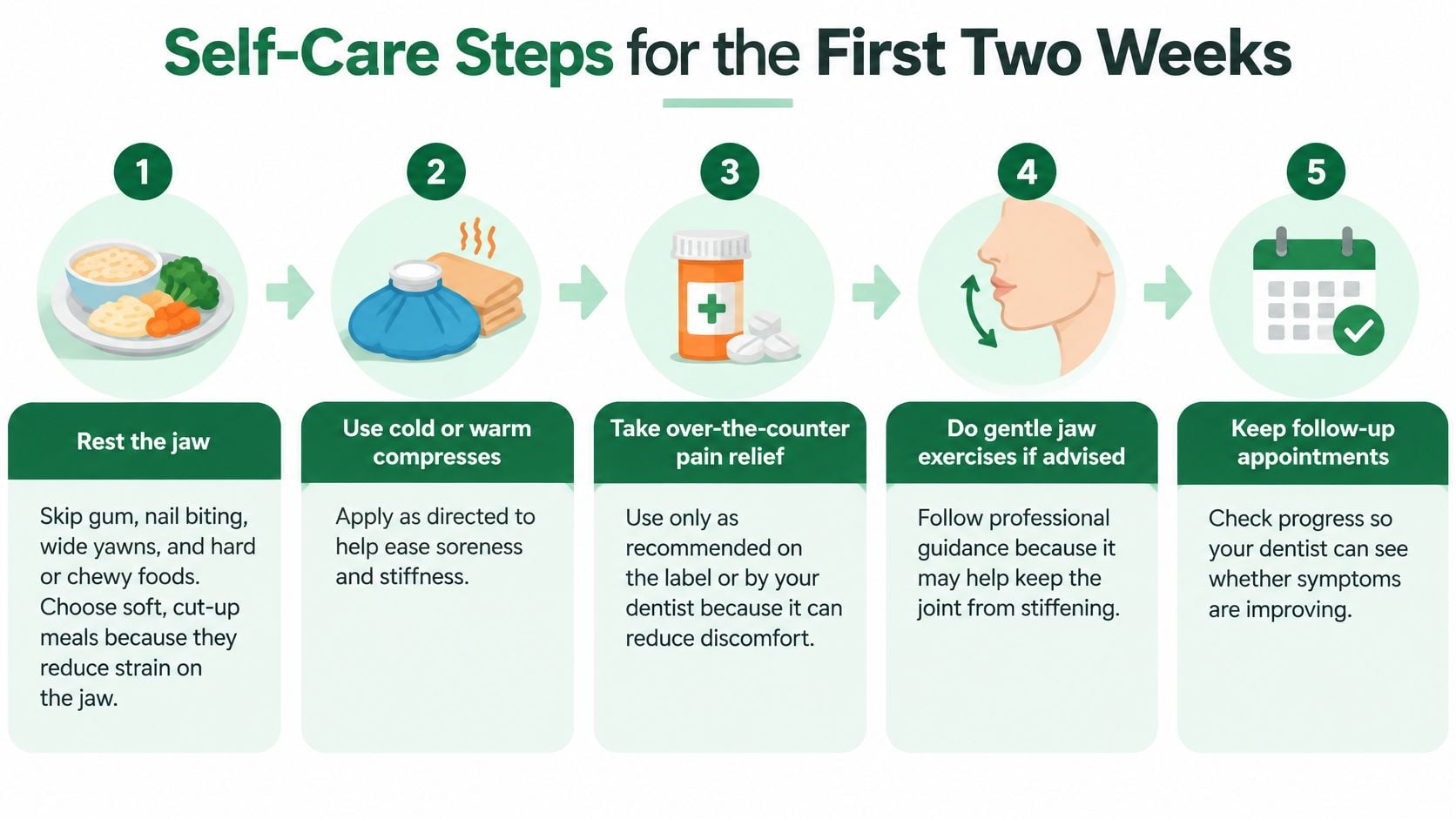
Early care should make the jaw more comfortable without forcing movement or permanently changing the teeth. The National Institute of Dental and Craniofacial Research's conservative-care guide supports starting with simple, reversible measures rather than moving straight to invasive treatment.
A gentle daily routine
Reduce chewing strain. Soft, cut-up meals such as scrambled eggs, cooked vegetables, or tender fish require less effort than crusty bread or chewy meat. Skipping gum, nail biting, and wide yawns reduces repeated loading while irritated muscles settle.
Choose comfortable warmth or cold. A cloth-wrapped pack over the painful cheek for about 10–15 minutes at a time may ease soreness or muscle tension. The pack shouldn't feel painfully hot or cold, and extraction-specific instructions take priority.
Keep movement gentle. If the dentist or therapist advises it, comfortable opening and small side-to-side movements a few times daily may help limit stiffness. Movement should stop before pain rises, and a jaw that catches or locks shouldn't be forced.
Practice a relaxed resting position. Lips can rest lightly together, with teeth apart and the tongue resting gently against the roof of the mouth. Keeping the teeth separated reduces the sustained pressure of daytime clenching.
Notice bracing habits. Jaw tightening may happen during driving, computer work, or stressful conversations, so reminders can prompt a brief relaxation check. Nighttime grinding can't be interrupted by willpower, but morning soreness or a partner's observations belong in the symptom history.
Use medication cautiously. An over-the-counter pain reliever should be taken only according to its label or a clinician's directions, with advice first for people taking blood thinners or living with relevant medical conditions. At Pain and Sleep Therapy Center, drugs support the outcomes of more definitive TMJ treatments and therapies; drugs alone cannot solve TMJ issues.
Track function along with pain. A daily log can record pain from 0 to 10, comfortable opening without forcing, foods that hurt, and stressful days. Reviewing the log after two weeks, or sooner if symptoms worsen, helps distinguish meaningful progress from repeated flares.
What improvement looks like
Easier chewing, less interference with sleep, and more comfortable movement matter more than making every joint sound disappear. A painless click isn't a reason to push exercises harder or repeatedly test the jaw.
Teeth should never be filed, ground, or self-adjusted at home. Those changes are irreversible, and most early jaw soreness doesn't require them.
Why Dental Work Can Set Off TMJ Pain
Dental treatment can precede jaw pain through different routes. Separating them helps prevent both dismissal of a genuine dental problem and unnecessary treatment of an assumed bite problem.
- Temporary strain: A long appointment with sustained opening can irritate chewing muscles or the joint. Broad cheek or temple soreness after treatment fits a different pattern from pain isolated to a single tooth.
- An acute contact problem: A new filling or crown may contact before neighboring teeth. Pain when chewing on that restoration warrants a dental check, not an assumption that the entire jaw needs repositioning.
- A coincidental onset or flare: Clenching, stress, sleep problems, or earlier joint symptoms may already have been developing. The appointment may aggravate symptoms or make them more noticeable.
Timing is a clue, not proof
A review of TMD epidemiology and contributing factors reports population estimates reaching 13% for chewing-muscle pain, 16% for disc-displacement disorders, and 9% for TMJ pain disorders using standardized research criteria; it also notes disc displacement on MRI in as many as 35% of people without symptoms and describes a 2022 orthodontic review's association estimate of 1.84, while emphasizing that causation isn't firmly established. These findings don't show that routine dental care causes TMD in every patient.
A displaced disc means the small cushioning structure within the joint isn't in its usual position. Because that finding can occur without pain, a scan alone can't establish what caused new symptoms.
Pain beginning after an appointment deserves investigation, but the sequence alone doesn't identify the cause.
The history should establish whether pain began during treatment, immediately afterward, or later. Earlier clicking, chronic headaches, facial pain, or morning jaw fatigue also matter. A thorough evaluation considers muscle overuse, sustained opening, joint irritation, clenching, and nerve-related symptoms rather than assigning every complaint to a permanently altered bite.
What to Check With Your Dentist About Your Bite
A useful visit starts with the procedure date, when pain began, its location, and the activities that reproduce it. A tooth that hurts when biting needs a different investigation from a sore temple or pain directly in front of the ear.
The National Institute of Dental and Craniofacial Research's TMD guidance explains that no single universally accepted test diagnoses TMD. The clinician needs the history, examination, and functional findings together.
A checklist for a meaningful examination
- Teeth and restorations: The dentist checks the treated tooth, surrounding tissues, and the new filling or crown. Marking contacts during closing and side movements helps establish whether a suspected high spot is reproducible and linked to the pain.
- Muscles and joints: Gentle pressure over the cheeks, temples, and joints helps locate tenderness and determine whether it reproduces familiar symptoms.
- Opening and movement: Comfortable and maximum opening, movement direction, catching, and painful joint sounds help document function. Maximum opening should be measured clinically rather than forced at home.
- Head and neck: Tenderness or restricted neck movement may contribute to the overall pain pattern and influence referral decisions.
For readers separating cavity care from joint care, the resource to find treatment for cavities from Dr. Michael's Dental Clinic provides background on fillings. It doesn't establish whether a particular restoration is causing jaw pain.
Imaging should answer a clinical question
Pain and Sleep Therapy Center's diagnostic process includes patient history and interview, physical examination, range-of-motion measurement, joint sounds or vibrations, and joint hard-tissue images. Sleep diagnostics and hospital-based soft-tissue diagnostics may be included when needed.
A 3D cone beam scan, which shows bone, should be ordered when its findings can change the plan. MRI is better suited to the disc and other soft tissues. Neither replaces an examination or proves that dental work caused the pain.
Before any proposed adjustment, useful questions include:
- Supporting finding: Which examination result connects the bite contact to the symptoms?
- Reversible alternative: Is a monitored trial possible before changing teeth?
- Earlier review: Which changes require a return visit sooner?
The center's discussion of jaw realignment can help clarify terminology before that conversation.
How to Protect Your Jaw at the Next Dental Visit
A future appointment can be planned around comfortable jaw positioning rather than an assumption that a bad bite explains every flare. A biomechanical paper on dental procedures and jaw positioning discusses sustained, patient-specific opening as a relevant concern during demanding treatment.
Visit-day actions
- Share the jaw history before treatment. Prior locking, painful clicking, headaches, and procedures that triggered symptoms help the dentist plan.
- Request jaw rests during lengthy work. A bite block or suitable support may reduce muscular effort, provided its position remains comfortable rather than forcing maximum opening.
- Agree on a stop signal. A raised hand gives the patient a clear way to request a break before strain becomes difficult to tolerate.
- Plan a lighter recovery period. Soft meals and comfortable compresses after lengthy treatment can reduce immediate demands on the jaw.
- Report a newly high restoration. A contact check is safer than repeatedly testing the tooth or attempting home adjustment.
- Separate dental needs from TMD treatment. Crowns, braces, or broad bite changes shouldn't be started solely to treat jaw pain without a clear diagnosis.
For appointment preparation, patients can explore routine dental treatments through Littleover Dental Practice's overview, then discuss likely treatment demands with the treating dentist.
A planned pause is easier to arrange before treatment than after the jaw becomes uncomfortable.
Patients in Newark and Wilmington, Delaware, and Bryn Mawr and the Philadelphia Main Line can mention previous procedure-related flares when booking.
Conservative Options Clinicians May Consider
The options below share one trait worth noticing: each can be paused, adjusted, or undone if it fails to help.
| Option | What it involves | Reversible | Evidence picture |
|---|---|---|---|
| Self-care and education | Soft diet, heat or cold, jaw rest, habit changes | Yes | First-line care in the peer-reviewed TMD discussion cited below |
| Physiotherapy and jaw exercises | Guided movement and muscle work | Yes | Part of the same conservative, coordinated approach |
| Removable occlusal splint | Clinician-selected device used as a time-limited trial | Yes, when designed as reversible | May help selected muscular cases; tested alongside laser therapy in the trial below |
| Low-level laser, or photobiomodulation | Noninvasive light therapy used as an adjunct | Yes | Short-term pain benefit in the systematic review below; protocols vary |
| Permanent bite adjustment or crowns for TMD | Irreversible tooth reshaping or restorations | No | Not supported as routine TMD treatment; may worsen symptoms |
Education and load reduction usually come first because they can be adjusted without changing the teeth. Guided physiotherapy may then address muscle tenderness, jaw movement, and related neck function. A peer-reviewed discussion of TMD care and patient experiences supports this kind of conservative, coordinated management and cautions against irreversible approaches that lack support.
Splints and laser therapy need individual selection
An occlusal splint is a removable device intended to manage loading or support jaw function. Its design, fit, and effect on symptoms require clinical monitoring; a generic device is not interchangeable with an individually selected appliance. When a splint becomes part of ongoing maintenance, it is anticipated to need replacement in five to seven years, sooner for heavy bruxers and clenchers or for people who do not take care of the appliance.
Photobiomodulation, also called low-level or cold laser therapy, uses light as a noninvasive adjunct. A systematic review of 31 randomized controlled trials found pooled results favoring laser over placebo for short-term pain relief and some jaw-function measures, although treatment doses and protocols differed. That variation limits predictions for any individual patient or device.
A randomized trial comparing laser therapy, a splint, and their combination reported pain reduction in the laser-containing groups, with combined treatment outperforming splint-only care during the first two weeks. That result supports trying a combined approach in selected cases while keeping expectations tied to the individual pain source.
A trial needs a reassessment plan
Educational descriptions of dental treatment for TMJ disorders from Inspire Dental Group and the center's overview of new TMJ treatments can support a conversation about options, though selection still rests on the pain source and the examination findings.
One situation remains mechanical rather than therapeutic: adjusting a confirmed high contact on a new restoration restores the bite that existed before the appointment. Short-term medication, when used at all, exists to improve the results of the therapies above, since drugs alone cannot solve a TMJ problem.
Pain and Sleep Therapy Center takes every possible precaution to protect occlusion, meaning how the teeth meet, and the TMJ itself, yet consequences in these areas remain possible. A time-limited reversible trial with a clear reassessment date lets the clinician judge benefit, discomfort, and functional change before anything permanent is considered.
Book an Evaluation If Symptoms Persist
Trouble breathing or swallowing requires emergency care now, not a routine appointment. Jaw pain paired with fever or chills, spreading facial or under-jaw swelling, pus, or a bad taste near a tooth points toward infection and needs urgent assessment.
A suddenly locked jaw or new facial numbness or weakness needs prompt medical or dental evaluation. Sudden facial weakness, particularly with speech difficulty or other neurological changes, warrants emergency care.
These patterns sit outside ordinary post-appointment soreness.
Persistent symptoms deserve an explanation
For nonurgent cases, pain that disrupts eating, sleep, or work deserves a scheduled evaluation rather than repeated waiting. An unchanged pattern beyond the expected recovery period also warrants review, even when the pain is not severe.
Dr. Ryan Robinson, a triple board-certified specialist in craniofacial pain and dental sleep medicine, leads Pain and Sleep Therapy Center's root-cause approach. An evaluation typically includes a physical examination, measurement of jaw range of motion, assessment of joint sounds, a patient history and interview, and imaging of the joint's hard tissue when indicated. A 3D CBCT scan of the jaw joint is frequently part of that workup, and patients may be referred to a diagnostic imaging center to have it completed. The findings are weighed across dental, muscle, joint, and related contributors before invasive options enter the discussion.
No outcome can be promised. Headache occurrence frequently improves with therapy, but the center does not guarantee that TMJ appliances will solve headaches.
Sleep symptoms belong in the history
Grinding, loud snoring, and unrefreshing sleep should be reported alongside jaw symptoms. More than 60% of patients with TMJ issues have obstructive sleep apnea, so a sleep study may be suggested during TMJ therapy. Sleep apnea requires a sleep study and diagnosis by a physician; a questionnaire alone cannot diagnose it. The Sleep Quiz can help patients identify questions for that discussion.
Pain and Sleep Therapy Center offers root-cause evaluation of jaw, head, and facial pain, with conservative options such as orthotic therapy, cold laser therapy, lifestyle modifications, and coordinated care when appropriate. For persistent TMJ pain after dental work, visit Pain and Sleep Therapy Center to Request an Appointment or Take our Sleep Quiz.