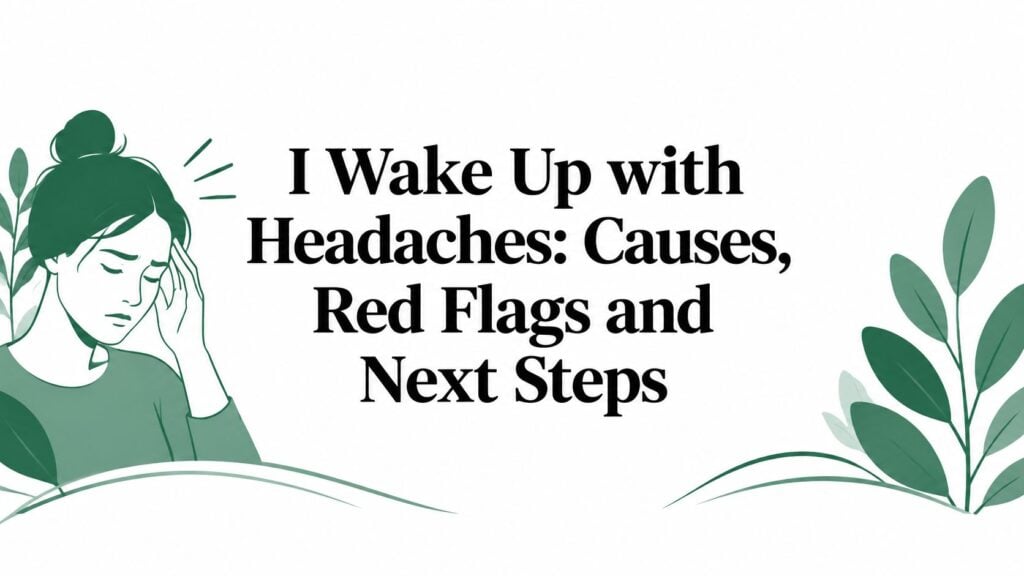
Does a headache on waking really point to a sleep problem, or could the jaw, medication use, and migraine be part of the same picture? The timing is a clue, not a diagnosis. A useful evaluation looks beyond the pain itself to what happens during sleep, how the jaw feels in the morning, and which medicines are being taken.
For adults searching for answers about waking headaches, the first goal isn't choosing a device or changing a pillow. It's identifying the pattern, checking for warning signs, and choosing the right kind of assessment.
Table of Contents
- Common Causes of Morning Headaches at a Glance
- When Morning Headaches Need Urgent Care
- How Sleep Apnea and Snoring Can Cause Waking Headaches
- How Clenching and Jaw Problems Cause Morning Pain
- Medications, Poor Sleep and Migraine as Other Triggers
- How to Confirm the Cause Through Testing
- Choose Your Next Step for Morning Headaches
Common Causes of Morning Headaches at a Glance
Morning headaches are relatively common, and several possible contributors can overlap. A 2004 general-population study of 18,980 people published in JAMA Internal Medicine found that 7.6% reported waking with headaches at least sometimes.
Morning headache causes, typical clues and first checks
| Likely cause | Typical clues | First check |
|---|---|---|
| Sleep apnea | Loud snoring, witnessed breathing pauses, gasping, daytime sleepiness, dry mouth on waking | Sleep screen, then a physician-led sleep study |
| Sleep bruxism and TMD | Jaw stiffness, tooth wear, temple tenderness, headache near the temples | Exam of jaw muscles and joints |
| Poor or fragmented sleep | Frequent waking, unrefreshing sleep, headaches after stressful nights | Sleep log and sleep habit review |
| Medication overuse | Pain relievers taken on many days each month | Track doses and discuss with the prescriber |
| Migraine or tension-type headache | Throbbing or pressing pain, light or sound sensitivity, nausea | Headache diary and medical evaluation |
| Alcohol or caffeine timing | Headache after evening drinks or an overnight caffeine drop | Note intake times in a log |
| Nasal obstruction | Stuffy nose, mouth breathing, congestion on waking | Physician or ear, nose and throat specialist review |
How to Read the Clues
Sleep bruxism means repeated jaw-muscle activity during sleep, often clenching or grinding. Temporomandibular disorder, or TMD, refers to conditions involving the jaw joints and the muscles that move the jaw. These are related possibilities, but they aren't interchangeable diagnoses.
The most useful clue is often what accompanies the headache. Temple pain with painful chewing suggests a different starting point from head pain with gasping and daytime sleepiness. Throbbing pain with nausea deserves medical attention even when snoring is also present.
A person may match several rows. For example, someone working changing shifts might sleep poorly, clench during stressful nights, and take pain relievers frequently. Treating only the jaw could leave the sleep and medication patterns unaddressed.
Practical rule: Choose the first check from the accompanying symptoms, not from the fact that the headache happens in the morning.
The table provides a starting map, not a diagnosis. Persistent symptoms deserve a coordinated review rather than a series of unrelated home experiments. A clinician can help separate a likely contributor from something that happens alongside the headache.
When Morning Headaches Need Urgent Care
Emergency care is needed for a sudden severe headache, or a headache accompanied by confusion, fainting, weakness, speech or vision problems, seizures, fever, or a stiff neck.
Warning signs by how quickly to act
| Urgency | Warning signs | What to do |
|---|---|---|
| Emergency now | Sudden severe headache, confusion, fainting, weakness, speech or vision problems, seizure, fever with stiff neck | Call emergency services or go to the nearest emergency department |
| Prompt medical visit | New, progressive, positional or exertional headache, headache after a head injury, or headaches that don't respond to appropriate over-the-counter treatment | Arrange a medical assessment without delay |
| Routine evaluation | Recurring waking headaches without the signs above | Keep a log and book a visit with a physician, sleep specialist or TMD specialist |
| Self-monitoring | Occasional, brief waking headache that eases with sleep or habit changes | Track the pattern and share it at the next visit |
Why a Changing Pattern Matters
A positional headache changes noticeably with sitting, standing, or lying down. An exertional headache starts with physical effort. These patterns, a headache after injury, or pain that steadily worsens should be assessed rather than managed with home remedies alone.
The same applies when headaches become more frequent, interfere with work or ordinary activities, or no longer respond to the person's usual appropriate treatment. Waiting for the pain to become unbearable isn't a useful safety rule. A meaningful change from the person's usual pattern is enough reason to contact a physician.
Routine evaluation still matters when there's no emergency. Repeated waking pain can affect concentration, mood, and daily function, even when it fades later in the morning. Improvement after getting out of bed doesn't establish the cause.
Headache Intensity Doesn't Measure Sleep Apnea
A severe waking headache doesn't automatically mean a dangerous oxygen drop or severe sleep apnea. A study of patients referred for suspected sleep apnea found no clear association between morning headaches and either sleep apnea severity or nighttime oxygen reduction.
That distinction helps prevent both alarm and false reassurance. A mild headache can still deserve assessment when breathing pauses accompany it, while severe pain may have a cause unrelated to apnea.
Most waking headaches aren't emergencies. The warning signs, the change over time, and the accompanying symptoms determine the next step, not morning timing alone.
How Sleep Apnea and Snoring Can Cause Waking Headaches
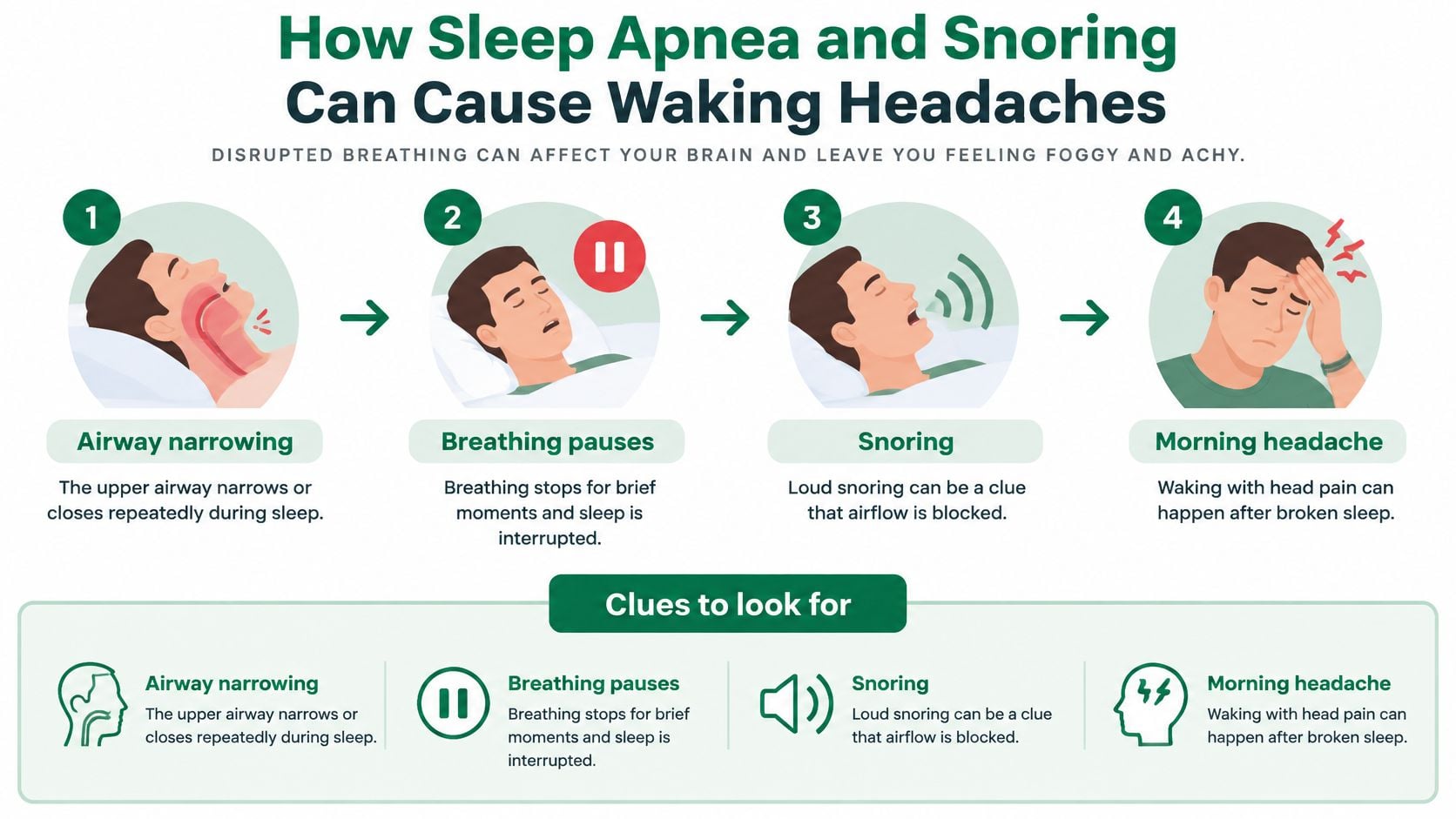
A waking headache can be one clue among several when sleep-disordered breathing is possible. Obstructive sleep apnea (OSA) occurs when the upper airway repeatedly narrows or closes during sleep, interrupting breathing. The body may briefly wake to reopen the airway, even if the person doesn't remember waking.
Look for a pattern across the night and the day: loud habitual snoring, gasping, or breathing pauses noticed by a bed partner; sleep that feels unrefreshing; daytime sleepiness, fatigue, or trouble concentrating; and recurring morning head pain, sometimes with dry mouth. These clues can guide a conversation with a clinician, but symptoms alone cannot diagnose OSA.
What the Headache Evidence Means
A 2023 systematic review and meta-analysis found headaches in about 33% of people with OSA. Its pooled estimates were 33% for morning headache, 25% for sleep-apnea headache, 19% for tension-type headache, and 16% for migraine. These categories describe different headache patterns and shouldn't be added together.
The same review estimated a relative risk of 1.43, though its broad confidence interval included no statistically certain difference between people with and without OSA. Apnea is a possible contributor, and the data cannot show that it explains an individual's pain.
Some headaches associated with sleep apnea are brief and felt on both sides. In a polysomnography-based study of awakening headaches, they were typically shorter than 30 minutes. This pattern can inform an assessment, but it isn't a home diagnostic test.
Looking Beyond Snoring
Snoring alone doesn't establish apnea, and a headache alone cannot diagnose or grade it. A guide to warning signs beyond loud snoring can help you identify other symptoms to discuss at an appointment.
Daytime fatigue also needs context. Consider whether it occurs alongside nighttime breathing clues, as described in this overview of sleep apnea and chronic fatigue.
In adults, restricted tongue mobility from a tongue tie can contribute to sleep-disordered breathing, snoring, and head, neck, or shoulder discomfort. A tongue tie doesn't mean that every person will develop apnea or need a procedure.
Sleep apnea is confirmed with a sleep study, either an overnight polysomnography (PSG) in a sleep facility or a home sleep study when appropriate. Share observations about breathing pauses, gasping, snoring, and the timing and duration of headaches with the clinician arranging the evaluation.
How Clenching and Jaw Problems Cause Morning Pain
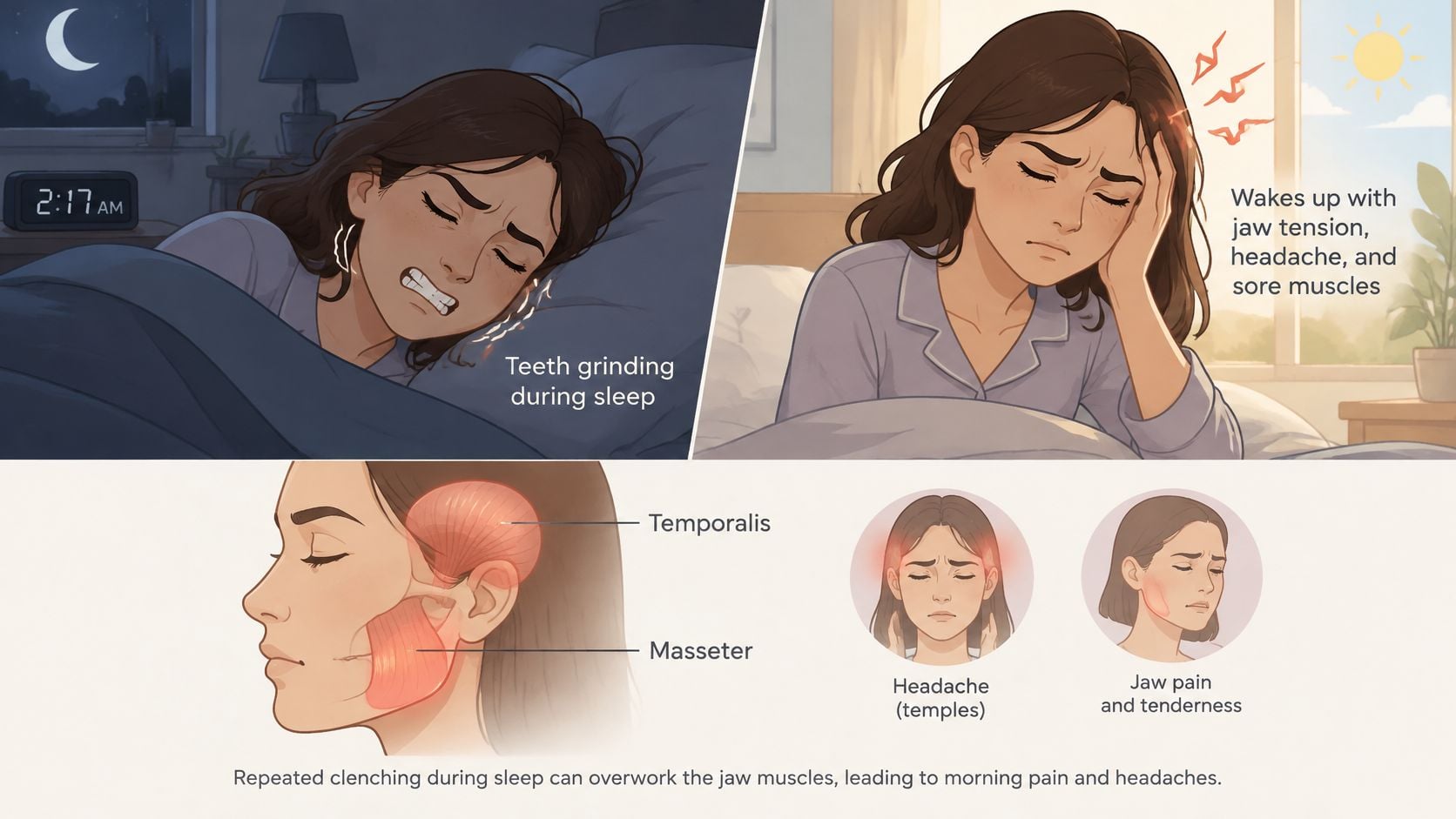
Morning jaw stiffness, sore chewing muscles, and tenderness near the temples make a jaw-related contribution worth checking. Other clues include tooth wear or sensitivity, limited mouth opening, cheek or tongue indentations, and headaches after stressful or poor-sleep nights.
During sleep bruxism, repeated clenching or grinding can fatigue the temporalis, a muscle at the temple, and the masseter, a strong chewing muscle along the cheek and jaw. Pain from these muscles may be felt in the temples rather than only in the jaw.
Separating Grinding from Painful TMD
TMD can involve jaw pain, facial pain, chronic headaches, and clicking or popping sounds. Joint noises are useful history, but they don't establish the source of a headache on their own.
A peer-reviewed study on sleep bruxism and morning headache supports assessing these symptoms together while recognizing overlap among bruxism, painful TMD, insomnia, and OSA. Grinding isn't an independent explanation for every morning headache.
One particularly useful distinction is whether chewing, clenching, or jaw movement changes the familiar temple headache. The Diagnostic Criteria for Temporomandibular Disorders include a headache modified by jaw function and reproduction of familiar pain during an appropriate examination. That's more specific than finding tooth wear.
What a Careful Jaw Examination Includes
The examination should connect symptoms with function:
- Map the pain. Record its location, timing, and relationship to chewing or waking.
- Examine muscles and joints. Gentle palpation checks whether the familiar pain can be reproduced.
- Assess movement. Measure mouth opening and observe restriction, movement patterns, and joint sounds.
- Review the bite and history. Include dental changes, prior injury, habits, and earlier treatment.
- Screen sleep. Breathing symptoms may change which treatment is appropriate.
Pain and Sleep Therapy Center's assessment process includes history, physical examination, range of motion, joint sounds or vibrations, and imaging when indicated. Some cases also require sleep diagnostics or specialized soft-tissue evaluation.
Further education about whether clenching teeth can cause headaches can help patients describe symptoms more precisely.
A dental guard should follow diagnosis, not replace it.
A nighttime appliance needs careful selection when sleep apnea is possible. An appliance intended for jaw protection or stabilization isn't automatically designed to treat breathing obstruction. Without checking the airway and joints, it may leave the underlying problem unaddressed or worsen breathing in some patients. Conservative care should address both jaw function and sleep findings.
Medications, Poor Sleep and Migraine as Other Triggers
If you wake with a dull headache and take pain medicine on most mornings, the pattern itself is worth discussing with a clinician. Frequent use of medicines intended for quick relief can contribute to medication-overuse headache and keep headaches recurring. A clinician can help review safe use, especially for prescription medicines.
Sleep disruption and migraine can also overlap. Insomnia, shift work, stress, alcohol near bedtime, late caffeine, or changes in regular caffeine intake may affect sleep or headache patterns. Waking with pain alone cannot identify the cause. Migraine, tension-type headache, and disturbed sleep are among the possibilities. Mayo Clinic's guidance on when to seek care for a headache recommends medical evaluation if headaches become more frequent or severe, do not improve with appropriate over-the-counter treatment, or interfere with normal activities.
Sleep Quality and Migraine Can Overlap
Nausea or sensitivity to light and sound may accompany a migraine-type headache, but a physician's assessment is needed to evaluate the pattern. If attacks keep returning, ask whether preventive treatment might be appropriate rather than repeatedly treating each episode. For people considering non-drug comfort aids, Evo Dyne Products offers information to explore migraine relief devices. A device is not a substitute for diagnosis, and it may not suit every headache.
Practical Measures While Awaiting Evaluation
Three habits are especially relevant to sleep timing: keep a steady wake time, avoid caffeine late in the day, and avoid alcohol near bedtime. A dark, cool bedroom and limiting screen use before sleep may also support a more regular routine. Eat heavy meals earlier when possible.
- Rest the jaw: When comfortable, keep the lips gently closed and the teeth apart. Avoid chewing gum.
- Review medicine use: Use acute pain relievers on as few days as practical, and ask the prescriber about safe limits. Do not stop prescribed treatment abruptly without advice.
A diary can help make overlapping clues easier to discuss:
- Pain: Start time, duration, location, and whether it feels pressing or throbbing.
- Other symptoms: Nausea, light or sound sensitivity, and hormonal changes.
- Sleep: Quality, awakenings, snoring, and daytime sleepiness.
- Intake and treatment: Caffeine, alcohol, and each acute medicine, including dose and frequency.
These notes can help a clinician consider whether medication use, sleep habits, migraine features, or a combination deserves attention. Habit changes support that review, but do not replace it.
How to Confirm the Cause Through Testing
Testing is most useful when the clinical question is clear. A breathing study evaluates sleep-related breathing, while a jaw examination evaluates muscle and joint function. Neither automatically explains every kind of headache.
A Practical Assessment Sequence
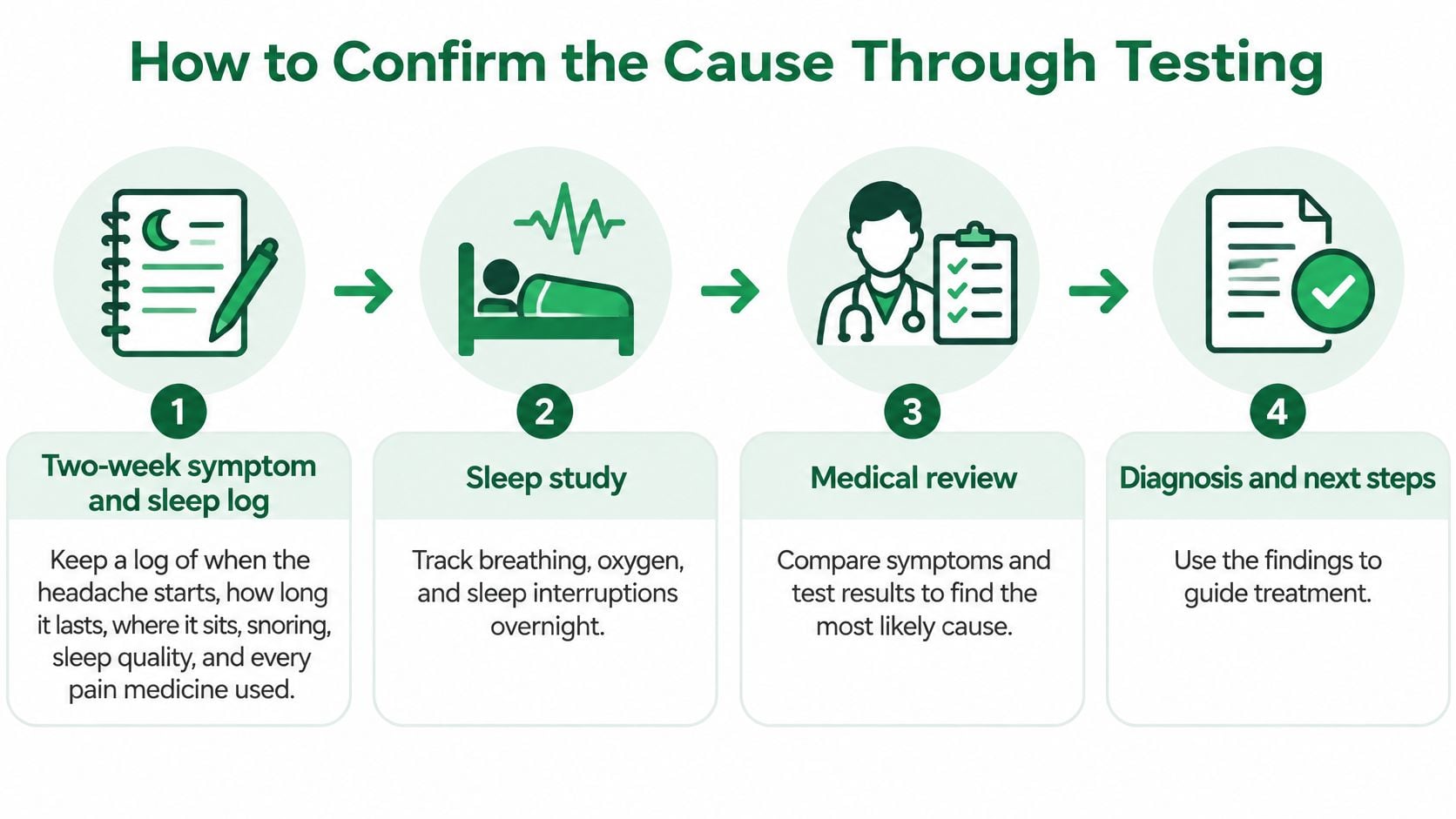
- Keep a symptom and sleep log. A two-week record is a practical starting point for documenting headache timing, duration, location, sleep quality, snoring, and pain-reliever use. The pattern helps guide the assessment.
- Complete a sleep screen. Pain and Sleep Therapy Center's online Sleep Quiz helps identify whether breathing symptoms deserve closer attention. It isn't a diagnostic test.
- Arrange a physician-led sleep evaluation. The physician selects home or laboratory testing based on symptoms and medical history.
- Add a jaw examination when indicated. Clenching, stiffness, painful chewing, or temple tenderness warrant assessment of the muscles and joints.
- Review the findings together. Treatment should address the likely contributors rather than whichever symptom received attention first.
Choosing the Right Sleep Test
Home sleep study and in-lab sleep study compared
| Test | Setting | Main advantage | Main limit |
|---|---|---|---|
| Home sleep study | The patient's own bed | Convenient, with no overnight facility visit | Can sometimes under-diagnose sleep apnea |
| In-lab polysomnography (PSG) | Facility designed to monitor sleep | Full overnight monitoring in a controlled setting | Requires an overnight visit |
| Follow-up after a negative home test | Facility designed to monitor sleep | Further assessment when symptoms are severe despite a negative home result | Adds another night of testing |
A negative home result doesn't always end the evaluation. Severe symptoms may lead the physician to recommend an in-lab study. Information about at-home sleep apnea testing can help patients prepare questions about suitability and follow-up.
For Pain and Sleep Therapy Center patients, anyone who hasn't had a sleep study, or whose last study was over two years ago, should call the office so a new study can be arranged before consultation.
Diagnosis Comes Before an Appliance
The American Academy of Sleep Medicine's oral-appliance practice parameters state that the presence or absence of OSA should be determined before an oral appliance is initiated. A baseline diagnosis also lets clinicians judge whether treatment adequately controls breathing.
Testing principle: A normal result answers the question that test was designed to investigate. It doesn't rule out every cause of morning pain.
Brain imaging answers a different question from sleep testing. For readers discussing imaging with a physician, headache MRI insights from Lola offer background for that conversation. MRI isn't a substitute for a sleep study, and a physician should decide whether imaging is indicated.
Choose Your Next Step for Morning Headaches
A waking headache is a clue, not a diagnosis. Once urgent warning signs have been ruled out, look for patterns that point toward sleep, jaw tension, medication use, or more than one cause at once.
Turn Observations into an Appointment Plan
Start a simple log. Note when the headache begins, where it hurts, how your sleep went, and what medicines you took. Don't deliberately provoke pain or change prescribed medicines to test a theory.
Then choose a starting point based on the clues. Jaw tenderness or clicking may warrant a jaw evaluation; witnessed breathing pauses call for medical sleep assessment; frequent headache medicine use is a reason to review medications with a clinician. Bring prior sleep-study results, a medication list, and information about any dental appliances.
Pain and Sleep Therapy Center's online sleep quiz takes 15 seconds and helps evaluate sleep health. The website also lets patients request an appointment. A quiz can guide a conversation, but it cannot diagnose a sleep disorder.
Local Care with a Root-Cause Focus
Pain and Sleep Therapy Center evaluates TMJ-related head and facial pain, sleep disorders, and tongue-tie conditions. The practice is led by Dr. Ryan Robinson, a triple board-certified specialist in craniofacial pain and dental sleep medicine, and has locations in Newark, Delaware, and Bryn Mawr, Pennsylvania.
A thorough evaluation can help distinguish jaw-related pain from sleep-disordered breathing and other overlapping contributors. Sleep care may include a sleep appliance, lifestyle adjustments, and collaboration with specialists. Oral appliance therapy is considered when a sleep diagnosis supports it; treatment is based on the patient's findings and needs.
No treatment guarantees that headaches will stop. Headache occurrence frequently improves with TMJ therapy, though the right next step depends on the cause or combination of causes.
Visit Pain and Sleep Therapy Center to request an appointment or take the sleep quiz.