A morning starts with a stiff jaw, sore chewing, and a dull ache near the ear. Lunch is harder than it should be. A yawn catches, a click shows up, and the same question keeps returning, why does my jaw hurt when nothing obvious happened?
That frustration is common, and it's understandable. Jaw pain rarely comes with a clear label. It can start in the joint, the muscles, a tooth, the nerves, or somewhere else entirely. Sorting the pattern step by step helps a reader describe symptoms clearly, use sensible self care, and know when an evaluation shouldn't wait.
Table of Contents
- Understanding Your Jaw and Why Pain Happens
- Common Causes of Jaw Pain and How They Feel
- Associated Symptoms and When to Seek Urgent Care
- Self-Care Habits That May Ease Jaw Pain
- How a Clinician Builds a Root-Cause Evaluation
- Treatment Pathways From Conservative Care to Coordinated Care
- Your Next Steps and How We Can Help
Understanding Your Jaw and Why Pain Happens
The jaw isn't one simple part. It's a small, busy system made of joints, muscles, cartilage, ligaments, and nerves working together for talking, chewing, yawning, and swallowing. When one part gets irritated, the others often compensate, which is why pain can feel vague or move around.
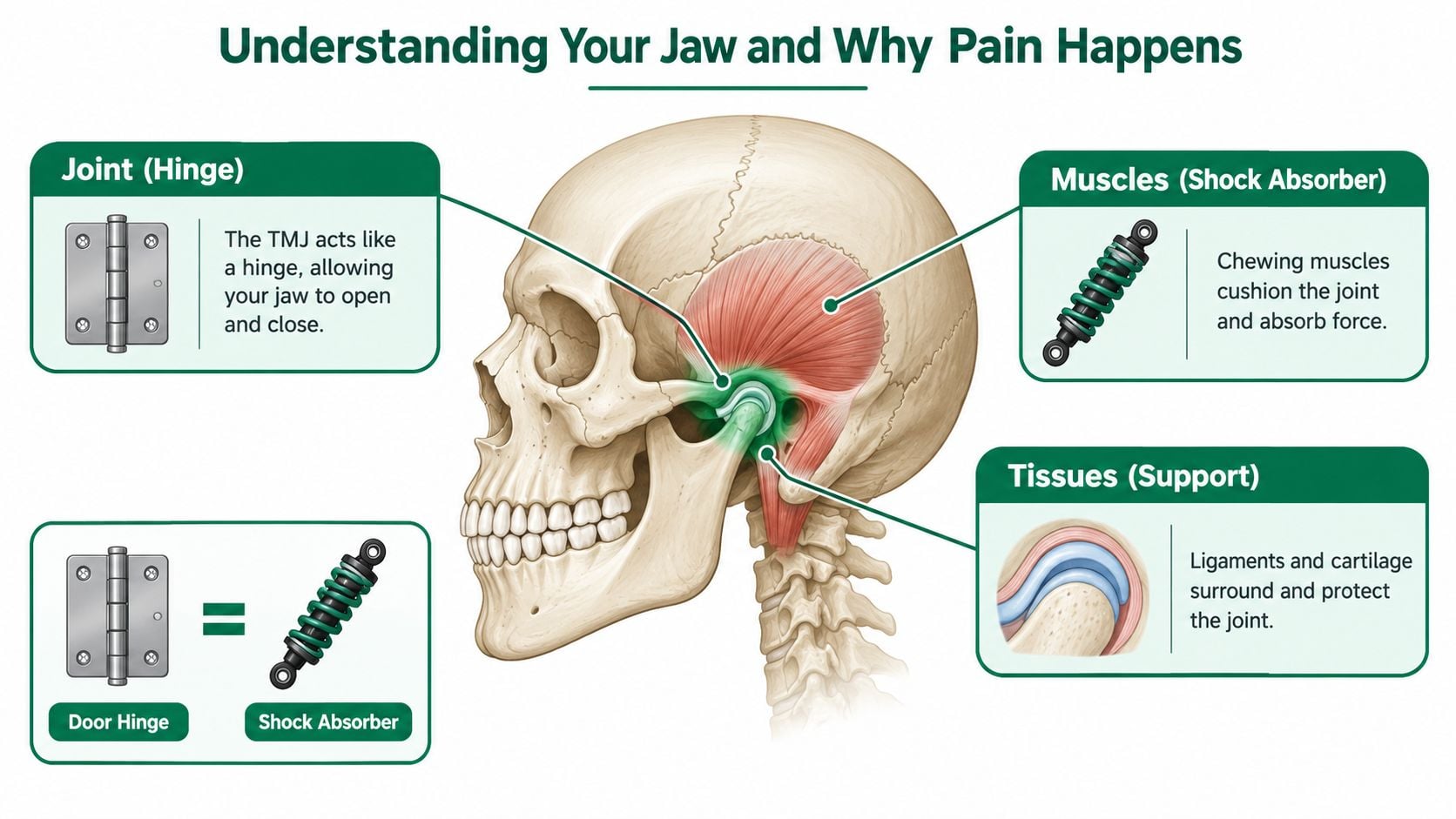
A Hinge With a Shock Absorber
The temporomandibular joint, often shortened to TMJ, sits just in front of each ear and connects the lower jaw to the skull. It works a bit like a hinge on a door, but it can also slide forward slightly. That glide allows the mouth to open wide instead of only swinging on one fixed point.
Inside and around the joint, cartilage and a small disc help cushion movement, much like a shock absorber softens a bumpy ride. The chewing muscles provide power and control. If the hinge moves unevenly, the cushion gets stressed, or the muscles work too hard for too long, the whole system can become sore.
What TMD Means in Plain Language
Temporomandibular disorders, or TMD, is an umbrella term for more than 30 conditions involving the jaw joints, chewing muscles, and nearby tissues, according to the National Institute of Dental and Craniofacial Research overview of TMD. TMD isn't one single diagnosis. One person may have mainly muscle tenderness, while another has a disc or joint problem inside the joint.
Symptoms can include pain while chewing, stiffness, limited opening, painful clicking, and aching into the face, neck, or head. Pain often worsens with chewing, yawning, or prolonged jaw activity and may spread to the ear, temple, or cheek.
A useful starting point: Location alone doesn't identify the cause. Timing, triggers, and what movement changes the pain matter just as much.
That distinction matters because jaw pain is a symptom, not a final answer. Joint irritation, muscle overload, clenching, inflammation, dental trouble, and other orofacial pain conditions can overlap. A structured look at the pattern helps prevent a rushed conclusion based only on a click or a sore spot.
Common Causes of Jaw Pain and How They Feel
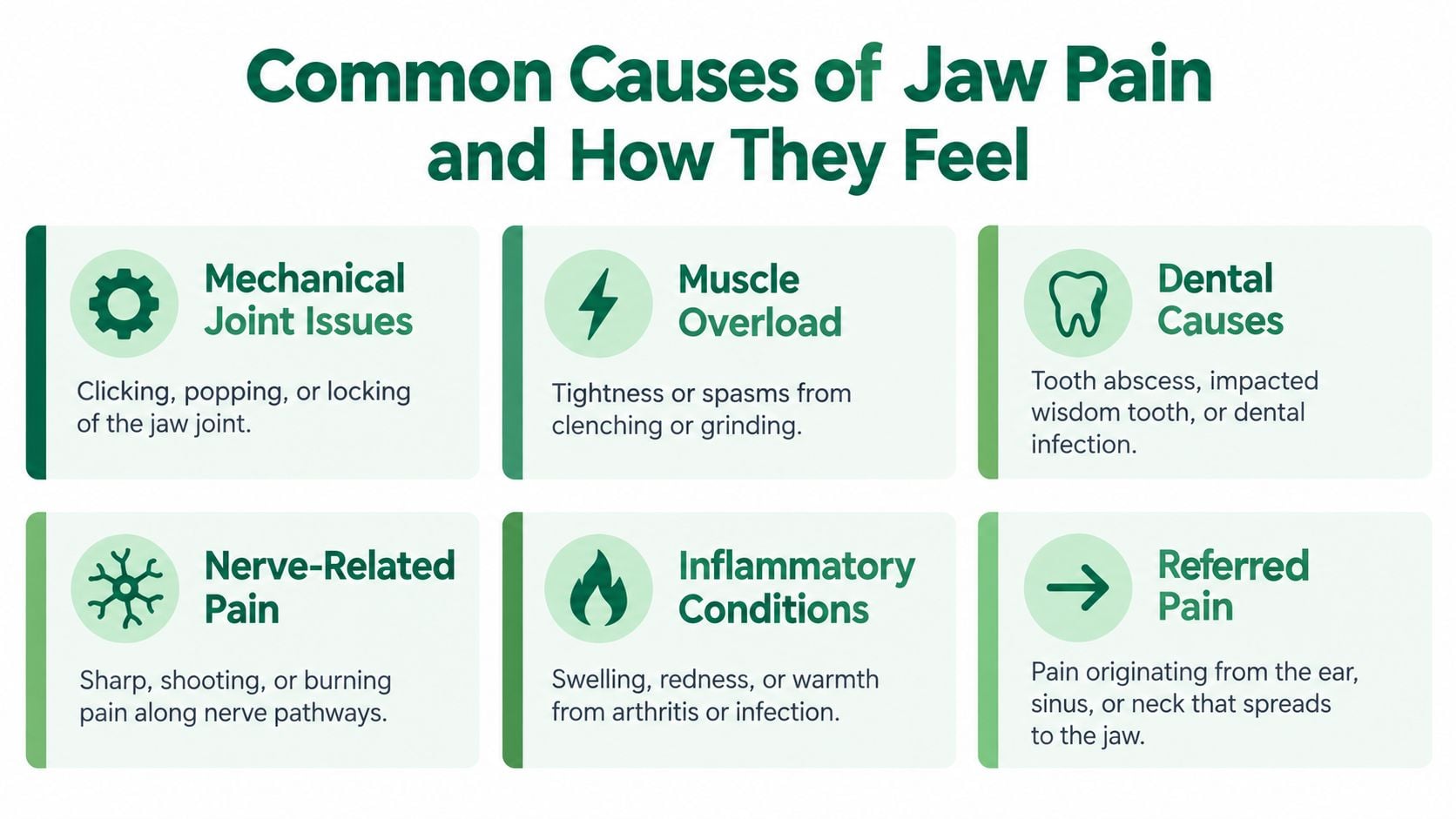
Most causes fall into six plain language groups. The groups overlap, and more than one can be present at the same time. The goal isn't self diagnosis. It's learning which clues a clinician will care about most.
Problems Inside the Joint
Mechanical joint issues happen inside the joint itself. Examples include a disc shifting out of its usual position, cartilage wearing down, arthritis, or an injury. Readers often describe clicking, popping, catching, or a jaw that feels stuck open or closed.
Pain from the joint is often felt just in front of the ear and may change with opening, closing, or chewing harder foods. A sound by itself doesn't prove damage, though. Painful locking, reduced opening, or a sudden change in how the teeth meet deserves closer attention.
Muscle Overload and Clenching
Muscle overload is very common. The chewing muscles can become tender and tight from daytime clenching, nighttime grinding, stress, gum chewing, or holding tension during concentration. The ache often feels broad across the cheek, temple, or jaw angle, and mornings can feel worse after a night of clenching.
Bruxism means grinding or clenching the teeth, during sleep or while awake. Readers looking for habit based context may find dental advice for bruxism helpful as general background, while a focused look at whether clenching teeth can cause headaches explains how muscle strain and head pain can travel together. Grinding and pain often coexist, but one doesn't automatically prove the other caused it.
Dental, Nerve, and Inflammatory Causes
- Dental causes: A cracked tooth, deep cavity, abscess, or impacted wisdom tooth can send pain toward the jaw and ear. Pain tied to one tooth, biting pressure, or hot and cold sensitivity points more toward a dental source.
- Nerve related pain: This type often feels sharp, shooting, electric, or burning. It may follow a line across the face rather than changing mainly with chewing.
- Inflammatory conditions: Arthritis, infection, or other inflammation can bring swelling, warmth, stiffness, or pain that doesn't behave like simple muscle soreness.
- Referred or systemic pain: Pain starting in the ear, sinus, neck, or elsewhere in the body can be felt in the jaw. The jaw is where it's noticed, not always where it begins.
In the United States, a national household survey of 42,370 adults found 5.3% reported pain in the jaw joint or area in front of the ear more than once in the previous six months, with 6.9% among women and 3.5% among men, according to NIDCR data on temporomandibular disorders and jaw pain. Those numbers show how common the symptom is, while also reminding readers that common doesn't mean the cause is always the same.
Associated Symptoms and When to Seek Urgent Care
Symptoms that travel with jaw pain often provide the best clues. A click with no pain tells a different story than locking with limited opening. Morning stiffness, headache, ear fullness, and tooth sensitivity each point the evaluation in a slightly different direction.
Symptoms That Travel With Jaw Pain and What They May Suggest
| Symptom pattern | Likely category | Action to consider |
|---|---|---|
| Clicking or popping with pain | Mechanical joint irritation | Note when it happens and seek evaluation if painful or worsening |
| Locking or limited opening | Joint dysfunction or disc problem | Avoid forcing the jaw and arrange prompt assessment |
| Morning stiffness and sore cheeks | Muscle overload, clenching or grinding | Track sleep, stress, and morning symptoms for the visit |
| Headache at the temples | Muscle strain or referred pain | Record timing, triggers, and jaw tenderness |
| Ear fullness without ear infection signs | Joint or muscle referral near the ear | Mention ear symptoms during jaw evaluation |
| Pain focused on one tooth | Dental cause | Arrange dental examination, especially with temperature sensitivity |
Red Flags That Need Urgent Medical Care
Some jaw pain isn't a routine jaw problem at all. NHS guidance identifies pain spreading from the chest to the jaw, neck, arms, back, or stomach as a possible heart attack symptom, as described in the NHS heart attack guidance. Jaw discomfort with crushing or squeezing chest pain, shortness of breath, fainting, or unusual pallor means emergency services should be contacted immediately.
Sudden jaw pain with chest pressure or trouble breathing should be treated as an emergency, not as routine jaw pain to watch at home.
Other warning signs need broader and timely evaluation. Those include unexplained weight loss, night sweats, a face or neck mass, mouth sores that don't heal, facial numbness, sudden vision changes, or jaw claudication, meaning pain or fatigue in the jaw with chewing that eases with rest. Persistent tooth pain that isn't reproduced by jaw muscle examination also needs a different workup.
A practical rule helps separate the paths. Pain linked to chewing, yawning, tenderness, clicking, or limited opening fits a jaw focused evaluation. Pain with exertion, chest symptoms, breathing trouble, vision changes, or whole body symptoms needs urgent medical attention first.
Self-Care Habits That May Ease Jaw Pain
Self care works best as a calm, short term plan for mild symptoms, not as a promise to fix every cause. The aim is simple. Reduce load on the joint and muscles, notice habits that keep tension going, and give irritated tissues a chance to settle.
Eating and Daily Habits That Reduce Strain
On flare days, softer foods can help. Soups, eggs, yogurt, cooked vegetables, fish, and pasta usually ask less of tired muscles than steak, hard crusts, nuts, or chewy candy. Cutting food into smaller pieces also reduces how wide the mouth must open.
Small habit changes add up during the day. Lips can rest together while teeth stay slightly apart, the tongue rests gently, and the jaw hangs relaxed. Gum chewing, nail biting, chewing pens, and holding a phone between shoulder and ear all keep the system working when it needs rest.
Readers who carry tension in the cheek muscles may benefit from practical guidance on how to relax the masseter muscle, since the masseter is the strong cheek muscle used for clenching. Gentle awareness during work, driving, and screen time often matters more than one long stretch once a day.
Heat, Cold, Movement, and Sleep
- Warmth for tight muscles: A warm compress can feel soothing when muscles feel stiff or achy. It suits the dull, tired feeling many readers notice after clenching.
- Cold for a fresh flare: Cold may feel better after a recent strain or when the area feels inflamed. A barrier between skin and ice protects the skin.
- Gentle movement: Slow, pain free opening and guided stretches may help maintain mobility. Forceful stretching, wide yawns, and pushing through sharp pain should be avoided.
- Posture and screens: A head pushed forward for hours can strain neck and jaw muscles together. Raising a screen and taking brief posture breaks can reduce that load.
Sleep and stress belong in the same conversation. Poor sleep can raise pain sensitivity, and pain can then make sleep lighter. Regular sleep times, paced breathing, brief mindfulness breaks, and lower evening stimulation may help many patients, even though they don't replace evaluation.
Self care has clear limits. Pain that persists, keeps returning, limits opening, changes the bite, or interferes with eating and sleep needs professional assessment. Waiting while symptoms steadily worsen rarely makes the puzzle easier to solve.
How a Clinician Builds a Root-Cause Evaluation
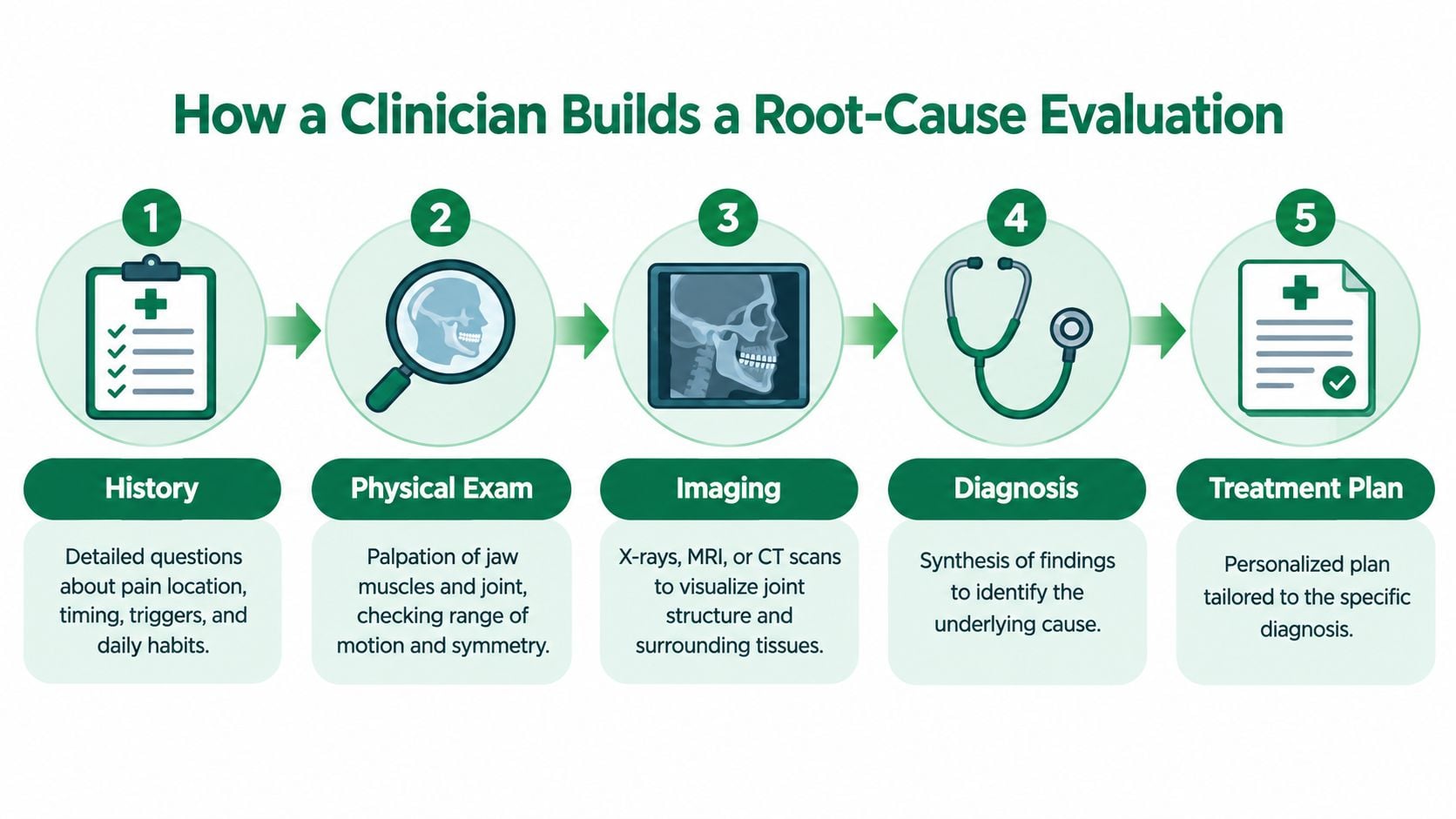
A good evaluation feels less like a quick label and more like careful detective work. The clinician tests whether pain comes from the joint, the muscles, a tooth, a nerve, or a wider medical issue. Each answer narrows the next question.
History and Hands On Examination
The history usually covers where pain sits, when it started, how long episodes last, and what triggers or eases them. Sleep quality, stress, recent dental work, injury, headaches, ear symptoms, and medicines also matter. A symptom diary, even a brief phone note, can make those patterns easier to describe.
During the exam, the clinician may gently press, or palpate, the joint and chewing muscles to see whether that reproduces the familiar pain. Range of motion gets measured, opening pattern gets watched, and joint sounds get noted in context rather than treated as a diagnosis alone. Bite changes, tooth wear, and tenderness patterns add more pieces.
A clinical pathway from the National Academy of Medicine on improving TMD care recommends assessing onset, triggers, mouth opening, joint sounds, and whether palpation reproduces familiar pain. That same pathway flags weight loss, night sweats, masses, oral lesions, jaw claudication, unilateral headache, visual symptoms, and temporal artery inflammation as reasons for broader evaluation.
Imaging, Sleep Screening, and Tongue Function
Imaging is selective, not automatic. Radiographs, CT, or MRI may be considered when trauma, structural disease, persistent locking, or an atypical presentation is suspected. Choosing imaging based on exam findings avoids unnecessary testing while still catching problems that can't be felt by hand.
Sleep screening may fit when snoring, fatigue, morning headaches, or witnessed pauses in breathing appear alongside jaw pain. Sleep and pain can reinforce each other, so screening asks a useful question without assuming sleep is the sole cause. Any suspected sleep apnea still requires a sleep study interpreted under physician oversight.
Tongue function may also be reviewed in a broader oral function assessment. A tongue tie, or ankyloglossia, means restricted tongue movement from a tight band of tissue under the tongue. A visible band alone doesn't prove treatment is needed, so function, symptoms, age, and goals guide any recommendation.
Treatment Pathways From Conservative Care to Coordinated Care
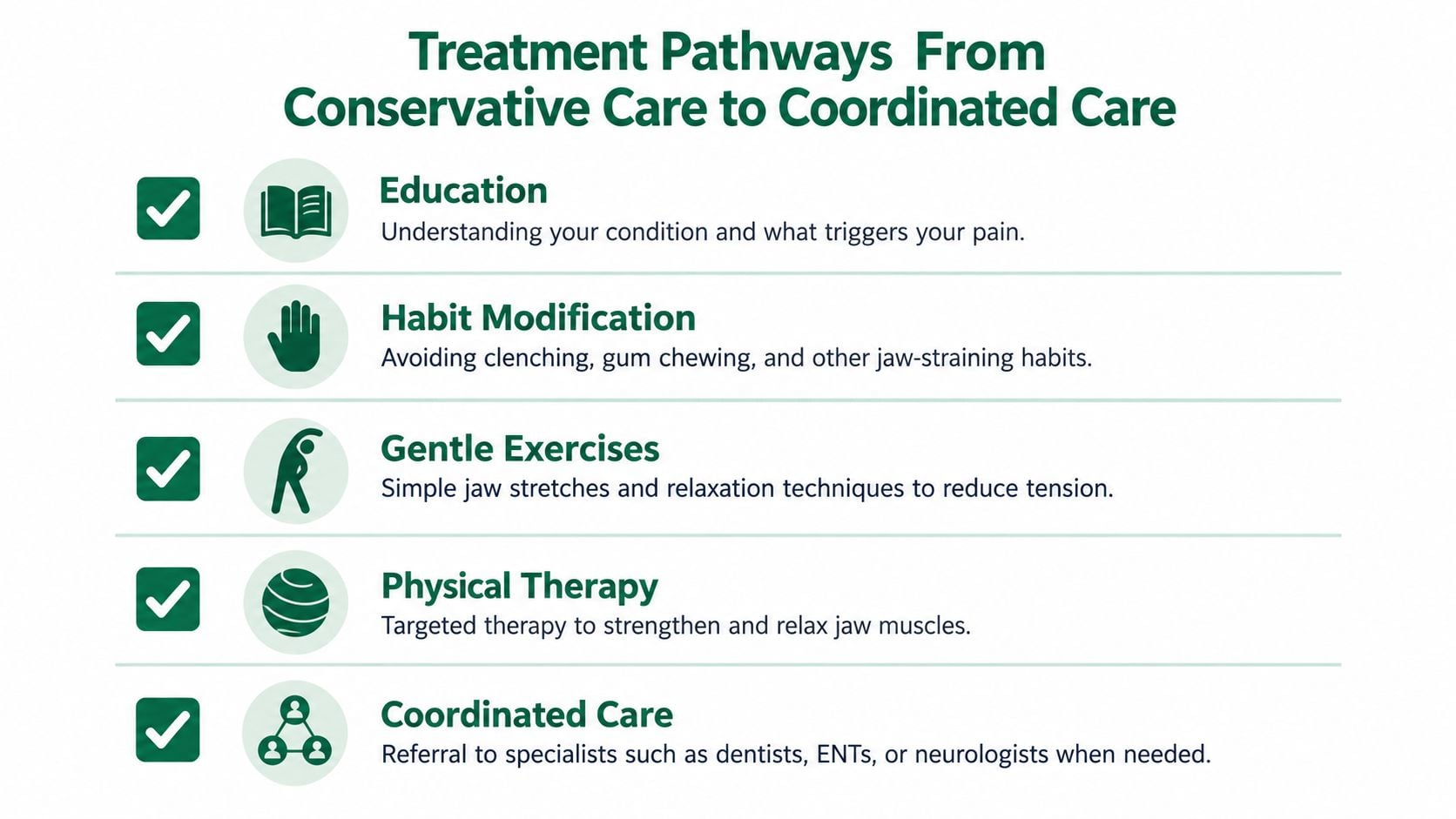
Treatment usually starts with the least invasive options that match the findings. Education comes first because understanding triggers changes daily choices. From there, care can stay simple or become more coordinated as needs become clearer.
Conservative Care Comes First
Conservative care may include habit modification, jaw exercises, physical therapy, stress management, and carefully supervised medication when appropriate. Physical therapy can address jaw, neck, and posture together, since those areas share muscle load. For readers comparing stepwise options, a detailed overview of non-surgical treatment for TMJ concerns shows how reversible therapies are typically considered before irreversible steps.
A stabilization splint is a plastic appliance fitted over the upper or lower teeth. NIDCR notes evidence for these devices is inconclusive and advises limited use without permanently changing the bite, as explained in the NIDCR guide to TMJ disorders. If a splint increases pain or changes how teeth fit together, use should stop and the clinician should be contacted.
Additional background on coordinated, stepwise jaw care is available through All Stars Dental TMJ care, which readers may use as general education alongside an in person evaluation. Cold laser therapy may also be discussed as an adjunct in some plans, meaning it supports a broader plan rather than replacing diagnosis or core care.
When Sleep or Tongue Concerns Are Part of the Plan
Sleep needs careful, honest language. A 2025 systematic review found bruxism in 45% to 87% of people with TMD and poor sleep quality in 40% to 75%, with poor sleep correlating with pain severity, according to a systematic review on bruxism, sleep, and TMD. Coexistence doesn't establish direct cause, which is why snoring alone shouldn't be treated as proof of sleep apnea.
For adults with confirmed obstructive sleep apnea, where the airway repeatedly narrows or closes during sleep, the American Academy of Sleep Medicine recommends a custom, titratable oral appliance from a qualified dentist when oral appliance therapy is selected, per the AASM guideline on oral appliance therapy for OSA. That pathway suits selected patients who can't tolerate CPAP or prefer an alternative after medical discussion. It doesn't replace CPAP for everyone, and follow up with medical and dental professionals remains important.
Tongue tie care follows the same root cause logic. Laser frenectomy is one method of releasing restricted tissue, but it should follow functional assessment, informed consent, and planned aftercare. Coordinated care may involve medical, dental, speech, feeding, or myofunctional professionals, especially for infants and children.
Your Next Steps and How We Can Help
A short checklist turns new understanding into action. It also gives a clinician cleaner information at the first visit, which can make the evaluation more focused.
- Write down the pattern: Note location, timing, triggers, clicking, locking, and what eases symptoms.
- Track sleep and stress: Record morning pain, snoring concerns, fatigue, and stressful periods without assuming one caused the other.
- Use gentle self care: Choose softer foods during flares, relax the jaw during the day, and avoid forcing wide opening.
- Book an evaluation when needed: Persistent, recurrent, worsening, or function limiting pain deserves in person assessment.
At Pain and Sleep Therapy Center, care is led by Dr. Ryan Robinson, who is triple board certified in craniofacial pain and dental sleep medicine. The practice serves patients in Newark and Wilmington, Delaware and Bryn Mawr and the Philadelphia Main Line, with a focus on TMJ and facial pain, sleep apnea and snoring care including oral appliance therapy and Snorelase, tongue tie care, and cold laser therapy. Many patients find a conservative, root cause plan easier to follow once the drivers are clearly mapped.
Readers ready to talk through symptoms can Request an Appointment or Take our Sleep Quiz as a first step. The Newark office can be reached at (302) 239-1757. No outcome can be promised, but a careful evaluation can clarify what may help and what should be addressed first.
For jaw pain that keeps returning, Pain and Sleep Therapy Center offers root cause evaluation of TMJ, head, and facial pain alongside dental sleep medicine and tongue tie assessment. A visit can help clarify whether muscle strain, joint concerns, sleep related factors, or another driver needs attention first. Readers can learn more and request a visit through Pain and Sleep Therapy Center.