
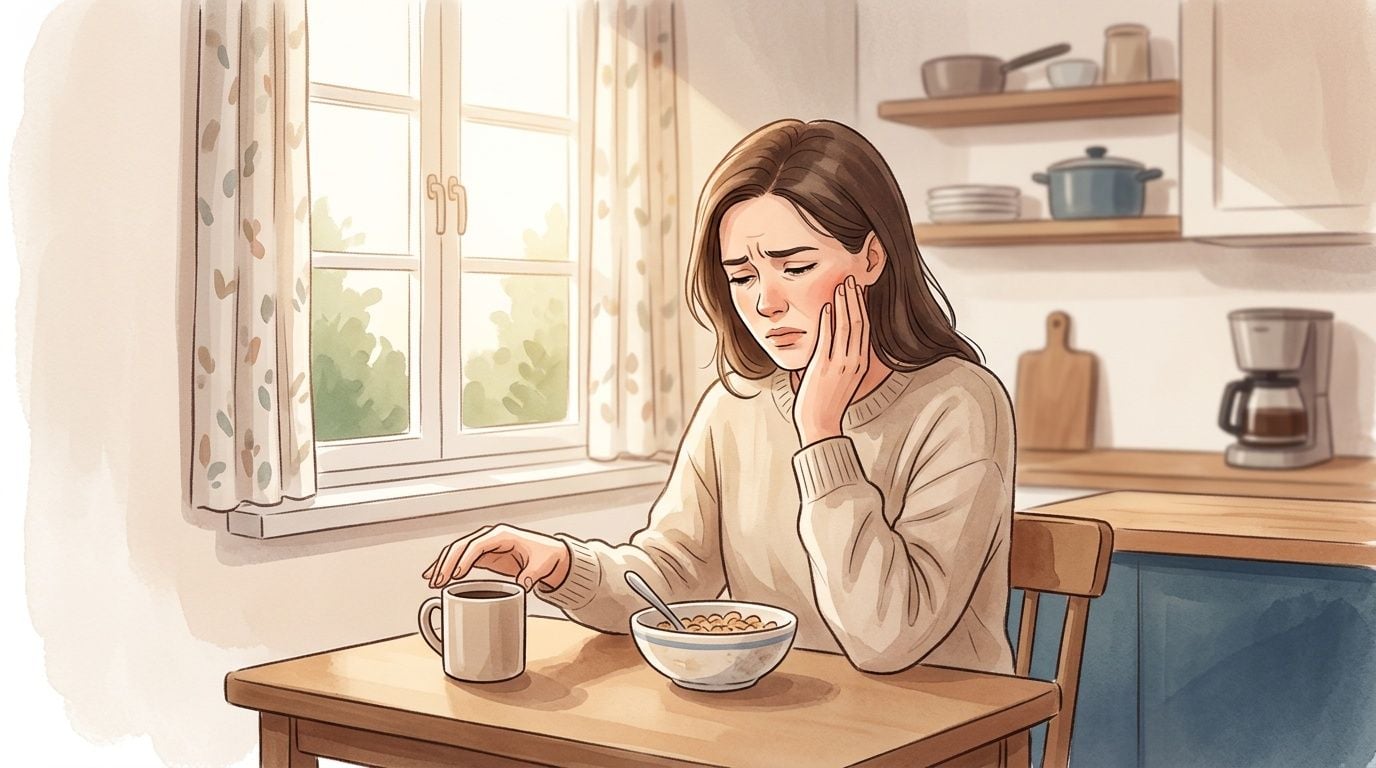
Breakfast has become a calculation: softer food, smaller bites, and a pause when the jaw clicks. A morning headache or aching cheek can make a routine day feel harder than it should. For someone searching for non surgical treatment TMJ options, the most useful starting point isn't a particular device or procedure. It's understanding which problem needs treatment.
Table of Contents
- When Jaw Pain Becomes a Daily Decision
- What TMD Actually Is and Why the Diagnosis Matters
- The First Layer of Care You Can Start This Week
- Orthotics and Physical Therapy Working Together
- Calming the Clench Pain Stress Loop
- Cold Laser Therapy and Other Adjunctive Modalities
- What to Avoid on the Road to Relief
- Connecting Jaw Symptoms to Sleep and Whole-Person Care
When Jaw Pain Becomes a Daily Decision
A person may hold the jaw during a long meeting, avoid a crunchy lunch, or wake wondering whether the face will hurt again. Those small adjustments matter because they show how symptoms affect eating, speaking, and rest. They're also useful details to bring to an evaluation.
Temporomandibular disorders, usually shortened to TMD, are a group of conditions involving the jaw joints, chewing muscles, or both. They aren't one disease with one treatment. The National Institute of Dental and Craniofacial Research estimates that approximately 5% of U.S. adults have TMD and recommends beginning with conservative measures, including symptom management, gentle exercises, and changes to aggravating habits, while cautioning against treatments that permanently change the teeth, bite, or joints (NIDCR guidance on TMD).
Conservative care is active treatment
Conservative care means starting with approaches that limit risk and can be adjusted or stopped. It doesn't mean dismissing symptoms or asking a patient to tolerate pain indefinitely. A useful plan connects treatment to a diagnosis, sets functional goals, and includes reassessment.
For example, easier chewing may be a more meaningful early goal than eliminating every joint sound. A patient whose main concern is morning headaches may need a broader assessment than someone whose jaw catches during meals. Information about TMJ and tension headaches can help patients describe that overlap without assuming every headache comes from the jaw.
A useful starting question: Which symptoms interfere with daily life, and what would meaningful improvement look like?
A first visit becomes more productive when patients bring concrete observations:
- Eating changes: Foods avoided, discomfort during chewing, or fatigue afterward.
- Movement concerns: Catching, locking, or difficulty opening comfortably.
- Daily patterns: Symptoms on waking, during desk work, or after prolonged talking.
Surgery isn't the default starting point. A thoughtful nonsurgical plan is a way to treat symptoms while learning more about what keeps them going.
What TMD Actually Is and Why the Diagnosis Matters
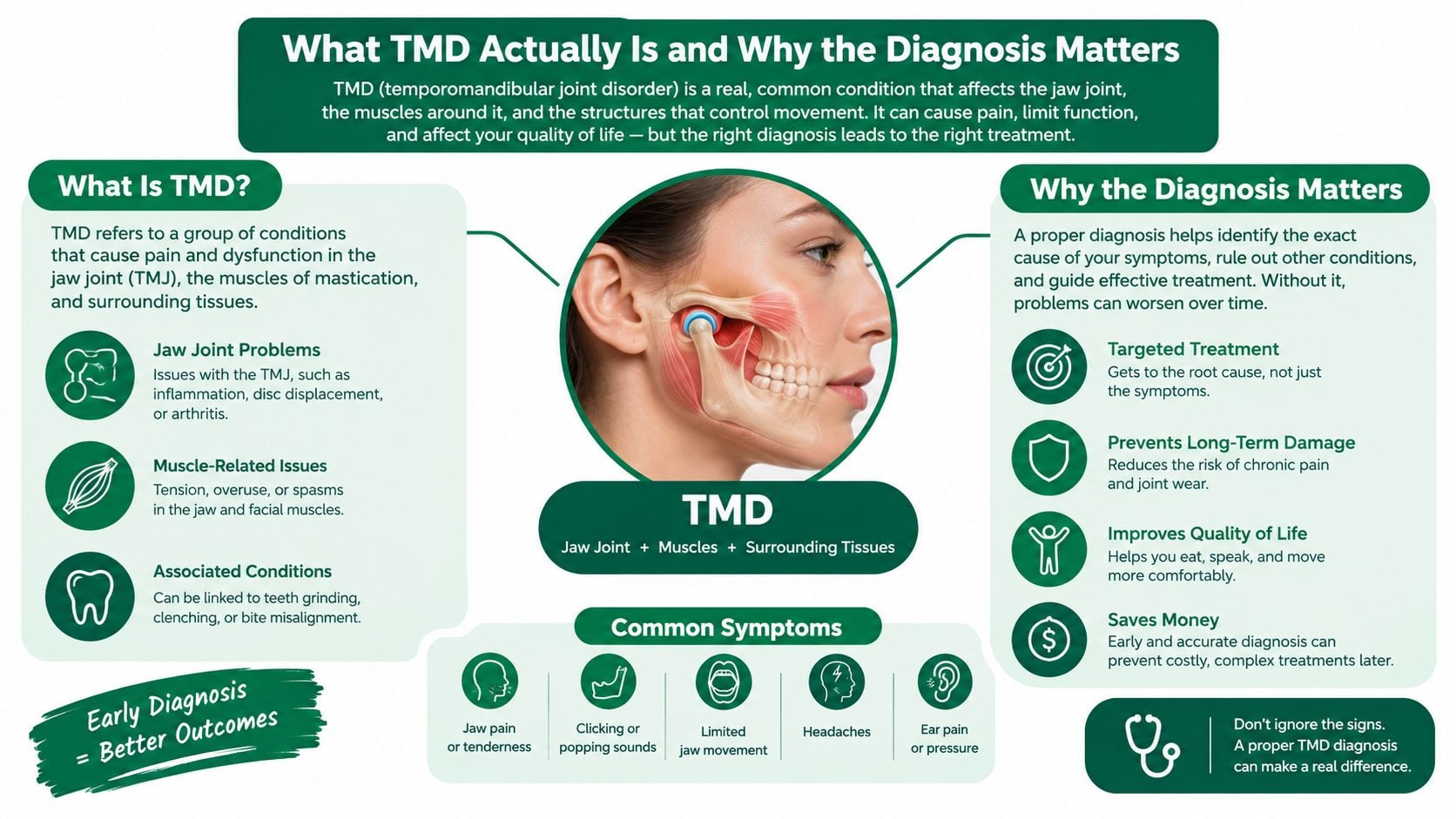
TMJ means the temporomandibular joint, the joint connecting the lower jaw to the skull. TMD names the disorders affecting that region. People often use “TMJ” to mean jaw pain, but the distinction matters: a painful muscle and a restricted joint may require different care.
Clinicians consider joint-related problems, muscle-related problems, and combinations of the two. That distinction supports individualized treatment rather than assuming every patient needs the same appliance or exercise program.
Similar complaints can have different explanations
Joint-related conditions may involve the disc, inflammation, or arthritis. The disc is tissue within the joint that helps its surfaces move together. Muscle-related pain involves the chewing muscles and may include referred pain, meaning pain felt away from the tissue contributing to it.
Headaches, ear fullness, and neck tension deserve attention alongside jaw symptoms, but they don't confirm a jaw diagnosis. An evaluation needs to consider whether those complaints share a contributor or require separate medical assessment. Identifying possible contributors isn't the same as proving a single root cause.
| Symptom pattern | Question that helps guide care |
|---|---|
| Pain centered around jaw movement | Is the joint, muscle, or both contributing? |
| Cheek or temple tenderness | Are chewing muscles a major treatment target? |
| Restricted opening or locking | Does movement require closer diagnostic assessment? |
| Headache with poor sleep | Are additional headache or sleep evaluations needed? |
What an evaluation should establish
A clinician reviews the history, maps tenderness, assesses comfortable opening, and considers joint sounds in context. Sleep, stress, prior dental treatment, medications, and previous attempts at relief help explain the full picture.
Patients can make that discussion clearer by describing what happens rather than naming a presumed diagnosis. “Opening becomes difficult while eating” gives different information from “the jaw aches after concentrated work.” The diagnosis should determine the treatment, not the availability of a device.
The practical takeaway is simple: two people with jaw pain may need different nonsurgical paths. A careful examination helps avoid treating the wrong target.
The First Layer of Care You Can Start This Week
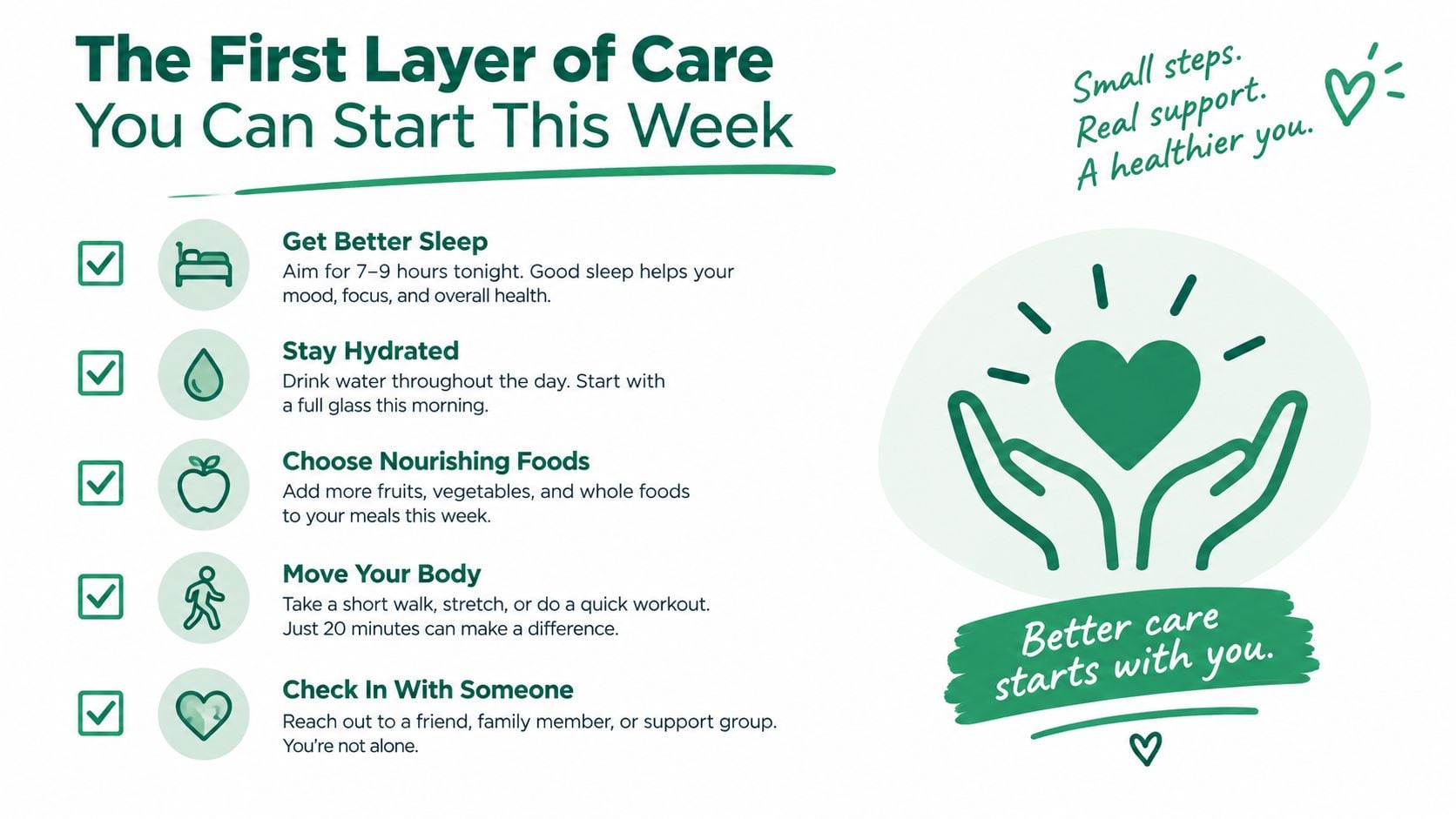
Foundational care should be manageable, not an exhausting list of restrictions. The initial measures described in NIDCR guidance focus on reducing aggravation while supporting comfortable function. They're a starting layer of treatment, not a substitute for evaluating persistent or worsening symptoms.
Reversible becomes easier to understand through everyday examples. Choosing softer food temporarily, changing a clenching habit, or using a comfortable compress doesn't permanently alter the teeth or jaw. Each measure can be adjusted according to the patient's response.
A practical starter list
- Make chewing easier: Softer meals and smaller bites can reduce the effort needed during an uncomfortable period. The aim is temporary pacing, not a permanently restricted diet.
- Try comfortable heat or cold: Either may help with symptoms. Applications shouldn't cause skin discomfort, and patients can discuss safe use with their clinician.
- Notice unnecessary tooth contact: A reminder during computer work can prompt awareness of daytime clenching. Keeping the teeth apart at rest may be a useful habit change.
- Pause repetitive loading: Gum chewing and nail biting are specific behaviors worth addressing rather than vaguely trying to “rest more.”
- Use guided movement: Gentle stretching or strengthening should match the examination findings. Forceful attempts to stretch through locking aren't an appropriate self-directed plan.
Medication and desk habits need context
Over-the-counter nonsteroidal anti-inflammatory drugs, or NSAIDs, are among the initial options described by NIDCR. They aren't suitable for every patient, so a clinician or pharmacist should review health conditions, other medicines, and label directions before use.
Desk-work breaks can also include checking shoulder position and noticing whether the jaw is held tightly during concentration. Education about how to relax the masseter muscle, a major chewing muscle, may help patients understand that target.
A short symptom record can make follow-up more useful. It can note which activities were uncomfortable, what was tried, and whether eating or speaking became easier. The purpose is to identify patterns, not to monitor every sensation or blame the patient for symptoms.
Orthotics and Physical Therapy Working Together
A jaw appliance and physical therapy aren't necessarily competing choices. They serve different purposes, and either may be appropriate depending on the diagnosis. Choosing between them starts with identifying the dominant problem: repeated tooth loading, movement difficulty, muscle tenderness, or joint-related symptoms.
An occlusal stabilization splint, sometimes called an oral orthotic, is a fitted appliance used as a reversible treatment option. A review comparing exercise and splint therapy found no significant difference in pain relief or jaw range-of-motion improvement, supporting individualized selection rather than declaring either approach universally superior (review of nonsurgical TMD treatment).
Match each option to its purpose
| Treatment | Potential role | What needs monitoring |
|---|---|---|
| Stabilization appliance | Managing selected loading-related symptoms within a conservative plan | Fit, comfort, bite changes, and symptom response |
| Guided jaw exercises | Supporting comfortable movement and function | Technique, tolerance, and progress |
| Manual therapy | Addressing muscle tenderness or movement restrictions | Whether pain and function improve |
| Posture training | Addressing relevant movement and neck-related contributors | Carryover into daily activities |
Parafunctional loading means jaw activity outside ordinary eating or speaking, such as clenching. An appliance may be considered when that pattern is relevant, but it shouldn't be described as reliably stopping clenching or correcting every cause of pain.
Physical therapy can combine hands-on treatment, jaw mobility work, posture exercises, and a home program. A 2023 systematic review identified exercise combined with manual therapy as a frequently used and better-supported combination within the literature it reviewed, while emphasizing individualized care (review of conservative physiotherapy for TMD).
Judge progress by function, not the device
A successful plan should make daily activities easier, not simply result in longer appliance wear or more treatment sessions.
Follow-up should ask whether chewing is more comfortable, opening is less restricted, and the patient can carry out the home plan. Lower pain doesn't necessarily mean every tender point will become painless.
Appliances should remain provisional and monitored, rather than becoming a pathway toward permanent bite changes. Likewise, exercise should be modified when the response doesn't match expectations. The combination is useful only when each part has a clear purpose and the clinician checks whether that purpose is being met.
Calming the Clench Pain Stress Loop
Behavioral care doesn't mean jaw pain is imaginary. It addresses contributors that can accompany persistent pain, including tension, clenching habits, sleep disruption, and difficulty coping with symptoms. Stress deserves assessment without becoming a catch-all explanation.
Cognitive behavioral therapy, or CBT, teaches skills for responding to pain, unhelpful thoughts, and behaviors that interfere with function. Relaxation training focuses on reducing tension. Biofeedback uses information about bodily activity to help a person recognize and practice changing a response.
A 2023 BMJ review of 153 randomized trials involving 8,713 participants found CBT combined with relaxation or biofeedback among the most effective approaches for chronic TMD pain; the accompanying guideline described pain reductions approximating twice the review's minimally important difference, a benchmark for meaningful improvement (BMJ evidence review on chronic TMD pain).
What structured behavioral care can involve
A session may start with identifying a specific situation, such as jaw tightening during concentrated work. The clinician can then help the patient recognize the pattern, practice a relaxation skill, and plan how to use it during that activity. The focus is a repeatable skill, not a general instruction to “be less stressed.”
- Awareness practice: Notice when the teeth press together or the jaw remains tense.
- Relaxation training: Rehearse a guided response that can be used outside appointments.
- Pain coping: Reduce avoidance that unnecessarily limits daily activities while respecting physical symptoms.
- Between-visit practice: Apply the agreed technique and discuss barriers at follow-up.
Keep wellness resources in their proper role
For readers interested in broader stress-management reading, The Axelrad Clinic's stress recovery tips for women may offer topics to discuss with a qualified clinician. That resource isn't evidence for a TMD diagnosis, and persistent fatigue shouldn't automatically be attributed to stress or an adrenal problem.
Behavioral programs can be focused and structured, but their length should reflect individual needs. The evidence doesn't justify promising that a brief course will be enough for everyone.
Behavioral treatment is a clinical option, not a last resort after every dental intervention has failed. Its value comes from addressing an identified contributor alongside appropriate physical care.
Cold Laser Therapy and Other Adjunctive Modalities
A technology-based treatment can sound more advanced than a home exercise program. That doesn't establish that it's more appropriate. The useful question is whether it adds something meaningful to a diagnosis-driven plan.
Cold laser therapy, also called low-level laser therapy, is used by some clinicians as an adjunct for pain modulation and tissue-healing support. Adjunct means an additional treatment, not the foundation of care. A Japanese clinical-practice guideline gives low-level laser therapy a conditional recommendation, while recommending mouth-opening exercises and stabilization-type appliances as primary options (Japanese guideline on TMD treatment).
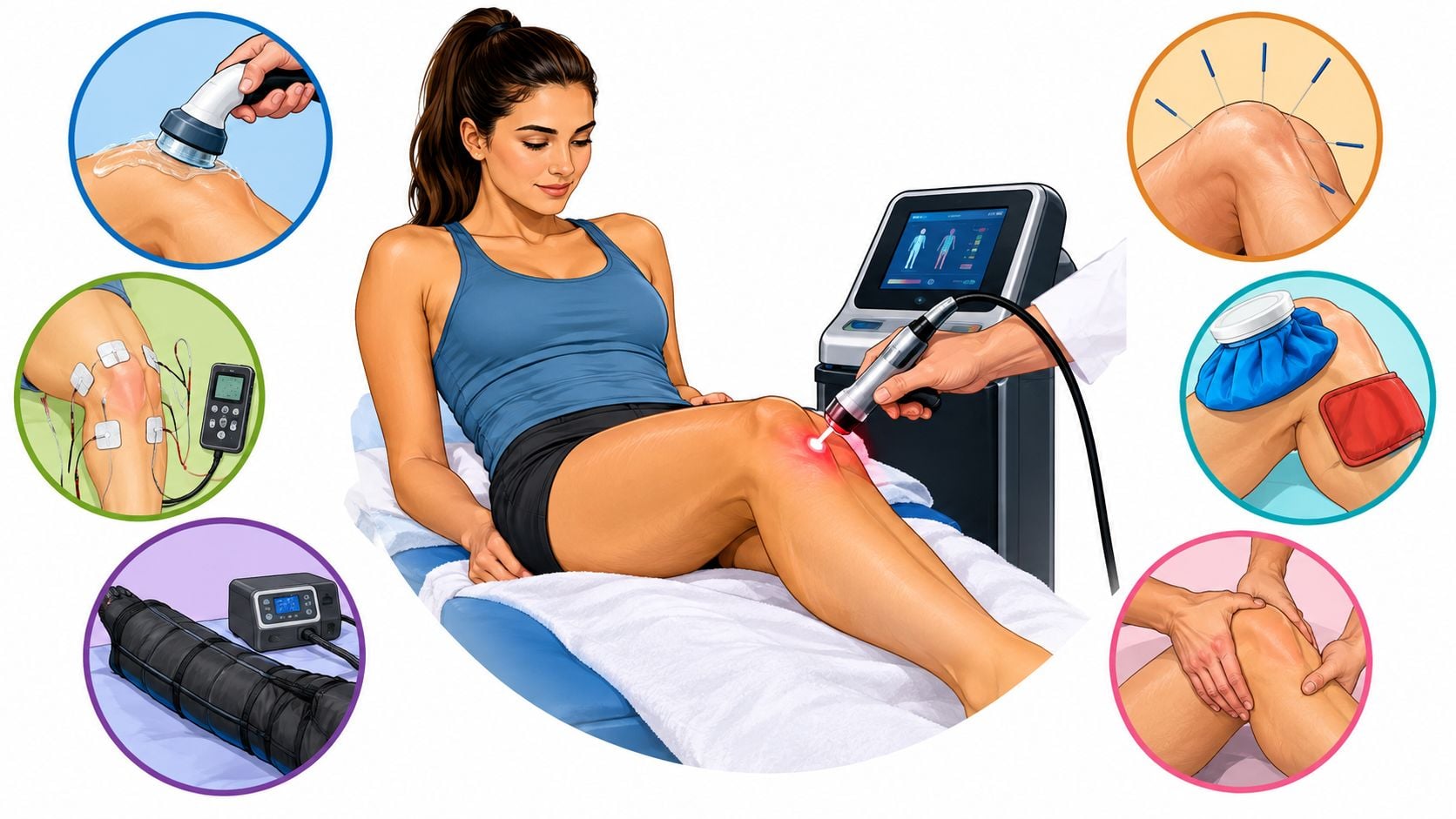
The image illustrates physical-treatment equipment in a clinical setting, not a jaw-treatment result. Different treatment sites and devices shouldn't be treated as interchangeable.
Encouraging evidence still needs careful interpretation
A conditional recommendation calls for a more selective discussion than a claim that every patient needs laser therapy. Improvements in pain and function have been reported in broader conservative-treatment evidence, but those findings don't establish that a particular device will help a particular patient.
Related options may include ultrasound and transcutaneous electrical nerve stimulation, or TENS, which uses electrical stimulation through the skin. Support varies across these modalities. Manual trigger-point therapy, hands-on treatment directed at tender muscle areas, has stronger support in the BMJ evidence discussed earlier and shouldn't be grouped with every machine-based treatment as though the evidence were identical.
Questions before adding an adjunct
- Identify the target: Is the treatment intended to address pain, tenderness, or a specific functional limitation?
- Define the measure: What observable change would justify continuing?
- Set a reassessment point: When will the clinician decide whether the addition is worthwhile?
- Protect the foundation: Will education, movement, and relevant behavioral care continue?
Readers comparing devices may encounter Spa Black's top home laser treatment picks. A consumer device list isn't clinical evidence for treating TMD, and a home product shouldn't be assumed equivalent to supervised jaw therapy.
An adjunct earns its place through useful results, not through novelty or an impressive name.
What to Avoid on the Road to Relief
An uneven-feeling bite doesn't automatically explain chronic jaw pain. It also doesn't automatically justify reshaping healthy teeth, replacing restorations, or changing the bite permanently. Before an irreversible intervention, the diagnosis and treatment rationale need to be clear.
Clinical guidance advises against irreversible restorative treatment or bite adjustment for most TMD cases, while recognizing specific exceptions, such as a recent filling or crown causing an acute change in tooth contact (clinical-practice guidance on safe TMD management). That's different from attributing longstanding pain to a presumed bite defect.
Persistent symptoms call for reassessment
When a plan isn't helping, the next step shouldn't automatically be a stronger device or more invasive procedure. The clinician should first check whether the working diagnosis still fits.
- Review the treatment target: Was care directed toward joint symptoms, muscle pain, or another condition?
- Check practical barriers: Was the exercise understandable and tolerable? Did appliance discomfort prevent appropriate use?
- Reassess the appliance: Fit, wear instructions, and changes in tooth contact need review.
- Review medication safety: Repeated use deserves attention to health history, interactions, and adverse effects.
- Look beyond the jaw: Sleep concerns, stress, headaches, and neck symptoms may need coordinated assessment.
Patients shouldn't be blamed when treatment falls short. Difficulty following a plan may indicate that it needs to be simplified or changed. New findings may also justify imaging or specialist referral when they could clarify the diagnosis.
Recognize symptoms that shouldn't wait
Trauma, progressive neurologic symptoms, signs of infection, unexplained swelling, and severe persistent restriction warrant prompt professional assessment. New or worsening numbness or weakness shouldn't be labeled as TMD. Persistent locking or progressively limited opening also deserves reassessment rather than indefinite appliance adjustments.
Before irreversible care: A second opinion can help establish what diagnosis is being treated, what alternatives remain, and what the proposed intervention can realistically accomplish.
Surgery has a role in selected circumstances, but pain intensity alone doesn't identify who needs it. Patients should receive a clear explanation of the expected benefits, limitations, and risks before escalation.
Safer care isn't passive care. It means responding to important changes while avoiding permanent interventions without a specific clinical indication.
Connecting Jaw Symptoms to Sleep and Whole-Person Care
Morning jaw discomfort alongside snoring, fatigue, or disrupted sleep deserves a broader conversation. Those symptoms don't prove that jaw pain causes a breathing disorder, or that one appliance will treat both. Education about whether TMJ can cause sleep apnea can help clarify the distinction.
Obstructive sleep apnea, or OSA, requires physician-led evaluation and a sleep study to establish the diagnosis and severity. A jaw examination or online questionnaire isn't a substitute for that process.
A sleep appliance serves a different purpose
The American Academy of Sleep Medicine recommends considering oral appliance therapy for adults with OSA who can't tolerate continuous positive airway pressure, or CPAP, or who prefer an alternative. It favors a custom, titratable appliance, meaning one that can be adjusted, fitted by a qualified dentist, with sleep-physician and dental follow-up to monitor effectiveness and side effects (AASM oral appliance therapy guideline).
CPAP remains an appropriate treatment option. A stabilization appliance for jaw symptoms shouldn't be assumed to treat sleep apnea, and a sleep appliance requires its own monitoring.
Headaches need similar care in interpretation. A meta-analysis of five trials found low-certainty evidence that stabilization appliances didn't clearly improve headache frequency or intensity during the first 1 to 3 months; at 4 to 9 months, frequency improved, but intensity didn't clearly improve (systematic review of stabilization appliances and headaches). An appliance therefore shouldn't be presented as a headache solution without individualized evaluation.
Coordinated care keeps treatments distinct
Whole-person care considers sleep, stress, posture, breathing concerns, and medical history without forcing every symptom into one explanation. Coordination helps clinicians select treatments for specific goals and recognize when another provider's assessment is needed.
Dr. Ryan Robinson is triple board-certified in craniofacial pain and dental sleep medicine. Available services include jaw, head, and facial-pain evaluation; cold laser therapy; oral appliance therapy; snoring care including Snorelase; and tongue-tie assessment with laser frenectomy for infants, children, and adults when indicated. These are distinct services, not interchangeable treatments for TMD.
Pain and Sleep Therapy Center offers root-cause evaluation and conservative care for jaw, head, and facial pain, alongside coordinated dental sleep medicine services. Patients in Newark and Wilmington, Delaware, or Bryn Mawr and the Philadelphia Main Line can visit Pain and Sleep Therapy Center to Request an Appointment or Take our Sleep Quiz. The Newark office can also be reached at (302) 239-1757 to discuss an evaluation.