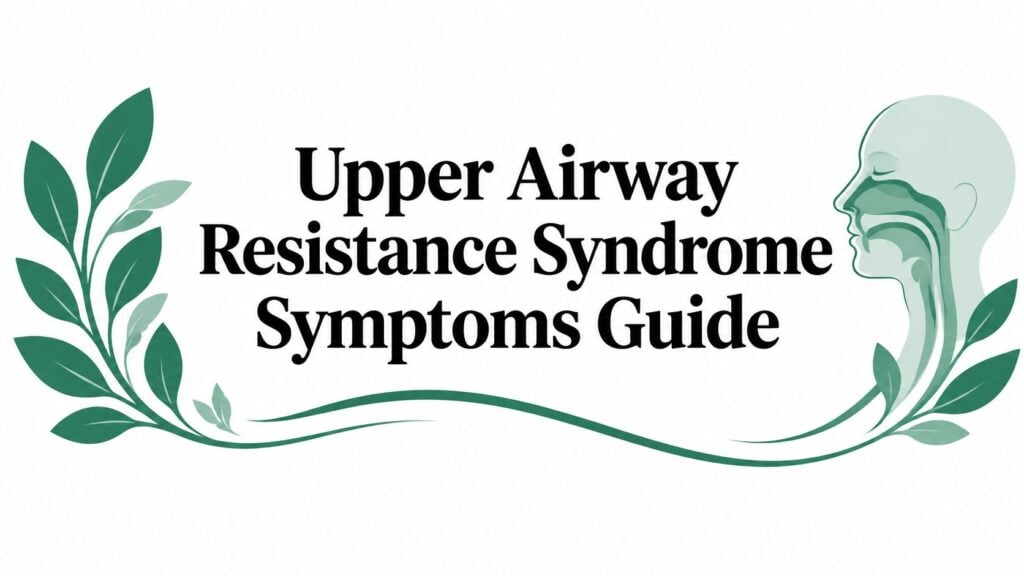
A sleep report comes back with an AHI under 5 and the word normal at the top. The person holding it still wakes exhausted, sleeps lightly, and watches the clock at 3 a.m. most nights. Upper airway resistance syndrome, or UARS, often hides in that gap.
Three terms explain why. The apnea-hypopnea index, or AHI, counts complete pauses and shallow-breathing events per hour of sleep. Flow limitation means the airway has narrowed enough that airflow flattens even as breathing effort rises. A respiratory effort-related arousal, or RERA, is a run of those effortful breaths that ends when the brain briefly wakes to reopen the airway. Upper airway resistance syndrome symptoms grow out of RERAs and flow limitation, events a standard report can leave uncounted.
Both conditions sit on the same spectrum of sleep-disordered breathing, and the difference is mechanical. In obstructive sleep apnea (OSA), the airway closes or nearly closes, so breathing stops or drops for at least ten seconds and oxygen usually falls. In UARS, the airway narrows and resists, which raises effort and triggers arousals without a clean pause.
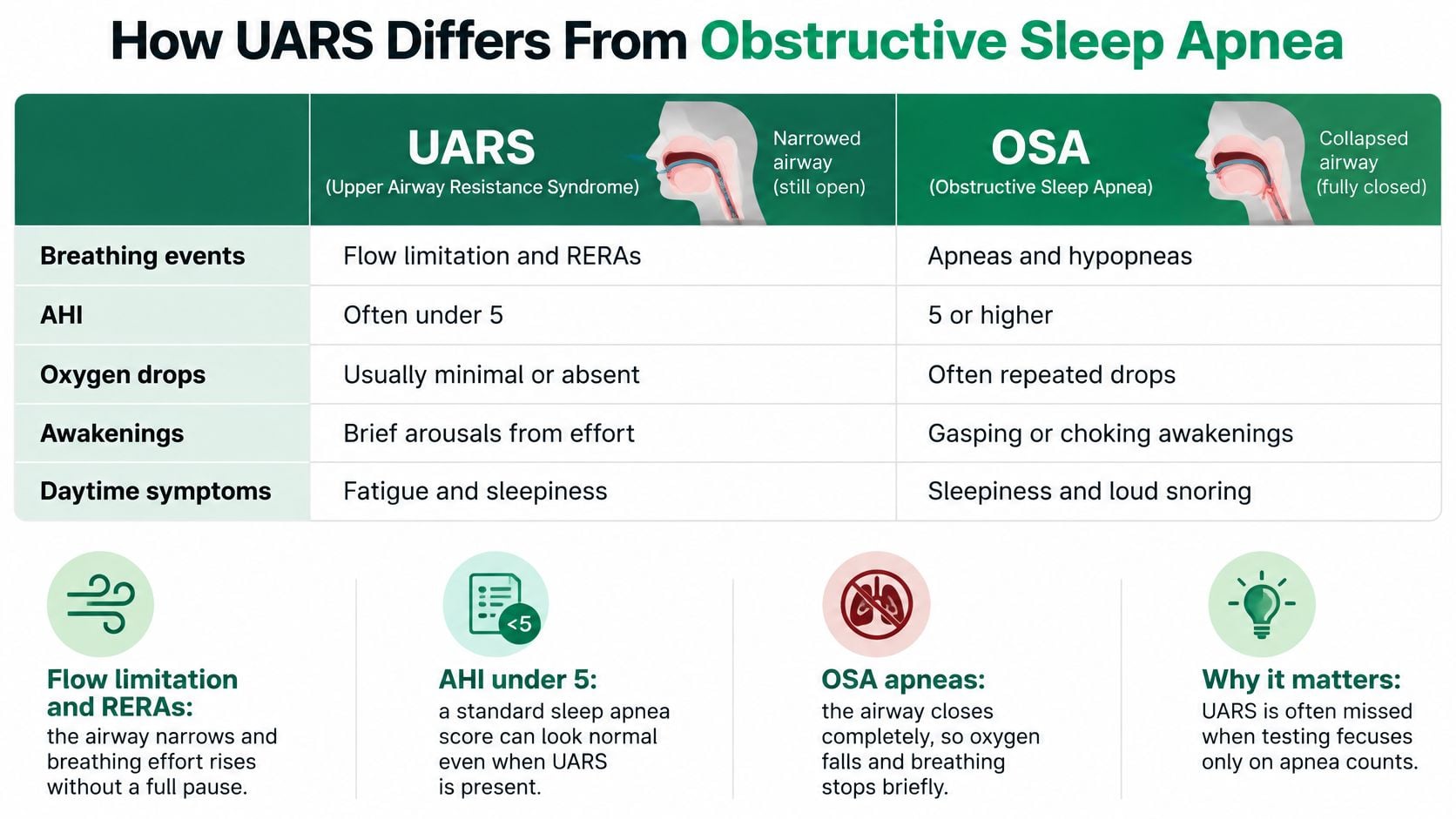
| Feature | UARS | Obstructive sleep apnea |
|---|---|---|
| Main breathing events | Flow limitation and RERAs; AHI often under 5 | Apneas and hypopneas |
| Event severity labels | Not graded by the usual apnea bands | Mild 5-15, moderate 16-30, severe above 30 per hour |
| Oxygen | Usually stays near the sleeper's baseline under research definitions | Drops are more common |
| Who it often affects | Frequently younger and slimmer; women outnumbered men in the population study described below | More often older adults with higher body weight |
| Prominent complaints | Fatigue, insomnia, unrefreshing sleep | Loud snoring, witnessed pauses, sleepiness |
| Study clues that matter | Flow flattening, RERAs, sometimes esophageal pressure | AHI and oxygen desaturation |
The severity ladder is the first real fork in the road. A physician classifies obstructive sleep apnea as mild at 5 to 15 events per hour, moderate at 16 to 30 events per hour, and severe above 30 events per hour. UARS has no equivalent scale, because its defining events are effort-related arousals and flow limitation rather than countable pauses.
UARS isn't rare, though the measured frequency swings with the definition applied. A population study using strict criteria (AHI below 5, minimum oxygen at least 92 percent, airflow limitation for at least 5 percent of sleep, and daytime sleepiness or fatigue) estimated prevalence at 3.1 percent overall, 4.4 percent among women, and 1.5 percent among men, as summarized in a review of UARS epidemiology and clinical features. The sex gap under those rules is striking, and it matters clinically.
Who tends to get overlooked
The same review describes people with UARS as frequently younger and thinner than typical obstructive sleep apnea populations, with insomnia and fatigue speaking louder than witnessed pauses. A man in his sixties with a high body weight fits the textbook apnea picture. A woman in her thirties who wakes two to three hours after falling asleep and can't get back down fits it less cleanly, so her breathing rarely gets examined.
Overlapping symptoms create a second blind spot. Headaches, jaw pain, and clenching bring people to a dental office, not a sleep lab. More than 60 percent of patients with TMJ issues have obstructive sleep apnea, so a sleep study may be suggested during TMJ treatment when the symptom pattern fits. The overlap is large enough that jaw symptoms and breathing deserve to be checked in the same conversation.
The question that changes the report: was airflow limitation scored, and were arousals counted, or was the study built around apnea count and oxygen alone?
A low AHI rules out severe apnea on the night of the test. Flow limitation and arousals can still fragment sleep when they went unmeasured, which is how some people hear the word normal while their sleep keeps falling apart. Persistent fatigue with an AHI under 5 is a reason to look further and to have a qualified clinician read the whole night, and the questions above give that conversation a place to start.
Table of Contents
- Who tends to get overlooked
- How Breathing Effort Shapes Sleep and What Testing Shows
- Care Options After a Careful Evaluation
- When to Seek Prompt Medical Care
- Request an Appointment or Take the Sleep Quiz
How Breathing Effort Shapes Sleep and What Testing Shows
Sleep doesn't need a crisis to collapse. It needs friction.
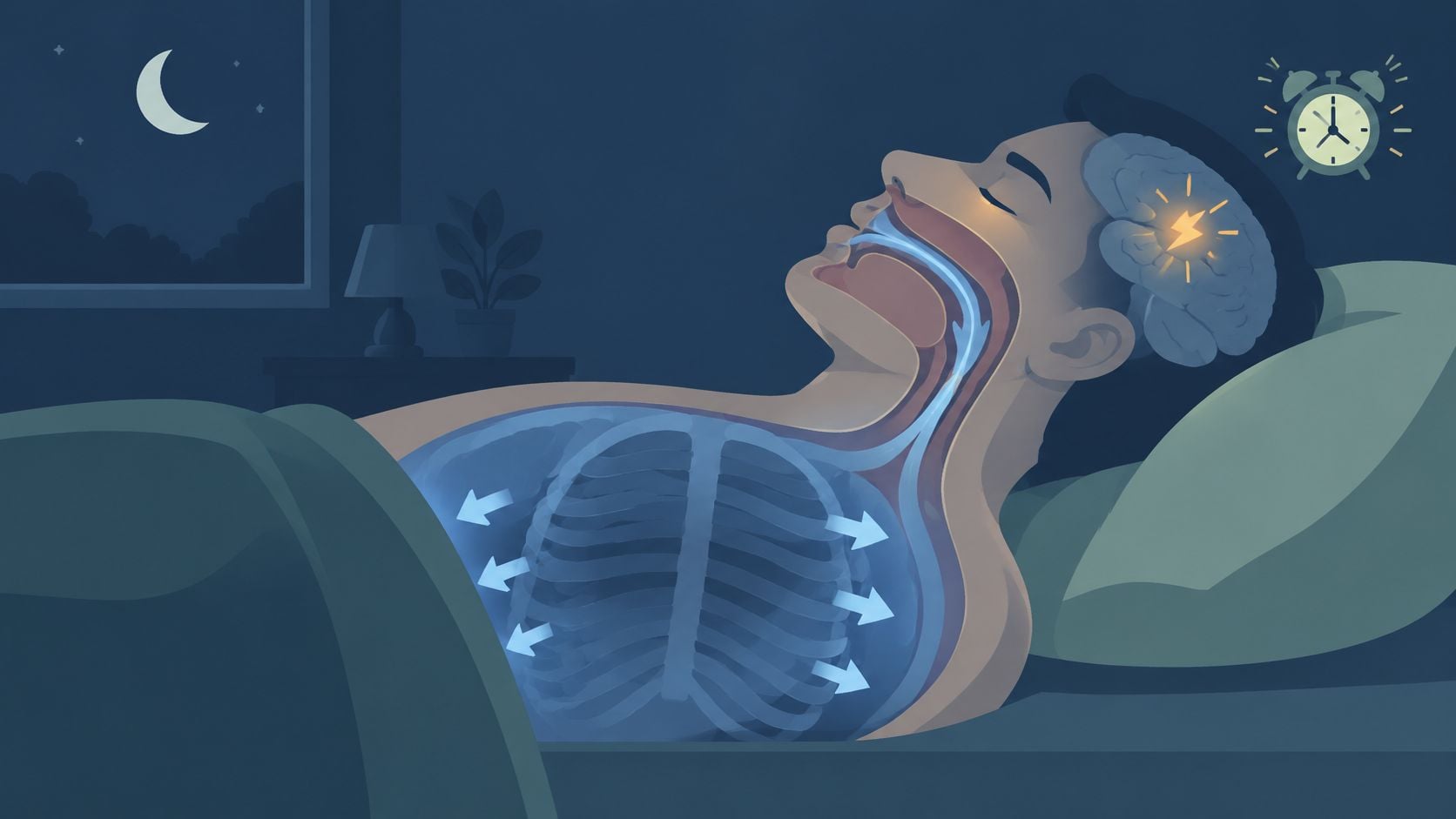
Each flow-limited breath makes the chest and diaphragm pull against a narrower opening, which creates negative pressure inside the chest and switches on a mild stress response. A review in the Journal of Clinical Sleep Medicine describes the consequence plainly: repetitive flow-limited breaths generate negative intrathoracic pressure and autonomic activation, forcing the brain to repeatedly transition toward wakefulness to restore airway patency. Symptoms then reflect cumulative sleep disruption and a heavier breathing workload, not sustained low oxygen.
That's the piece often missed. A night can look reassuring on an oxygen graph and still deliver almost no deep, consolidated sleep.
Think of a hallway light wired to a motion sensor. Nobody walks past long enough to leave it on, and nobody stands still long enough for it to go dark. The bulb burns all night without ever lighting the hall. Sleep with repeated arousals behaves the same way. The brain never fully wakes and never settles into deep, restorative stages, so the night produces hours without recovery.
What the pattern looks like by morning
The downstream complaints are broad, and they rarely sound like a breathing problem. People describe difficulty staying asleep, waking unrefreshed, daytime fatigue, reduced concentration, anxiety or low mood, morning headache, teeth grinding, and nighttime bathroom trips. Some reports add orthostatic symptoms or cold hands and feet from autonomic activation.
None of that is dramatic in the telling, which is exactly why it gets filed under stress, workload, or "just how I am." A pattern that repeats for years starts to feel like a personality trait.
A step-by-step path to a clear answer
- Write the pattern down. Track snoring, unrefreshing sleep, awakenings, morning headache, jaw clenching, daytime fatigue, current medications, and any nasal blockage. Two weeks of notes beats a vague memory in a short appointment.
- Get the anatomy examined. A clinician trained in airway and jaw structure can look at nasal patency, palate shape, tongue space, jaw position, and bite, and connect those findings to what happens at night.
- Complete a sleep study. Sleep apnea cannot be diagnosed from symptoms alone. It's determined either by an overnight polysomnography at a facility built to monitor sleep or by a home sleep test.
- Know what a home device captures. The home sleep test sensors monitor airflow, respiratory effort, blood oxygenation, movement patterns, and snoring. What most don't capture is brain-wave arousal, so RERAs can go undercounted and the score can read lower than the disruption.
- Read past the AHI line. Ask about the respiratory disturbance index (RDI), which adds RERAs to apneas and hypopneas. Ask about flow flattening, the oxygen trace, and whether arousals were scored at all.
- Push further when symptoms and numbers disagree. If a home study comes back low and the fatigue persists, ask about attended polysomnography with nasal pressure monitoring and arousal scoring. Historical confirmation sometimes involved esophageal pressure monitoring to demonstrate excessive inspiratory effort, and modern studies rely more on nasal pressure and flow signals.
- Rule out the look-alikes. Persistent fatigue can come from primary insomnia, circadian timing disorders, anemia, medication effects, or mood disorders. Skipping this step leads to treating the wrong thing.
When the report lands, what the numbers on a sleep apnea test mean is worth reading before the follow-up visit, so the conversation starts on the second page instead of the summary.
What to request at the follow-up: the full report, not just the summary page. Ask for the RDI, the arousal index, the oxygen trace, whether the lab scored RERAs, and which hypopnea rule the lab used.
Persistent fatigue with an AHI under 5 is a reason to look further, not a reason to self-diagnose or to give up on the question. It's also not a reason to assume the answer is UARS. It's a reason to have someone qualified read the whole night.
Care Options After a Careful Evaluation
Care starts with what the evaluation found, not with a device catalog. Four findings change the plan more than anything else: how blocked the nose is, where the jaw sits relative to the airway, how much room the tongue has, and how far the airway narrows during sleep. Each one points toward a different lever.
Start with breathing and daily habits
Nasal obstruction is a common and treatable contributor. If the nose is blocked by allergy, structural narrowing, or chronic congestion, treating that first is sensible, since air has to get in somewhere. Breathing retraining is a supportive skill some patients use for comfort. The Buteyko method, for example, re-trains the body to breathe in and out through the nose with light, regular, effortless breaths driven mainly by the diaphragm. It's a comfort and habit tool, not a treatment for apnea, and it works best alongside a proper diagnosis.
Oral appliance therapy
A custom oral appliance is a small device that positions the lower jaw slightly forward to help keep the airway more open during sleep. It's often considered by people who want an alternative to CPAP or who can't tolerate the mask. Simple tests are run to determine how much advancement is needed to prevent snoring, and adjusting the appliance to its best position can sometimes take a period of time. Subjective symptoms generally improve within 30-60 days, though results vary from person to person and aren't guaranteed.
Pain and Sleep Therapy Center fits custom oral appliances as part of a root-cause plan, with follow-up adjustments as the position is refined.
Worth saying plainly: no appliance, exercise, or device cures sleep-disordered breathing. The goal is to lower the effort of breathing and protect sleep, then keep checking whether it's working.
Where CPAP fits
CPAP is an effective medical therapy, and a physician may recommend it, especially when breathing events are clearer or an appliance alone isn't enough. Needing CPAP isn't a failure. It's a treatment match. Some people use it nightly with few problems, and others struggle with the mask or pressure, which is where an appliance conversation becomes useful. You can read more about apnea treatment without CPAP to understand how the options compare.
When the airway itself is the barrier
Tongue mobility belongs in this picture. In adults, tongue ties can contribute to sleep-disordered breathing, snoring, sleep apnea, and head, neck, and shoulder pain, and a restricted tongue can be assessed alongside jaw pain in the same visit. When physical barriers in the airway prevent CPAP and oral appliances from helping, Pain and Sleep Therapy Center works with the appropriate physician to create a plan for the best possible outcome.
The right match depends on the study, the anatomy, and what the person wants from treatment. A device that never gets worn helps nobody, so comfort and fit belong in the decision from day one.
When to Seek Prompt Medical Care
Some signals shouldn't wait for a routine appointment. A partner who sees pauses in breathing followed by gasping or choking is describing an event that warrants prompt evaluation, well before the next scheduled checkup.
Chest pain, fainting, or new shortness of breath needs urgent medical attention. That is a same-day call.
Drowsiness at the wheel is its own red flag. Don't drive when you're drowsy, and raise any sleepiness behind the wheel with a physician before the next long trip. Nodding off during meetings, meals, or while watching a child deserves the same conversation.
What else deserves a medical review
- Fatigue out of proportion to time in bed: a full night that never refreshes can come from fragmented sleep, but anemia, thyroid disorders, and several other conditions produce the same dragging tiredness, so a physician's review comes before any sleep conclusion.
- Mood changes that arrived alongside the sleep problems: depression and anxiety fragment sleep, and broken sleep feeds both, so which came first matters when a physician sorts the causes.
- Headaches that come back: recurring morning headaches have several possible sources and shouldn't be assigned to one cause without a look.
- Medication effects: sedatives, some blood pressure drugs, and other prescriptions affect sleep and daytime alertness.
- A home test that doesn't match how you feel: a result is data, not a verdict, and it doesn't replace a physician's review of symptoms and history.
For an urgent visit, the notes started earlier do the talking. Describe what a partner witnessed, when symptoms began, and what a typical night looks like, and let the clinician place the pattern.
Request an Appointment or Take the Sleep Quiz
Three lines summarize the decision. Match your experience against the symptom rows above. Don't stop at a low AHI if sleep still feels broken. And get a proper sleep study interpreted with a physician rather than relying on a questionnaire alone.
At its Newark, Delaware, and Bryn Mawr, Pennsylvania locations, Pain and Sleep Therapy Center offers both paths forward: request an appointment for a full evaluation, or take the online Sleep Quiz as a starting screen. The quiz frames the conversation; diagnosis itself comes from an overnight sleep study at a facility designed to monitor sleep or from a home sleep study. The home test's sensors track airflow, respiratory effort, blood oxygenation, movement patterns, and snoring, giving the interpreting physician a record of the night rather than a guess. Patients are seen by a dentist with advanced training in treating sleep apnea.
Visits focus on root causes across the jaw, airway, and sleep symptoms, with home sleep testing and conservative options such as oral appliances discussed when appropriate, always alongside the person's physician. Dr. Ryan Robinson is triple board-certified in craniofacial pain and dental sleep medicine. Because obstructive sleep apnea is a medical condition, treatment with a dental device is covered through medical insurance and is subject to the patient's annual deductible.
Improvement is individual, and no device or exercise is a cure. CPAP remains a respected medical treatment when it's the better fit, and when an oral appliance falls short of treatment goals the center supports the patient in obtaining other effective therapies. A useful question for any sleep study review, wherever it happens, is how arousals and breathing effort were scored.
Readers who recognized their own nights in these upper airway resistance syndrome symptoms can request an appointment or take the Sleep Quiz at Pain and Sleep Therapy Center.