The alarm rings after another noisy night. A partner remembers loud snoring and moments when breathing seemed to stop, while the person beside them wakes with a headache and little energy. Searching for a way to fix sleep apnea is understandable, but the most useful next step isn't buying a mouthpiece. It's finding out what happens to breathing during sleep, then choosing treatment that works and can be used consistently.
Table of Contents
- Why Snoring Alone Does Not Fix Sleep Apnea
- Confirm the Diagnosis Before Any Device
- Match Therapy to Severity and Preference
- Fit and Check an Oral Appliance
- Habits That Support Nighttime Breathing
- When Treatment Is Not Working Yet
- Request an Appointment or Take the Sleep Quiz
Why Snoring Alone Does Not Fix Sleep Apnea
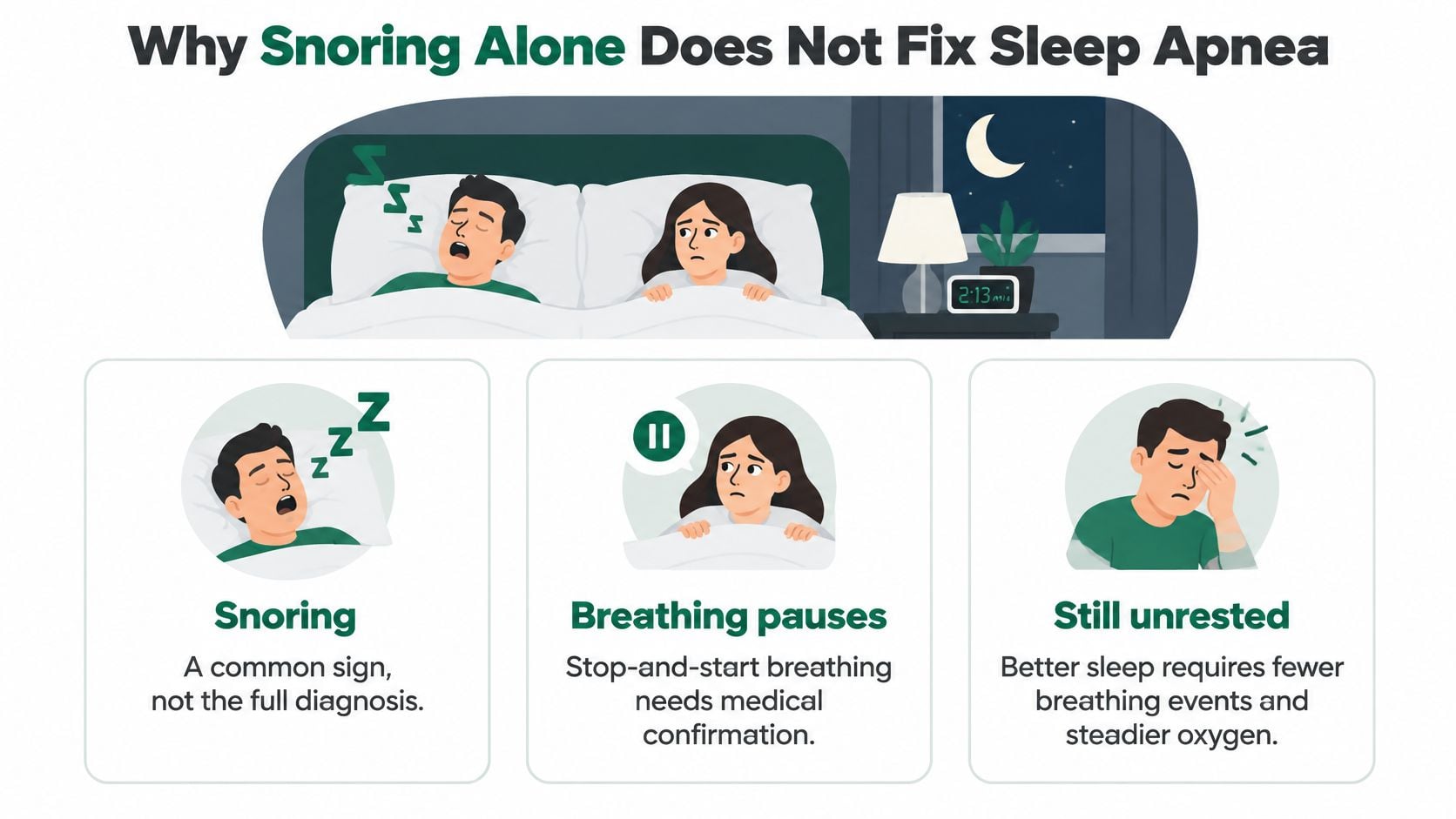
A quieter night can feel reassuring, especially when snoring has been disruptive. But snoring is only a sound, while obstructive sleep apnea (OSA) involves the upper airway repeatedly narrowing or collapsing during sleep. Treatment aims to reduce these breathing interruptions, support steadier oxygen levels, and improve daytime function. Less noise alone does not show whether the airway is staying open.
OSA is common, and many people with it have never been tested. A 2019 global analysis estimated that approximately 936 million adults aged 30 to 69 had at least mild OSA, including about 425 million with moderate-to-severe disease. A 2025 Sleep journal abstract, summarized by the American Academy of Sleep Medicine newsroom, estimated that as many as 85.6 million U.S. adults may have OSA, with approximately 68.5 million, about 80%, undiagnosed.
Signs that deserve an evaluation
Snoring has several possible causes, so the sound alone cannot establish OSA. An evaluation is especially appropriate when snoring occurs with:
- Witnessed breathing pauses or repeated gasping.
- Morning headaches or sleep that does not feel refreshing.
- Strong daytime sleepiness, especially during quiet activities.
- Blood pressure that stays high despite treatment.
Jaw symptoms may also prompt a discussion about sleep. Pain and Sleep Therapy Center notes that greater than 60% of patients with TMJ issues have OSA, so a sleep study may be suggested during TMJ therapy. Jaw pain by itself, however, cannot diagnose apnea.
The useful distinction is between symptom relief and airway control. A treatment that quiets snoring may still leave breathing interruptions, while a stronger option that someone cannot tolerate may go unused. A sleep physician confirms the diagnosis and severity, and follow-up checks whether the chosen treatment is controlling breathing. The practical goal is an appropriate therapy the patient can use consistently, not silence alone.
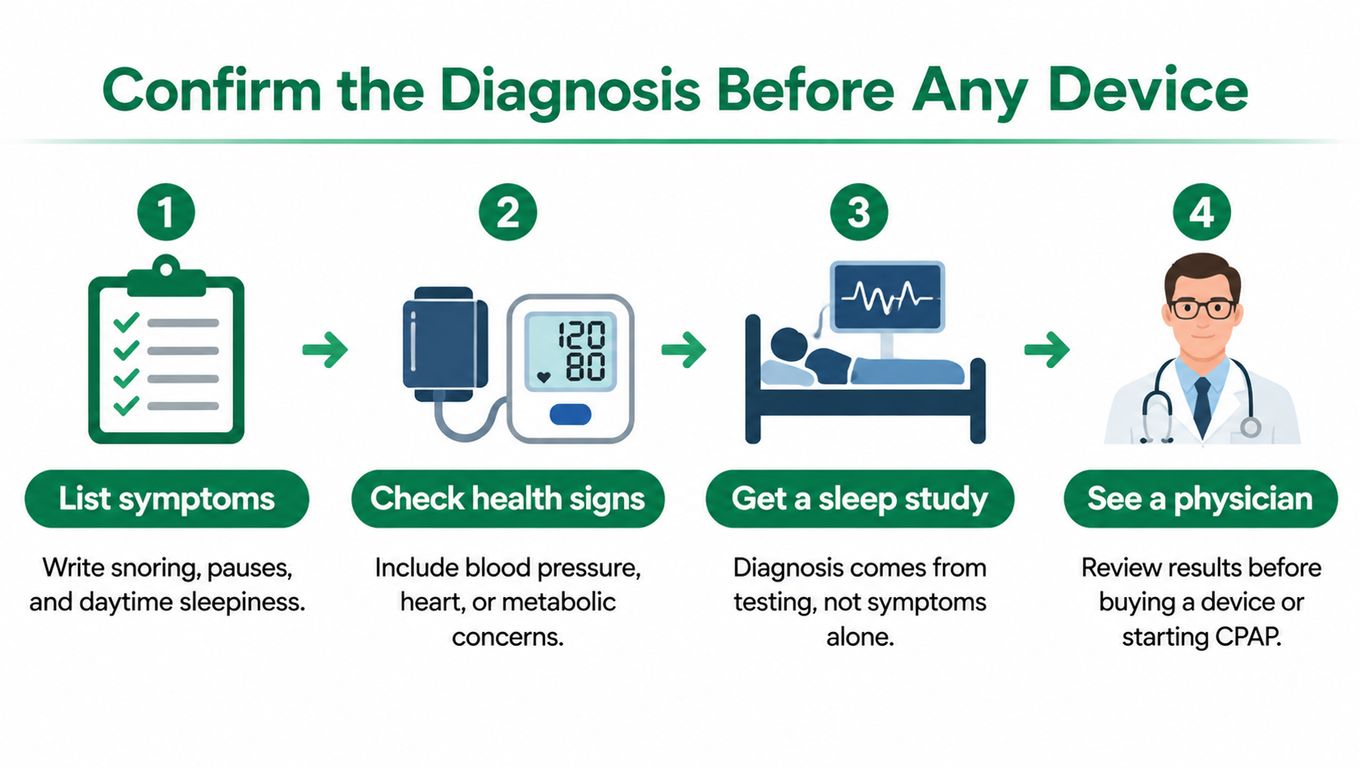
Confirm the Diagnosis Before Any Device
A questionnaire, snoring recording, or wearable alert can raise concern, but it cannot establish sleep apnea. Diagnosis requires a sleep study interpreted by a physician. Testing before choosing a device helps show whether apnea is present and how severe it is.
The AASM guideline on evaluating and managing adult OSA places objective testing within a clinical evaluation. Medical history gives the physician context for interpreting results, rather than treating a single number as the whole picture.
A practical testing pathway
Write down symptoms and health conditions. Include snoring, observed breathing pauses, daytime sleepiness, blood pressure, heart disease, metabolic conditions such as diabetes, and medicines that cause drowsiness. Do not stop medicines without guidance from the prescriber.
Arrange an appropriate study. If you have not had a sleep study, arrange testing before selecting a device. Changed symptoms or health may also make a new study appropriate instead of relying on an older result.
Consider home testing when appropriate. For many uncomplicated adults, a home sleep apnea test is an accepted option. Learn about the process through this guide to home sleep apnea testing before scheduling.
Use laboratory testing when needed. Polysomnography (PSG) is an overnight study at a facility designed to monitor sleep. It may be recommended when other medical conditions, another sleep disorder, or an inconclusive home result complicates the assessment.
Review the physician's interpretation. At Pain and Sleep Therapy Center, a boarded sleep physician reads and interprets raw data from both home studies and PSG. Results should include breathing-event frequency, oxygen findings, and a baseline measure of sleepiness, such as the Epworth Sleepiness Scale questionnaire.
Testing caution: A home test can underestimate severity because it may record time in bed rather than time spent asleep. If symptoms are strong but a home result is negative or unclear, a laboratory study may be recommended. This possibility is discussed in a review of updated international guidance.
Sleep apnea severity by AHI
The apnea-hypopnea index (AHI) counts complete breathing pauses and partial airflow reductions per hour of sleep. The AASM obstructive sleep apnea indicator report describes diagnostic thresholds, while the severity bands below reflect the classification used by Pain and Sleep Therapy Center.
| Severity or threshold | AHI (events per hour) | What it means for next steps |
|---|---|---|
| Mild OSA | 5 to 15 | Symptoms or heart and metabolic conditions often shape the decision |
| Moderate OSA | 16 to 30 | Therapy choice weighs symptoms, related conditions, and preference |
| Severe OSA | Above 30 | PAP is first-line; a physician confirms the plan |
| Diagnostic threshold | 5 or more with symptoms or related conditions; 15 or more without symptoms | A physician confirms the diagnosis |
AHI is one part of the assessment. Oxygen drops, disrupted sleep, medical conditions, and daytime function can differ even when event rates are similar. Leave the evaluation with written results, a severity assessment, and a medical plan. Symptom relief alone does not show whether breathing is controlled, so follow-up matters.
Match Therapy to Severity and Preference
A patient with severe obstructive sleep apnea may be advised to start with CPAP, while someone with less severe disease may have more than one treatment option. The right choice considers both the measured breathing problem and whether the patient can use the therapy consistently.
Match treatment to severity
| Situation | Usual first therapy | Practical guidance |
|---|---|---|
| Mild OSA, 5 to 15 events per hour | CPAP or a custom mandibular advancement device | Start with CPAP if the patient tolerates the mask. A custom oral appliance is an option if CPAP is refused or cannot be tolerated. |
| Moderate OSA, 16 to 30 events per hour | CPAP or a custom mandibular advancement device | Start with CPAP when it is tolerated; consider a custom appliance when CPAP is not acceptable or usable. |
| Severe OSA, above 30 events per hour | CPAP first | If CPAP cannot be used, discuss an oral appliance and other suitable options with the care team. |
| Primary snoring, fewer than 5 events per hour | Evaluate the cause of snoring | Snoring alone does not establish OSA or justify apnea treatment. |
The 2025 VA/DoD guideline recommends positive airway pressure as first-line treatment for severe OSA and allows either PAP or a mandibular advancement device for an AHI or respiratory-event index from 5 to less than 30 events per hour. The severity bands above classify mild OSA as 5 to 15 events per hour, moderate as 16 to 30, and severe as above 30.
Understand the trade-offs
Positive airway pressure (PAP) sends pressurized air through a mask to help keep the airway open. Continuous positive airway pressure (CPAP) provides a continuous prescribed pressure. A mask may take time to get used to, so comfort concerns are worth discussing with the care team before abandoning treatment.
A mandibular advancement device (MAD) is a custom oral appliance that holds the lower jaw slightly forward during sleep. It can be adjusted gradually and may suit adults who cannot tolerate CPAP or prefer another option. Dental health and jaw movement affect whether it is appropriate.
The therapies do not necessarily control breathing equally. A systematic review of randomized controlled trials found that oral appliances improved sleep-disordered breathing and subjective sleepiness, while CPAP reduced AHI more effectively. That difference matters, particularly in severe OSA, where a CPAP trial is generally the clearer starting point. A comparison of oral appliance therapy versus CPAP can help patients prepare questions about comfort, daily use, and follow-up.
A therapy that is used may offer more practical benefit than a stronger therapy that is abandoned. For example, if discomfort leads a patient to remove a CPAP mask soon after falling asleep, the care team can address the barrier and consider another appropriate option. Symptom relief alone does not confirm that the airway is controlled, so treatment response must be assessed rather than assumed.
Lifestyle changes may support treatment, but they do not replace diagnosis or verified airway control. Surgery may be considered when conservative options are unsuitable or insufficient. Primary snoring without diagnosed OSA calls for evaluation of its cause, not an automatic apnea prescription.
Fit and Check an Oral Appliance
Oral appliance therapy is a monitored medical pathway, not an online purchase followed by a hopeful guess. A sleep physician retains responsibility for the medical diagnosis, while a dentist with advanced sleep training manages fit, adjustment, and dental effects.
The joint AASM and AADSM oral appliance guideline supports a custom, titratable device, meaning one that can be gradually adjusted, with qualified dental oversight and follow-up sleep testing.
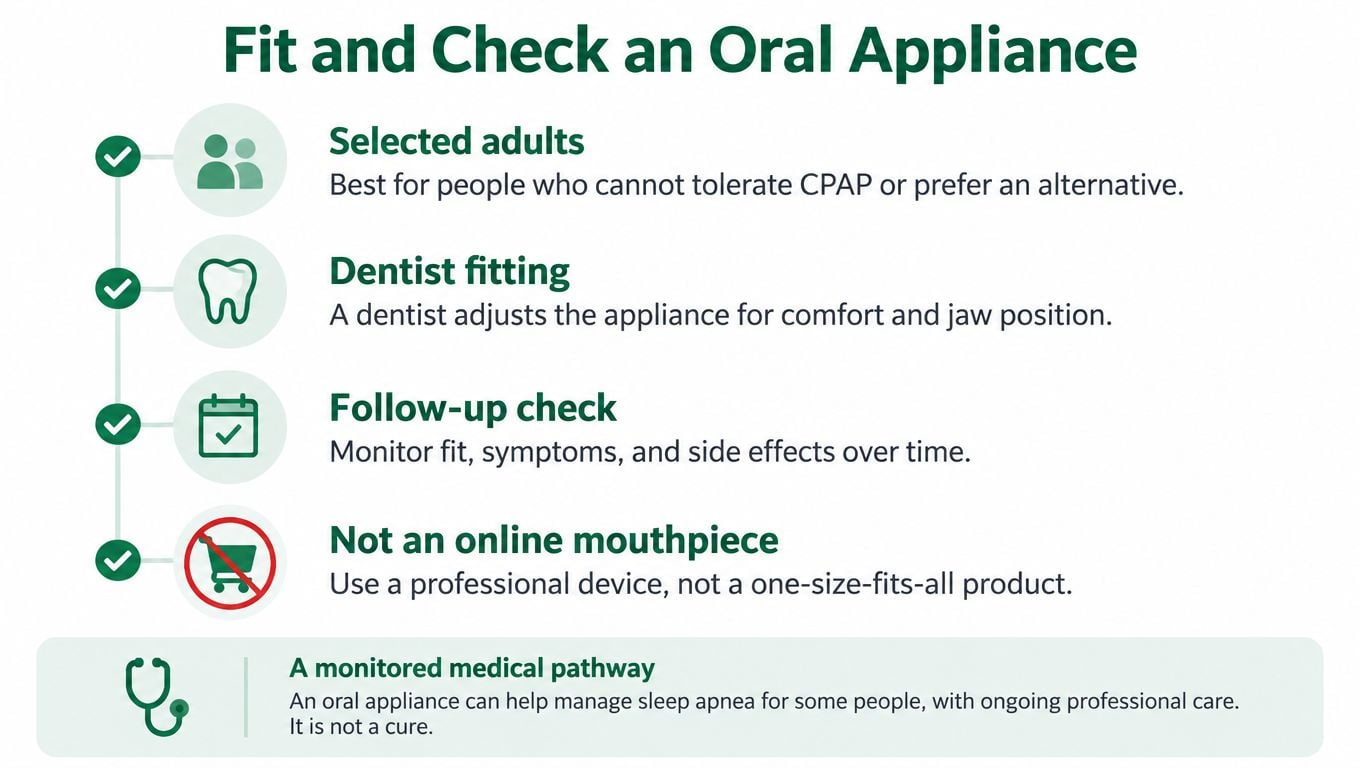
The fitting and verification process
Confirm diagnosis and severity first. The appliance should address documented OSA. Choosing it solely because snoring is bothersome skips the medical assessment.
Check teeth, gums, and jaw joints. Active decay, gum disease, insufficient teeth, or limited jaw movement may make a particular appliance unsuitable. Pain and Sleep Therapy Center patients are seen by a dentist with advanced training in treating sleep apnea.
Choose a custom, adjustable appliance. A boil-and-bite guard doesn't provide the same monitored treatment pathway. Fit matters for both retention and tolerability.
Advance gradually. At Pain and Sleep Therapy Center, simple tests help determine the advancement needed to prevent snoring, and reaching the best position can take time. Less snoring guides adjustment, but advancing farther isn't automatically better.
Wear it throughout sleep as prescribed. Comfortable use is part of treatment, not an optional extra. Removing the appliance during the night leaves part of sleep untreated.
Verify the result objectively. A follow-up sleep study checks residual breathing events. Feeling better is encouraging, but it doesn't replace measurement.
Improvement is not the same as complete control
A 2024 analysis of oral-appliance studies reported AHI improvements of 48% for mild, 67% for moderate, and 62% for severe OSA. These are study findings, not a prediction for an individual, and a substantial reduction can still leave clinically important apnea.
Jaw comfort needs attention throughout treatment. A nighttime appliance is a hallmark maintenance therapy for TMJ problems, but Pain and Sleep Therapy Center notes that an appliance not designed to control apnea can double its severity in some patients. A pain guard and an airway appliance shouldn't be treated as interchangeable.
If an appliance doesn't meet treatment goals, another effective therapy should be pursued rather than continuing an unsuccessful device.
Habits That Support Nighttime Breathing
Habits work best beside a confirmed treatment plan. They may improve comfort or reduce contributing factors, but a patient shouldn't postpone testing while trying to perfect sleep position, weight, or bedtime routines.
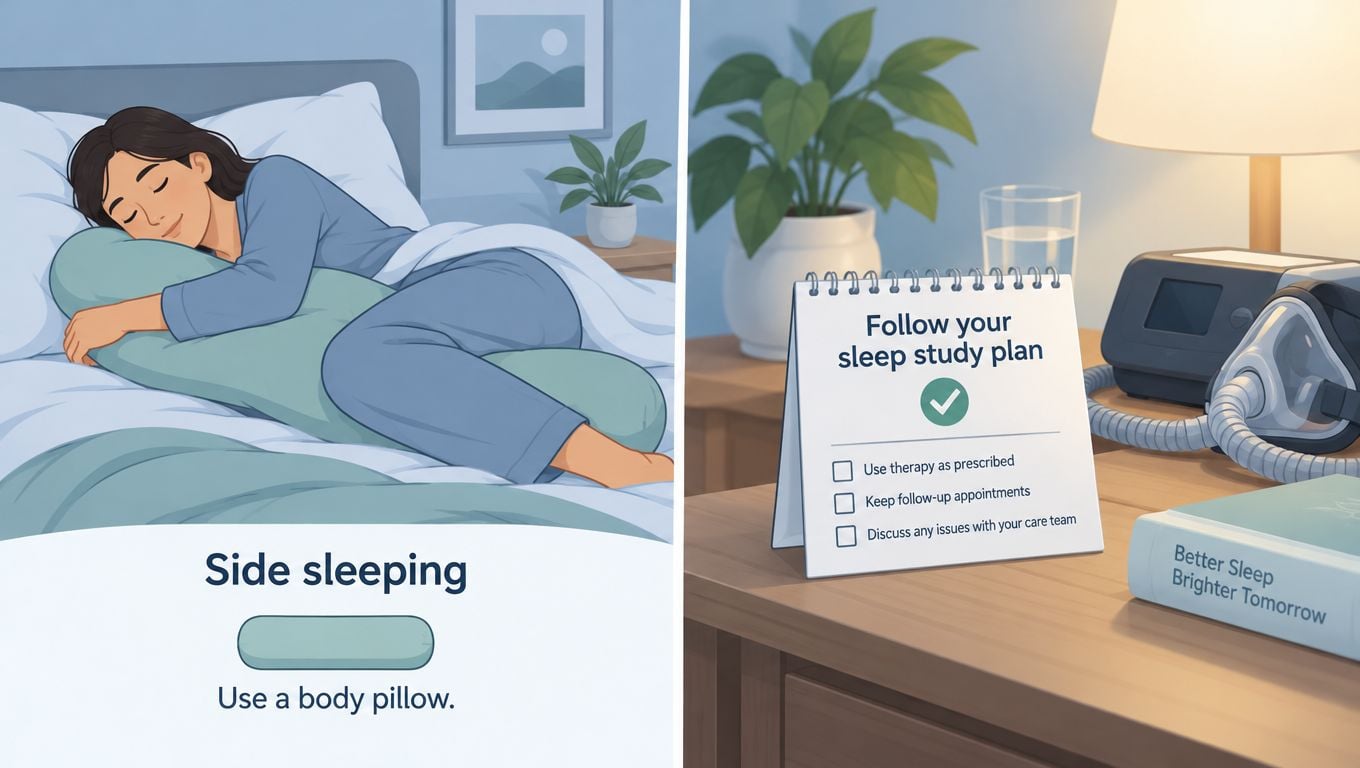
Small changes with a clear purpose
Try side sleeping when position matters. If testing shows worse breathing on the back, a pillow behind the back may help maintain a side position. Positional strategies are among the supportive approaches described in AASM oral-appliance practice guidance.
Address weight without delaying care. Weight-related treatment may help some adults, but weight isn't the only cause of airway obstruction. A manageable example is replacing a sugary drink with water while continuing prescribed therapy.
Review alcohol and sedating medicines. Alcohol near bedtime can worsen airway relaxation. A prescriber should review sedating medicines; prescribed drugs shouldn't be reduced or stopped independently.
Make nasal breathing easier. Saline, appropriate allergy care, or evaluation of persistent blockage may improve treatment comfort. Guidance on mouth breathing and nasal breathing can help frame a discussion, without assuming that nasal care alone treats OSA.
Keep a consistent sleep window. A dark, cool room and regular bedtime can support sleep. For broader routine-building ideas, Navilo Health's resource on everyday wellness with Navilo Health offers general wellness context, not apnea treatment.
Bring useful observations to the appointment
A brief sleep diary can record position, device use, caffeine and alcohol timing, and afternoon sleepiness. Those notes help the sleep physician and dentist distinguish treatment discomfort from other sleep problems.
Jaw clenching, morning headaches, and facial pain deserve their own assessment. Restricted tongue movement may also warrant evaluation when oral-function or breathing symptoms coexist; a tongue-tie finding alone doesn't establish the cause of OSA or mean a release will control it.
When Treatment Is Not Working Yet
Feeling somewhat better can hide an unfinished treatment plan. In an objective-adherence assessment summarized in an AASM quality-measure document, 60% reported nightly CPAP use, but only 46% met at least 4 hours per night on at least 70% of nights. That gap supports reviewing device records rather than relying on memory.
What lingering problems usually mean
| What you notice | Likely reason | Next step |
|---|---|---|
| Still sleepy on CPAP | Too few hours, mask leak, dry nose, or insomnia | Review download data and fix the barrier early |
| Jaw pain or bite change with an appliance | Too much advancement or a jaw-joint limit | Pause advancement and have the dentist recheck |
| Snoring seems gone but no new study | Symptoms are not proof | Repeat objective sleep testing |
| Severe symptoms and a negative home test | Home testing sometimes under-calls apnea | Ask about in-lab polysomnography |
| Both CPAP and the appliance miss the goal | A physical airway barrier may be contributing | Plan with the sleep physician; surgery may be discussed |
Troubleshoot rather than blame
CPAP records can help the team assess use, leaks, and residual events. Mask refitting, humidification, treatment of nasal obstruction, or a clinician-led pressure review may remove a practical barrier. The goal is use throughout sleep, not merely reaching an administrative benchmark.
With an appliance, new soreness or a shifting bite calls for dental review, not pushing through pain. AASM follow-up guidance supports objective testing and periodic visits with both the sleep physician and dentist to assess effectiveness, fit, oral structures, and bite.
A better response to difficulty is a better plan, not blame. Persistent symptoms deserve reassessment even when the patient has made a sincere effort.
Other conditions may contribute to disrupted sleep. Pause Medical's discussion of addressing sleep disruption from low testosterone provides context for a separate medical conversation when appropriate; it doesn't replace apnea testing or establish a hormonal diagnosis.
When a different treatment is needed
Pain and Sleep Therapy Center actively supports patients in obtaining other effective therapies when an oral appliance misses treatment goals. When physical airway barriers limit CPAP and appliances, the center coordinates with the appropriate physician. A separate TMJ-only guard shouldn't be added as a workaround for uncontrolled apnea.
For selected adults, a sleep physician may discuss surgery, including hypoglossal nerve stimulation, an implanted treatment that activates the nerve controlling tongue movement. A 2024 meta-analysis reported average AHI reductions of 20.14 events per hour in the short term and 15.91 events per hour in the long term. Outcomes vary, so surgery remains a considered option, not a guaranteed result.
Returning symptoms, substantial weight changes, or an outdated assessment should prompt a review.
Request an Appointment or Take the Sleep Quiz
A partner notices pauses in your breathing, or you wake with headaches and feel tired through the day. Those concerns can be reasons to request an evaluation. Sleepiness that makes driving unsafe calls for avoiding the drive and seeking prompt medical advice.
If you have not had a sleep study, or it has been more than 2 years since your last one, call the office so a new study can be arranged before your consultation. Tell the care team if your symptoms have changed, too. A study helps establish whether sleep apnea is present; symptoms alone cannot confirm it.
Choose the right starting point
A sleep physician reviews sleep-test results and can discuss next steps when results are positive or unclear, or treatment is not working. A dentist with advanced training in sleep apnea treatment can assess whether a custom oral appliance is appropriate. When sleep concerns occur alongside jaw or facial pain, or changes in the bite, a jaw and dental evaluation can address those issues as part of care.
Pain and Sleep Therapy Center is led by Dr. Ryan Robinson, a triple board-certified specialist in craniofacial pain and dental sleep medicine. The practice describes its approach as focused on root causes and coordinated, conservative care. Its offices are in Newark, Delaware, and Bryn Mawr, Pennsylvania.
An evaluation, not an online diagnosis
The website offers Request an Appointment and Take our Sleep Quiz. The quiz takes 15 seconds and can help you consider your sleep-health concerns, but it cannot diagnose sleep apnea. An evaluation can help clarify what to do next and whether further testing or treatment should be considered.
A treatment plan should fit the person and be usable consistently. Symptom relief alone does not show whether the airway is controlled, so follow-up remains part of care.
Visit Pain and Sleep Therapy Center to Request an Appointment or Take our Sleep Quiz and discuss an evaluation with the care team.