Breakfast can become a daily test of jaw movement. A stiff feeling when chewing, a new click near the ear, or aching that builds through a stressful workday may point to a temporomandibular disorder, or TMD, involving the jaw joint, chewing muscles, or both.
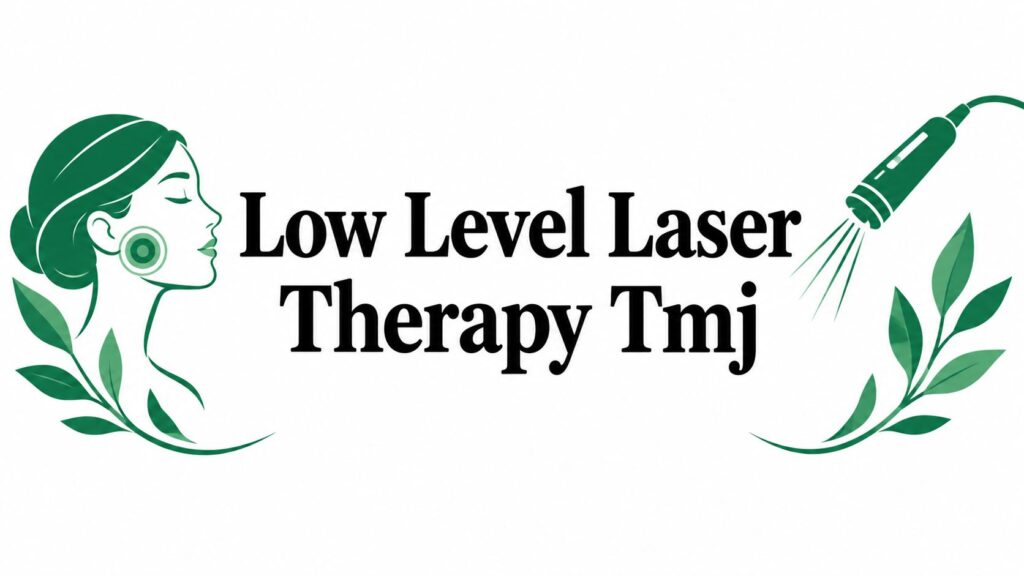
Low-level laser therapy, also called photobiomodulation, is one conservative option offered in some dental and physical therapy settings. It uses low-intensity light over the jaw area with the goal of reducing pain and supporting movement. It isn't magic or a stand-alone cure, but research suggests it may help selected patients when the treatment plan uses sensible settings and addresses the reason the jaw is overloaded.
This guide explains what the therapy is, what the strongest evidence shows, why wavelength and dose matter, and how laser compares with splints, anti-inflammatory medication, and TENS. It also explains why an evaluation matters, especially when symptoms could involve clenching, posture, sleep-related breathing, or structural joint changes. Resources on easing joint pain all day may offer additional comfort strategies, but persistent jaw symptoms still deserve a clinical assessment. Readers unsure whether symptoms fit TMD or another facial pain condition can review TMJ or trigeminal neuralgia guidance before choosing treatment.
Table of Contents
- Living With TMJ Pain and Looking for Options
- What Low Level Laser Therapy Actually Is
- What the Research Shows About Pain and Function
- Understanding the Settings Behind the Studies
- Who May Be a Good Candidate for This Approach
- Why Laser Works Best as Part of a Root-Cause Plan
- How LLLT Compares With Splints, NSAIDs, and TENS
- Questions to Ask and How to Take the Next Step
Living With TMJ Pain and Looking for Options
TMD is not just a sore muscle after an unusual meal. It can involve the temporomandibular joint, the muscles that move the jaw, or both. Pain may appear during chewing, yawning, speaking, or opening the mouth, while stiffness and tenderness can continue after the activity ends.
Laser therapy often attracts attention because it's non-invasive and usually doesn't require medication, injections, or surgery. The clinician applies a handheld device over the joint or nearby muscles, aiming to influence pain and inflammation without cutting tissue.
A careful decision starts with a more useful question than “Does laser work?” The question is whether the specific protocol matches the patient's symptoms and whether laser has a sensible place in a broader plan. Research findings vary because studies use different wavelengths, energy levels, treatment sites, session counts, and comparison treatments.
Practical rule: A clinic should be able to explain what it's treating, which settings it will use, how progress will be measured, and what happens if symptoms don't improve.
The strongest reviews suggest that photobiomodulation may reduce pain and support mouth opening, but they don't establish one universal recipe. Some patients may be reasonable candidates, while others need imaging, bite stabilization, physical rehabilitation, medical review, or evaluation of sleep and airway factors first.
The sections ahead answer the practical questions patients usually have. What does the light do? Which settings appear in the research? How many sessions might be considered? And when should laser sit beside a splint or medication rather than replace it?
What Low Level Laser Therapy Actually Is
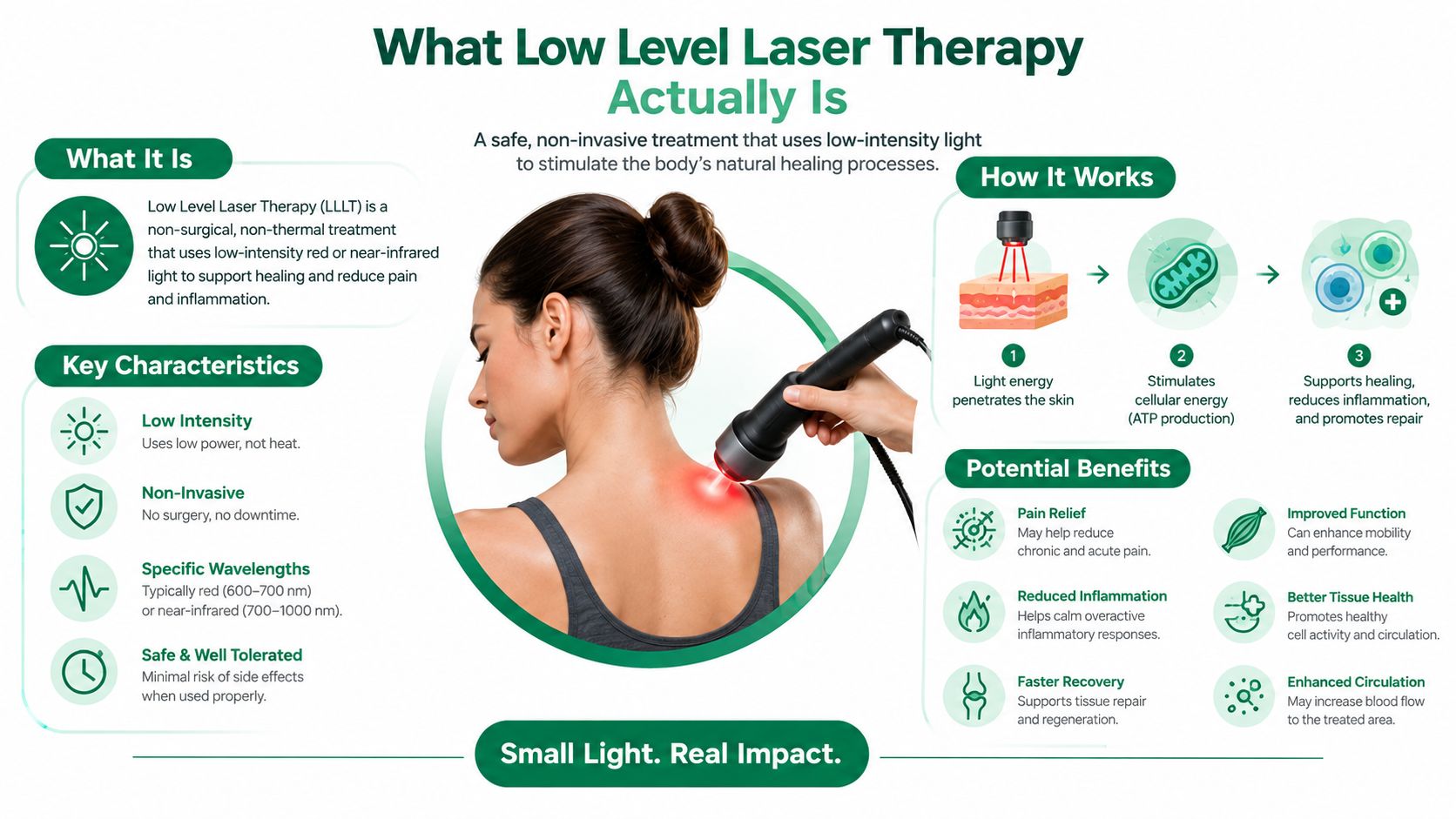
Low-level laser therapy, or LLLT, uses low-intensity light applied to the skin over the jaw joint and surrounding chewing muscles. The broader term photobiomodulation describes the proposed biological effect of light on cells. “Wavelength” means the color or band of light being used. TMJ studies often examine red or near-infrared light, with near-infrared wavelengths selected when the target tissue lies below the skin.
A simple analogy is sunlight and a plant. A plant uses light to support its biology, while therapeutic light is delivered at selected wavelengths intended to interact with human tissue. The comparison isn't exact, but it helps explain why the treatment uses a measured dose rather than bright light chosen at random.
The dose has more than one part
Energy density describes how much energy reaches a defined area, commonly written in joules per square centimeter, or J/cm². A treatment plan also involves output power, exposure time, the number of points treated, and the total number of visits. Those details affect whether the light reaches the intended tissue and whether the dose resembles protocols studied in clinical trials.
The proposed effects include reduced inflammatory activity, support for cellular energy production, and temporary modulation of pain signals. These mechanisms are biologically plausible, but researchers are still mapping how they apply to different TMD subtypes and treatment parameters.
Therapeutic LLLT differs from a surgical or high-heat dental laser. It doesn't cut or remove tissue, and patients generally feel little or nothing during application. A practical patient guide to what to expect with cold laser therapy can help explain the general treatment experience, although jaw protocols still need to be discussed with the treating clinician.
What the Research Shows About Pain and Function
The evidence supports a measured answer. A 2025 systematic review of 44 randomized clinical trials involving 1,816 participants reported a 60–70% decrease in pain intensity on the Visual Analog Scale and a 10–20% increase in maximum mouth opening after LLLT for TMD. The review also reported that courses lasting longer than 4 weeks produced more sustained benefits and that LLLT compared favorably with occlusal splints, NSAIDs, and TENS with fewer side effects. The 2025 review still doesn't prove that every patient will experience those changes.
An updated 2023 systematic review included 40 studies. Of those, 27 reported reduced pain intensity in photobiomodulation groups, while 7 of 15 studies measuring maximum mouth opening found greater improvement than placebo. The review identified infrared diode lasers at 780–980 nm, energy density below 100 J/cm², output power up to 500 mW, and at least 6 treatment sessions as a promising treatment window, not a universal prescription. The updated review also reflects the variation between protocols.
| Outcome | Typical reported change | Follow-up window |
|---|---|---|
| Pain intensity | 60–70% decrease in the 2025 review | Immediate to short or medium term |
| Maximum mouth opening | 10–20% increase in the 2025 review | Immediate to short or medium term |
| Pain reporting | 27 of 40 studies reported reduced intensity | Review-defined study follow-up |
| Maximum opening versus placebo | 7 of 15 studies found greater improvement | Review-defined study follow-up |
Why averages can mislead
A patient shouldn't treat those figures as a promise. Studies differ in whether they treat the joint, muscles, or both. They also vary in wavelength, energy density, pulse pattern, number of points, session spacing, control group, and follow-up period.
That makes protocol comparison similar to comparing different medications without checking the drug, dose, or schedule. An older systematic review of 14 studies concluded that the inconsistencies prevented definitive treatment guidelines and suggested that LLLT might help joint pain more consistently than masticatory muscle pain. The earlier review remains useful because it explains why a simple yes-or-no answer is inadequate.
The most reliable conclusion is that LLLT may improve pain and function for some people, especially in the short term, but the right settings and durability of benefit remain unsettled.
Understanding the Settings Behind the Studies
A proposed laser plan becomes easier to evaluate when patients know which details matter. Three stand out: wavelength, dose, and treatment schedule.
Wavelength identifies the light band
Wavelength is measured in nanometers and describes the light band used by the device. Research on TMD commonly includes near-infrared wavelengths such as 830 nm or 904 nm, with practical benchmark ranges around 790–905 nm in protocols reporting more consistent analgesic effects. A meta-analysis found that 780 nm and 830 nm wavelengths were associated with moderate to large pain-relief effects when applied to the masticatory muscle or joint capsule. The meta-analysis supports asking about wavelength, but it doesn't establish one ideal setting for every jaw disorder.
Dose describes the delivered energy
Dose may be reported per point or as energy density. Practical benchmark data describe commonly used settings of 1.5–10 J/cm² per session across 4–15 sessions. Other reviews noted more consistent effects with infrared light around 790–905 nm, 3–8 J/cm² per point, and 8–12 sessions. The protocol review shows why “cold laser” alone isn't enough information.
A low dose may not adequately stimulate the intended tissue, while a higher dose isn't automatically better. The response can depend on the target, tissue depth, device output, and whether the clinician treats muscle, joint, or both.
Session count completes the picture
The 2023 review identified at least 6 sessions as part of a promising window, while the 2025 review found more sustained benefits with courses longer than 4 weeks. These findings don't mean every patient needs the same number of visits.
Before starting, patients can ask:
- Wavelength: Which wavelength will be used, and why does it suit the treatment target?
- Dose per point: How much energy will reach each point?
- Treatment points: Will the clinician treat the joint, chewing muscles, or both?
- Session plan: How many sessions are planned, and when will progress be reviewed?
A useful benchmark: A specific answer is more reassuring than a promise that a device works for everyone.
Who May Be a Good Candidate for This Approach
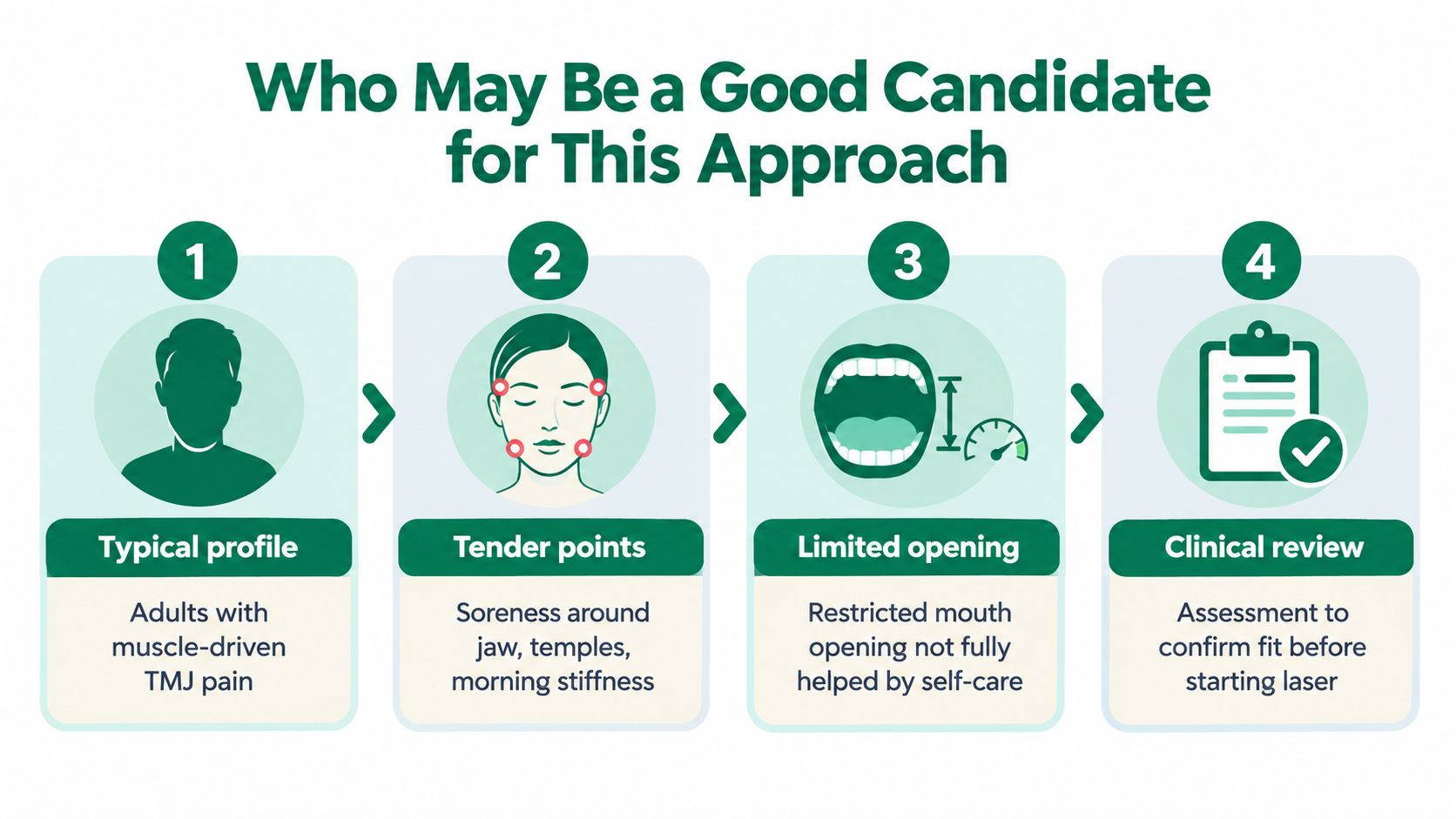
LLLT may be considered for adults with muscle-driven jaw pain, tender areas around the jaw or temples, morning stiffness, or limited opening that hasn't fully improved with self-care. The clinician still needs to determine whether the main problem involves muscle overload, joint irritation, disc movement, arthritis, injury, or another source of facial pain.
A typical session is straightforward. The provider places a handheld probe against the skin over the joint or chewing muscles, often using protective eyewear. The patient may notice faint warmth or no sensation at all. There's no anesthesia and generally no recovery period, so normal eating and speaking can usually continue afterward.
Published protocols vary, but treatment courses may involve 6–12 sessions, with the exact schedule selected according to the device, dose, symptoms, and response. The light can reduce sensitivity enough to make movement work more comfortable, but it doesn't replace stabilization or habit retraining.
When another path may come first
A clinician may pause or change the plan when there's an active infection, recent facial surgery, suspected malignancy in the treatment area, or pain dominated by structural joint damage. Those situations may require medical review, imaging, or a structural treatment plan before symptom-focused laser therapy is considered.
The same careful reasoning applies when symptoms are severe, the jaw locks, opening suddenly changes, or pain doesn't match the usual pattern. Guidance about whether TMD may be causing facial pain can help readers identify questions for an evaluation, but online information can't confirm a diagnosis.
Laser is more likely to make sense when the clinician can identify a treatable pain pattern and explain how the therapy will support the rest of care.
Why Laser Works Best as Part of a Root-Cause Plan
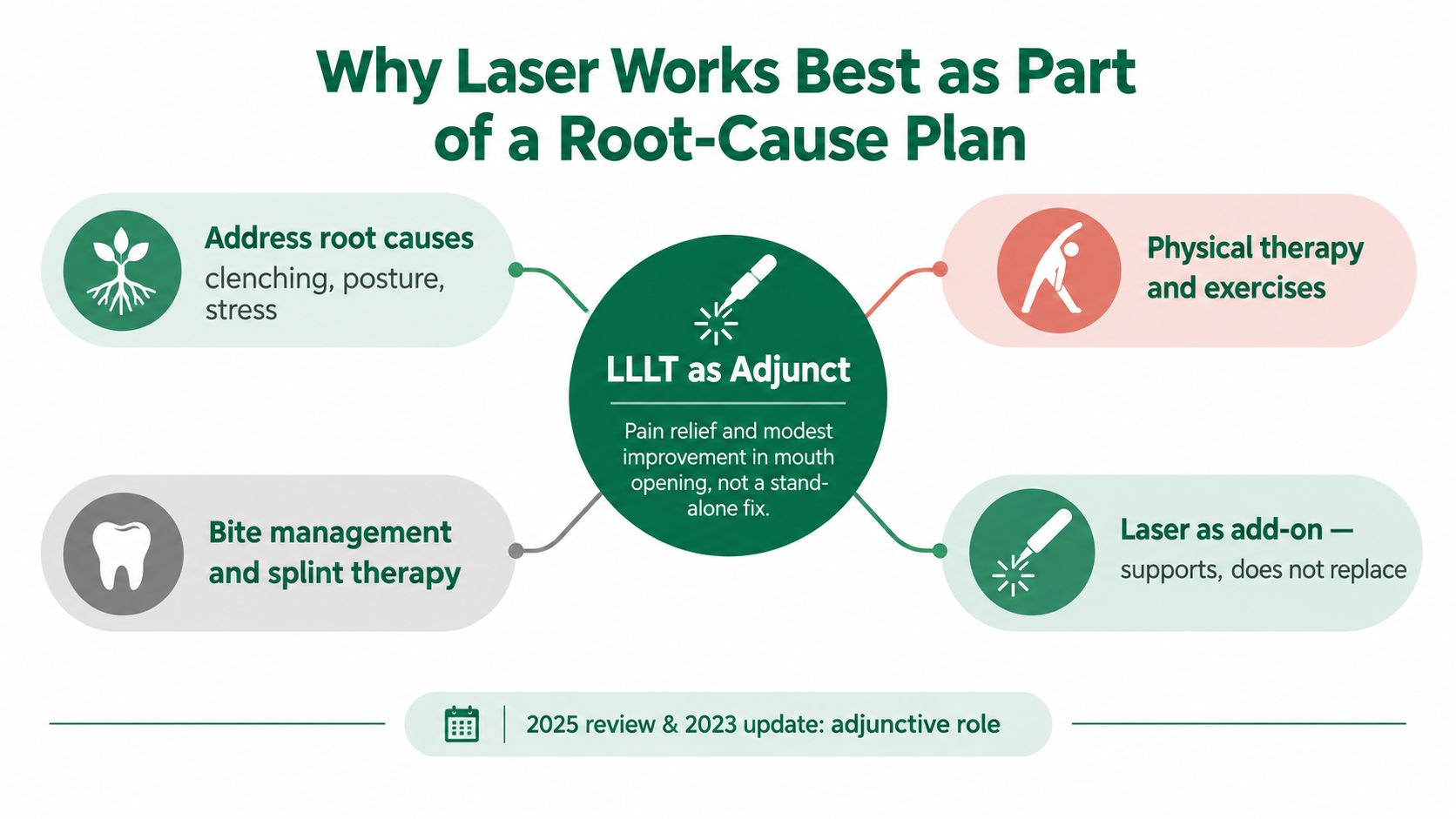
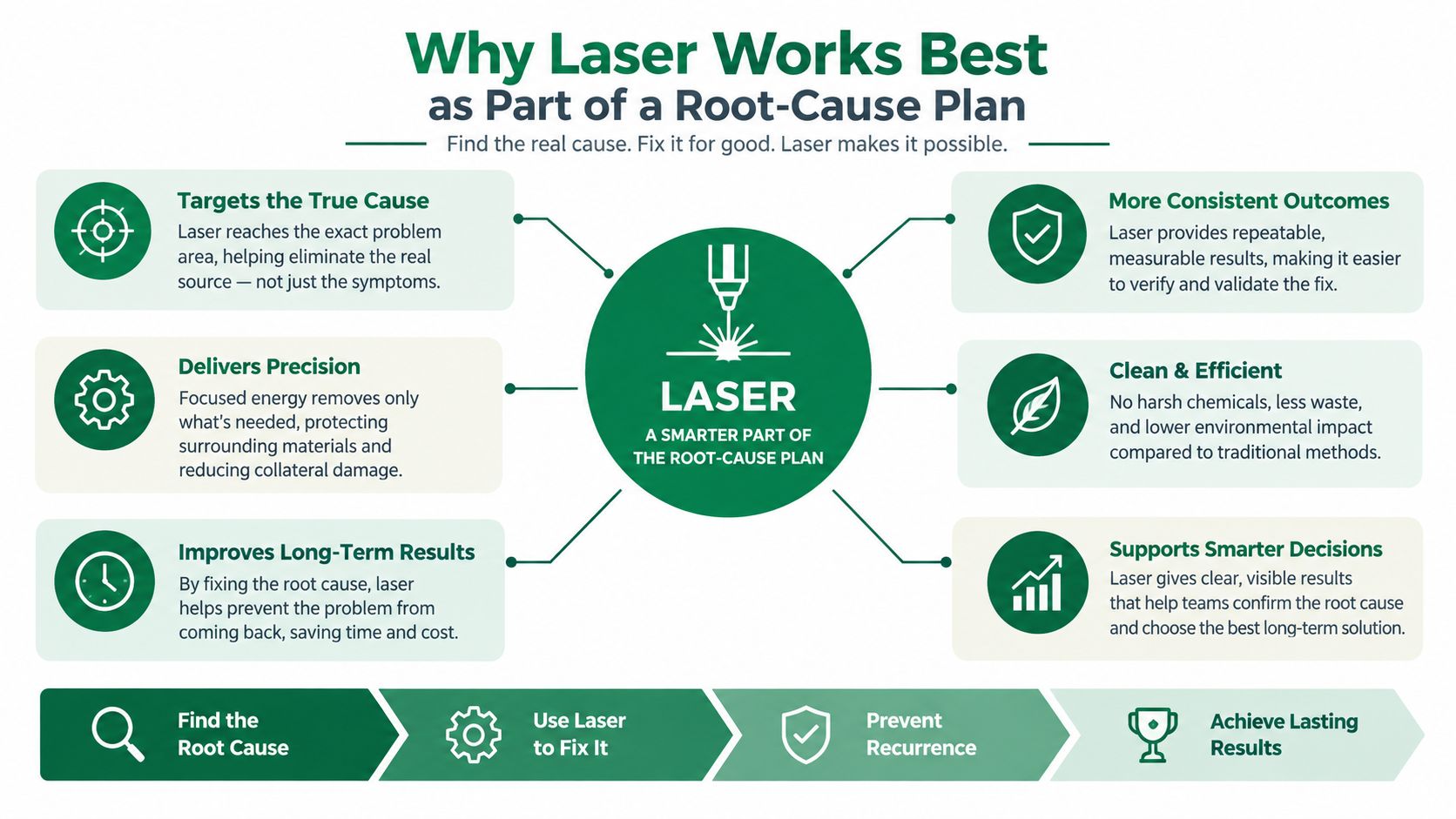
Pain relief can create an opportunity for rehabilitation. If jaw muscles are guarding movement, reducing discomfort may make it easier to practice gentle mobility, improve posture, and stop habits that keep loading the joint.
That doesn't mean the laser removed the cause. Daytime clenching, nighttime bruxism, forward-head posture, altered tongue position, airway or sleep problems, and unaddressed stress can all contribute to repeated jaw loading. A plan that lowers pain without reducing that load may provide only temporary relief.
Relief and correction are different goals
The 2025 review and the 2023 update support LLLT as an adjunct, meaning an added therapy that supports another treatment. They describe improvements in pain and mouth opening, but they don't show that laser replaces multimodal care or corrects every driver of TMD.
A useful comparison is a pain reliever that makes rehabilitation easier. The immediate benefit may help a patient chew more comfortably or tolerate exercises, while longer-term progress depends on changing movement patterns, stabilizing the bite when appropriate, and addressing contributing behaviors.
What a broader plan can include
A root-cause assessment may consider:
- Jaw habits: Daytime tooth contact, gum chewing, nail biting, and forceful jaw bracing.
- Movement: Neck posture, shoulder position, breathing pattern, and jaw coordination.
- Sleep: Snoring, poor-quality sleep, and possible sleep-disordered breathing. Sleep apnea requires evaluation through a sleep study and physician diagnosis.
- Rehabilitation: Gentle mobility drills, physical therapy, relaxation practice, and gradual return to normal function.
- Stabilization: An oral appliance or splint when the examination supports that choice.
Some patients notice easier chewing or improved opening during an early course of laser and self-care, but durable change may take longer and often requires continued habit work, follow-up, and attention to sleep or airway contributors. The exact timeline can't be guaranteed because TMD has multiple causes.
Whole-person care may include coordinated attention to lifestyle, breathing, movement, and oral function. Information about holistic solutions can help patients understand why a clinician may recommend more than one intervention.
How LLLT Compares With Splints, NSAIDs, and TENS
Patients often compare laser with the treatments already discussed during a dental or medical visit. The comparison becomes clearer when each option is judged by its purpose, not just by whether it can reduce pain.
The 2025 systematic review found that LLLT compared favorably with occlusal splints, NSAIDs, and TENS, with fewer side effects reported in the laser groups. That doesn't mean laser is automatically superior. It means the modality may offer a useful non-drug option within a plan suited to the cause of pain.
| Modality | Onset of relief | Typical benefit duration | Main side effects | Role in care |
|---|---|---|---|---|
| LLLT | May develop across a treatment course | Often short to medium term, with durability still uncertain | Usually minimal sensation; device and patient factors matter | Adjunct for pain and movement |
| Splints | May require adjustment and adaptation | Depends on use and the underlying problem | Bite discomfort or symptom changes can occur | Stabilization when clinically appropriate |
| NSAIDs | Often faster symptom relief | Generally temporary while medication is active | Gastrointestinal and renal risks can matter with prolonged use | Short-term symptom management when medically appropriate |
| TENS | May help during or after applications | Often limited without active rehabilitation | Skin irritation or discomfort from stimulation | Pain modulation, sometimes alongside exercise |
How clinicians may sequence care
A clinician may begin by reducing aggravating habits, recommending a softer diet briefly when chewing is difficult, and introducing gentle movement. A splint may be considered when clenching, bite loading, or joint stabilization makes it appropriate. Medication decisions should account for medical history and guidance from a qualified prescriber.
TENS can support pain modulation, particularly when paired with exercise, but passive treatment alone rarely addresses the mechanics that keep symptoms active. Laser may fit between passive comfort measures and active rehabilitation by making movement work more tolerable.
Patients exploring natural pain relief tips from SunnyBay should still check whether a suggested strategy is suitable for their symptoms and health history. Home measures can support care, but they shouldn't delay assessment of locking, significant swelling, infection symptoms, or persistent functional loss.
The reasonable choice depends on diagnosis, pain severity, medication tolerance, treatment access, and goals. A provider who presents laser as a replacement for every other option is offering a less complete explanation than one who places it within a staged plan.
Questions to Ask and How to Take the Next Step
A patient doesn't need to understand every technical detail of photobiomodulation before an appointment. The clinician should explain the essential parts clearly and connect them to the examination findings.
A useful checklist includes:
- Device wavelength: Which wavelength is being used, and what tissue is it intended to reach?
- Energy setting: What energy density or joule dose will be delivered at each point?
- Treatment sites: Will the provider treat the joint, the chewing muscles, or both?
- Session count: How many visits are planned, and how often will they occur?
- Clinical training: What training does the provider have in TMD assessment and therapeutic laser use?
- Root-cause care: Will the plan include stabilization, exercises, habit retraining, or sleep evaluation when indicated?
- Outcome tracking: Will pain, mouth opening, chewing comfort, and tenderness be recorded before and after treatment?
Vague language such as “laser therapy works for TMJ” doesn't answer the questions that determine whether a protocol is reasonable. Patients can ask what happens if the first course doesn't help, whether another diagnosis needs to be considered, and which symptoms would require referral or imaging.
Pain and Sleep Therapy Center serves patients in Newark and Wilmington, Delaware, and Bryn Mawr and the Philadelphia Main Line. The practice evaluates TMJ, head, and facial pain, and may use cold laser therapy as one part of a broader, non-invasive plan. Sleep-related symptoms may also deserve attention, but sleep apnea is diagnosed through a sleep study and physician evaluation, not through a quiz alone.
The next step is a full assessment rather than a commitment to one modality. Patients can request an appointment or take a sleep quiz to flag possible connections between jaw symptoms, snoring, airway concerns, and bruxism.
Pain and Sleep Therapy Center evaluates TMJ and craniofacial pain and may include cold laser therapy alongside stabilization, rehabilitation, and root-cause care when appropriate. Readers in Newark, Wilmington, Bryn Mawr, and the Philadelphia Main Line can visit Pain and Sleep Therapy Center to request an appointment, call Newark at (302) 239-1757, or take the Sleep Quiz.