
An adult who has spent years waking with a dry mouth, clenching the jaw, snoring, or working hard to pronounce certain sounds may eventually ask whether a restricted tongue is part of the problem. After choosing an evaluation, the next concern is often practical: how painful will recovery be, how soon can normal eating resume, and when will speech, sleep, or jaw comfort change?
The answer depends on separating healing of the surgical site from retraining of oral function. Adult tongue tie surgery recovery is usually manageable in its early phase, but the most meaningful functional gains may require consistent stretching, myofunctional therapy, and follow-up. A release can create more tongue movement, but the muscles and nervous system still need to learn how to use that movement.
Table of Contents
- Understanding the Adult Frenectomy Recovery Timeline
- Managing Pain and Swelling After Your Procedure
- Dietary Adjustments and Activity Restrictions
- The Critical Role of Myofunctional Therapy and Stretching
- Setting Realistic Expectations for Functional Improvements
- Recognizing Complications and Planning Your Next Steps
Understanding the Adult Frenectomy Recovery Timeline
An adult frenectomy is a procedure that releases the tight band of tissue beneath the tongue, called the lingual frenulum. Some clinicians use the term frenuloplasty when the release also includes reshaping or repairing the area. The purpose isn't merely to create a larger wound. It's to improve functional tongue movement when an evaluation shows that restricted tissue contributes to a specific problem.
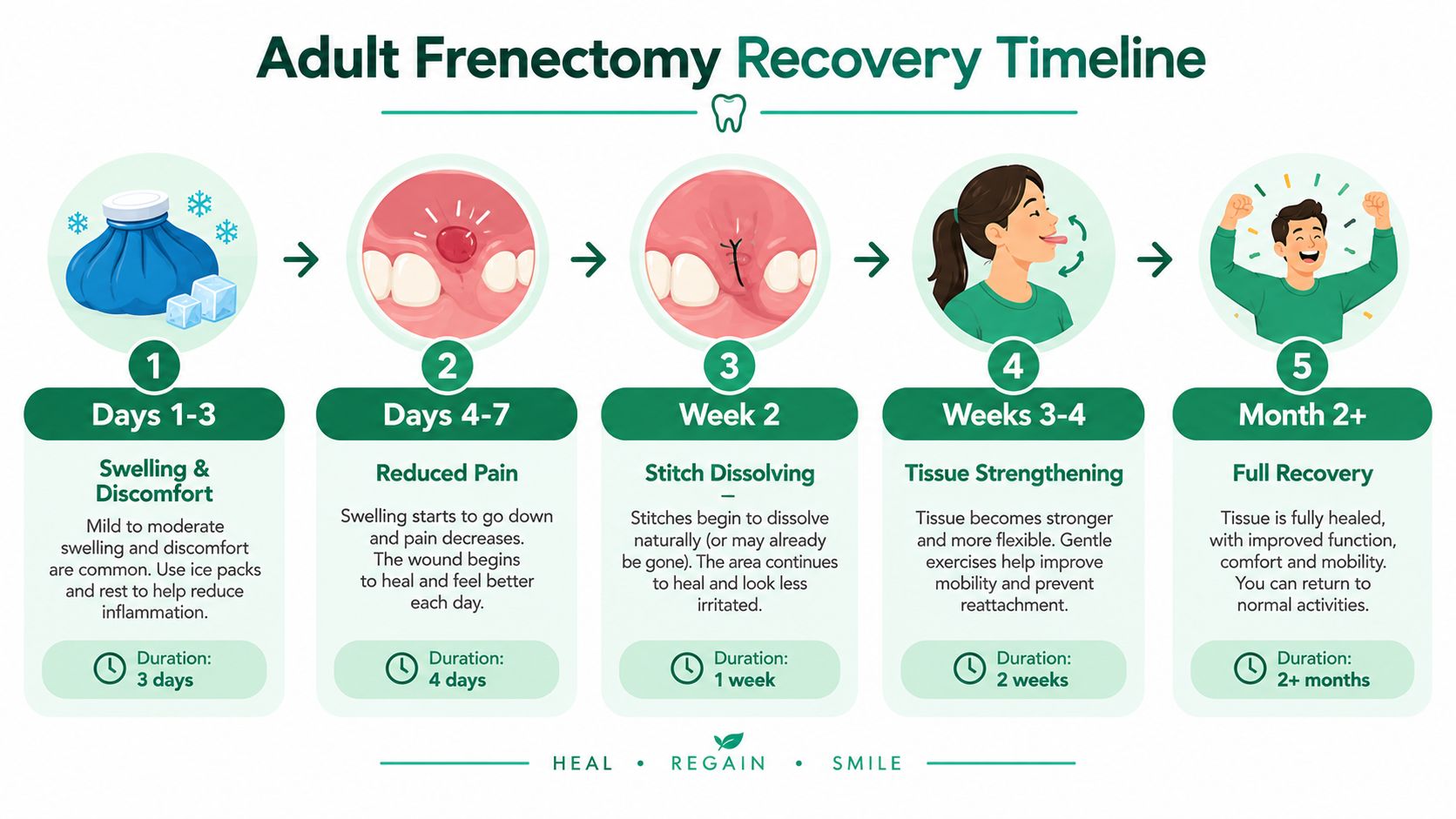
An adult patient may leave the appointment expecting recovery to be complete once soreness fades. That expectation is understandable, especially because the procedure itself commonly takes 15 to 30 minutes, and most adults feel back to normal within 1 to 2 days. Full soft-tissue healing generally takes 2 to 4 weeks, although functional rehabilitation often continues for 6 to 12 weeks (adult frenectomy recovery guidance).
Two different meanings of recovery
The first phase involves swelling, discomfort, wound closure, and the gradual strengthening of the soft tissue. Absorbable sutures may be used, and the tongue heals while those sutures dissolve naturally. The second phase involves motor retraining. An adult may have spent decades lowering the tongue, tightening the jaw, recruiting the neck, or changing speech patterns to work around the restriction.
That distinction explains why an adult can feel physically better while still noticing an awkward swallow, unfamiliar tongue posture, altered speech, or continuing jaw tension. A closed wound doesn't automatically mean a retrained tongue. Myofunctional therapy, meaning exercises designed to improve the coordination and strength of the tongue, lips, jaw, and related muscles, helps address the functional phase.
The recovery plan should therefore be based on the symptom goal. A patient seeking improved tongue mobility may need one type of follow-up, while a patient concerned about snoring, sleep-disordered breathing, speech, or jaw discomfort may need a broader evaluation. Tongue-tie treatment information is also different for children and adults. For families researching early-life procedures, an educational overview of laser lip tie release for kids addresses a separate age group and clinical context.
A useful planning resource for adults considering evaluation is the practice's information about tongue ties. It can help patients understand why a careful assessment should come before deciding whether a release is appropriate.
Managing Pain and Swelling After Your Procedure
The first few days are usually the most noticeable part of recovery. Mild-to-moderate soreness, a tight or pulling sensation beneath the tongue, and temporary difficulty with speaking or eating can occur as the anesthetic wears off and the tissues begin to respond.
Swelling may not appear until the next day and may peak on days 2 to 3. Pink or blood-tinged saliva can also be normal for 2 to 3 days. Clinical aftercare guidance recommends resting during the first 12 to 24 hours and using an ice pack for 20 minutes on and 20 minutes off during the first day (frenectomy post-operative instructions).
What the first days may feel like
The day of surgery: Rest is the priority. Talking should be limited to what is necessary, and the mouth should be kept clean according to the treating clinician's directions. An adult should follow the prescribed or recommended pain-management plan rather than waiting until discomfort becomes difficult to control.
The next day: Swelling may become more noticeable, even if the first evening seemed fairly comfortable. This delayed swelling doesn't necessarily indicate a problem. Cool fluids, gentle hygiene, and the recommended over-the-counter analgesic plan may support comfort, provided those medicines are medically appropriate for the individual.
Days 2 and 3: This period may bring the most swelling or soreness. A white or pale area beneath the tongue can appear as healing tissue develops. It may look alarming, but a white, diamond-shaped healing area is described in adult aftercare guidance and typically resolves in about 2 weeks (adult frenectomy aftercare handout).
Practical rule: A healing wound can look different from normal mouth tissue. Appearance alone shouldn't determine whether recovery is progressing. The treating clinician should assess changes that are worsening, severe, or difficult to interpret.
Keeping the area comfortable
Gentle oral hygiene helps maintain cleanliness without disturbing the wound. Brushing should follow the clinician's directions, and forceful rubbing, probing, or vigorous rinsing should be avoided unless specifically recommended. Patients who need general oral-surgery recovery reminders can review these Paul L. Gregory DDS recovery tips, while recognizing that tongue procedures have their own instructions.
Pain that gradually improves is generally easier to manage than pain that becomes stronger after an initial improvement. Persistent bleeding, rapidly increasing swelling, fever, foul drainage, or difficulty breathing or swallowing warrants prompt contact with the surgical office or urgent medical care, depending on severity.
Dietary Adjustments and Activity Restrictions
Food choices protect the healing site while the tissue is vulnerable. They also reduce the need for wide mouth opening, forceful chewing, and repeated tongue movements that may make the first day more uncomfortable.
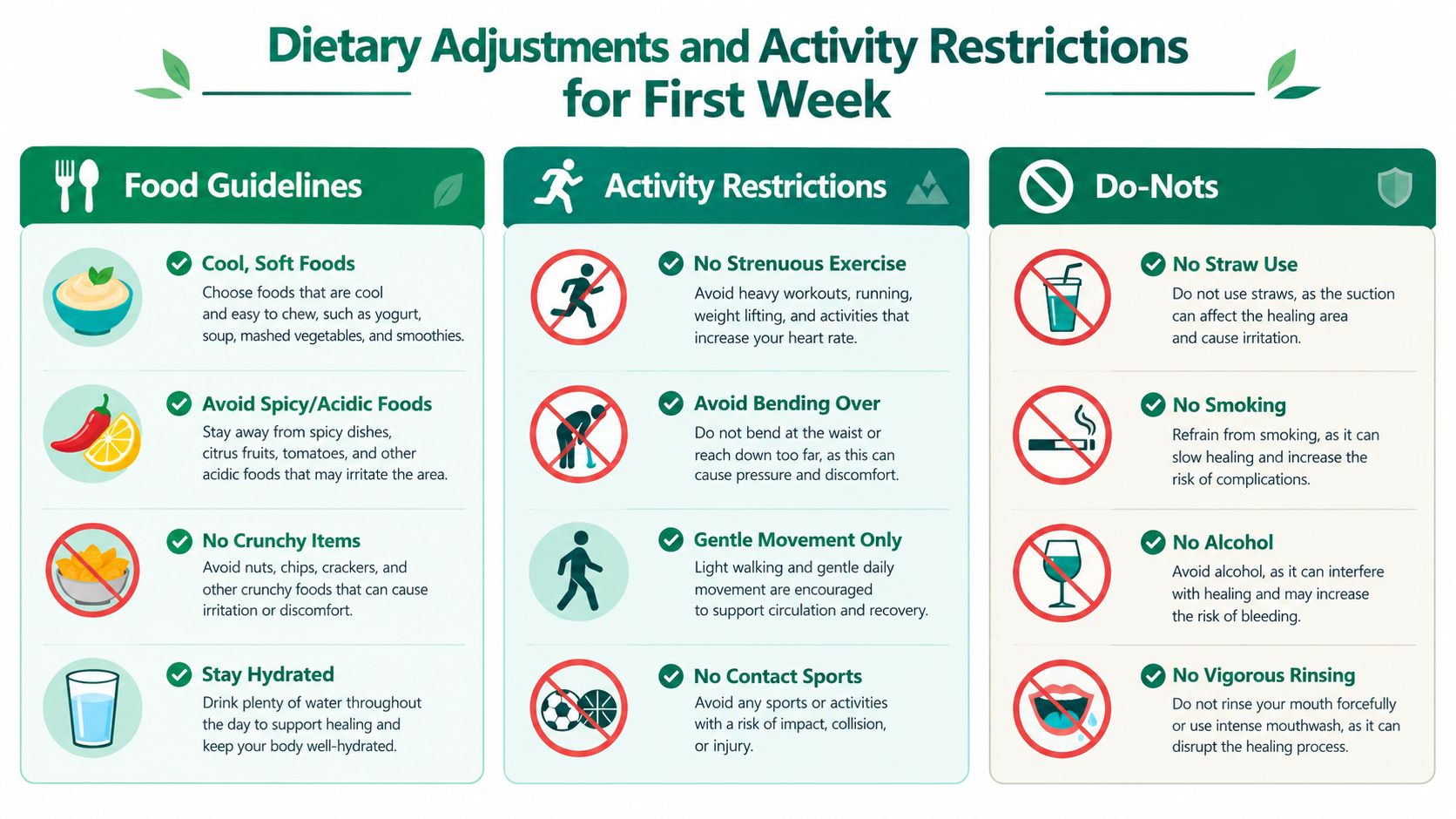
Aftercare guidance recommends starting with cold liquids or room-temperature foods during the first 24 hours. If the patient feels comfortable, a normal diet may resume after that period. Hot, carbonated, or alcohol-containing drinks, straw use, and strenuous exercise should be avoided for at least 5 days (frenectomy dietary and activity guidance).
Food and drink choices
Cool, soft foods are usually easier to control than foods that are hot, sharp, sticky, or highly textured. Examples include foods that require little chewing and don't scrape the underside of the tongue. Each patient should follow the treating clinician's specific dietary plan, especially if additional oral procedures were performed.
The reason for avoiding very hot drinks is practical. Heat can increase discomfort and may make bleeding more likely in a recently treated area. Carbonation and alcohol can irritate healing tissue, while straw use creates suction that may place unnecessary stress on the surgical site.
Adults interested in broader nutrition habits can use the clean eating resource as a general wellness reference. It doesn't replace procedure-specific instructions, but steady hydration and nourishing food choices can make the recovery period easier to manage.
Protecting the wound during daily activity
The first week calls for a balance between rest and normal gentle movement. Strenuous exercise, heavy exertion, and activities that increase pressure or cause accidental contact with the mouth can interfere with comfort and wound protection.
- Choose gentle movement: Light walking may be reasonable when the patient feels stable, but the treating clinician's restrictions take priority.
- Avoid mechanical irritation: Crunchy foods, sharp edges, and probing the wound can disturb healing tissue.
- Plan speaking demands: Long meetings, presentations, or extended conversations may be tiring during early recovery.
- Follow the specific plan: A laser release, surgical release, or combined procedure may have different care details, so generic advice shouldn't override the operating clinician's instructions.
The Critical Role of Myofunctional Therapy and Stretching
The release changes the tissue. It doesn't automatically change the way an adult swallows, speaks, breathes, or rests the tongue.
For years, a restricted tongue may have relied on substitute movements. The jaw may assist with tasks that should involve the tongue. The lips or neck may tighten during swallowing. The tongue may rest low in the mouth because that position was the easiest available option. After release, a greater range of motion can feel unfamiliar rather than immediately natural.
Myofunctional therapy gives the patient a structured way to practice the new movement. A trained clinician may assess tongue strength, resting posture, swallowing coordination, breathing habits, and muscle tension before creating exercises. The plan should be individualized because an exercise that is appropriate for one adult may be too demanding or poorly timed for another.
Why stretching matters
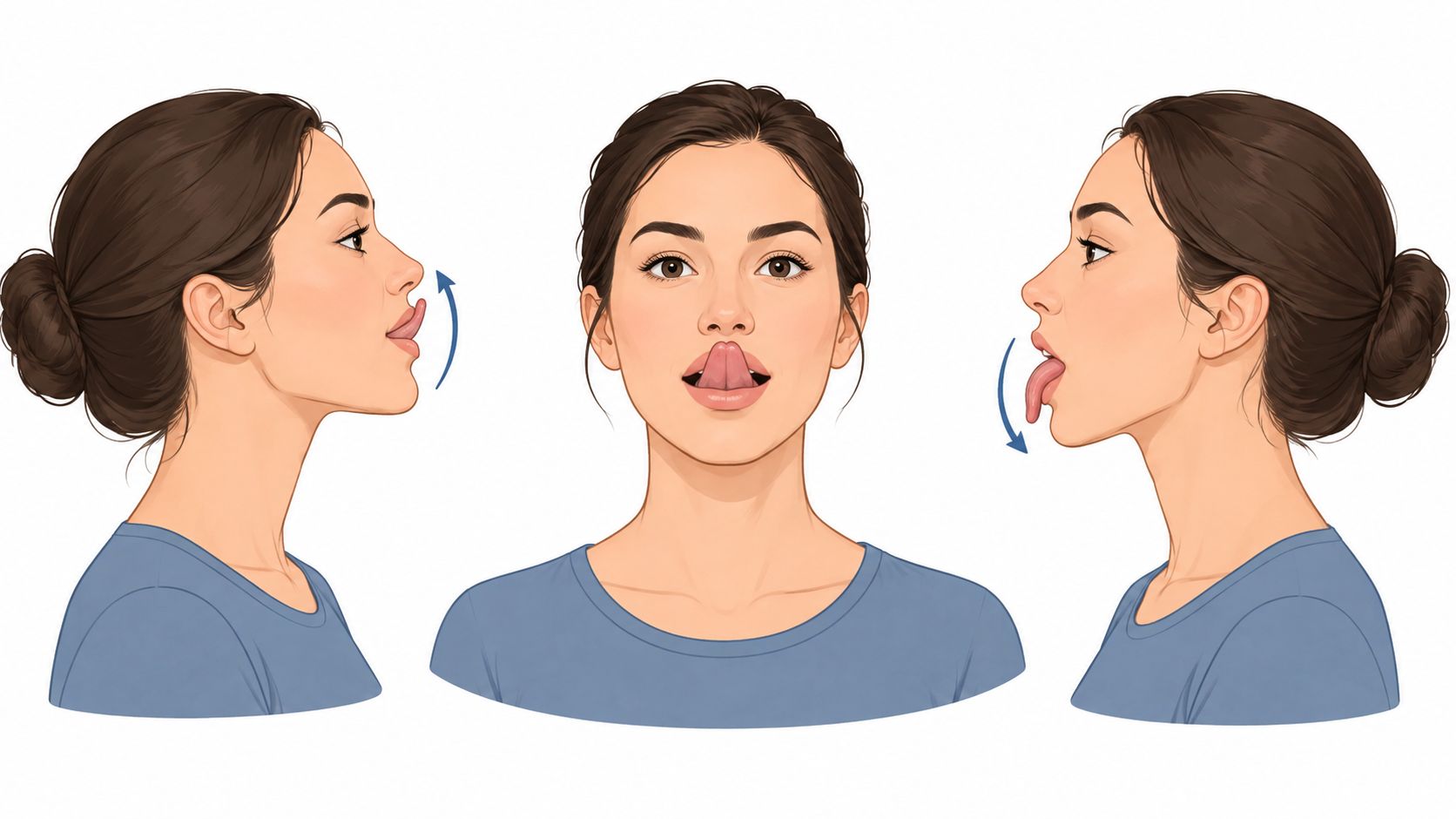
As the wound heals, scar tissue can limit movement or contribute to re-adhesion, meaning the released tissue begins to attach again in a restrictive way. Clinician-directed stretching helps maintain the surgical opening while the tissue remodels. It must be performed carefully, because excessive force can increase pain or irritate the wound.
Clinical guidance emphasizes continuing exercises for 4 to 6 weeks to reduce re-adhesion risk and support functional recovery. Inadequate stretching is repeatedly identified as a reason for reattachment or persistent restriction (guidance on post-operative tongue-tie exercises).
Passive healing versus active retraining
Passive healing asks the body to close and strengthen the wound. Active rehabilitation asks the nervous system to learn a better pattern. Both are important, but they solve different problems.
A patient may be able to lift the tongue higher during an examination yet still use an old swallowing pattern at meals. Another patient may gain movement but continue clenching because the jaw has learned to stabilize the tongue. These observations don't mean the release failed. They show why follow-up assessment matters.
Exercises may include controlled tongue elevation, reaching movements, resting-posture practice, and swallowing coordination. The exact program should come from the treating clinician and therapist. Adults should not copy an online exercise routine without understanding the wound's condition, the intended movement, and the appropriate amount of pressure.
The release creates an opportunity. Consistent rehabilitation determines how well the tongue learns to use it.
Breathing practice can also be part of a broader functional plan when nasal breathing and oral posture are relevant to the patient's symptoms. Educational healthy breathing program videos may support that process, but they aren't a substitute for an individualized clinical assessment.
Setting Realistic Expectations for Functional Improvements
Many adults ask the same question after learning about tongue-tie treatment: when will the symptoms improve? The most accurate answer is that the timeline depends on the symptom, the starting pattern, the presence of other conditions, and the patient's participation in rehabilitation.
A release may improve tongue range of motion before it changes speech or swallowing. Sleep quality and snoring may also follow a different timeline because sleep-disordered breathing has multiple possible contributors. Jaw tension may persist while the muscles adjust, especially if clenching or guarded movement has been present for a long time.
Mobility is not the same as function
Physical movement is easy to demonstrate in a treatment room. Functional improvement is more complex. The tongue must move at the right time, with the right amount of force, while the jaw, lips, soft palate, and breathing muscles coordinate around it.
That is why a patient may notice several stages:
- Early movement changes: The tongue may reach farther or lift more easily, although the motion may feel unfamiliar.
- Pattern awareness: The adult may begin noticing compensatory jaw or neck activity during speaking and swallowing.
- Practice-related adaptation: Repeated therapy may make the new movement more controlled and less effortful.
- Symptom reassessment: Speech, jaw comfort, sleep, or snoring can be reviewed against the original treatment goal.
Clinical evidence summaries report that many patients experience quality-of-life improvements, but outcomes vary significantly. They also emphasize that therapy is often needed to preserve mobility because more physical movement doesn't automatically produce immediate improvement in speech, sleep, or jaw tension (evidence summary on adult tongue-tie outcomes).
Different symptoms need different expectations
Speech changes may require practice with an appropriate speech professional, particularly when an adult has developed long-standing compensations. A release can improve the physical range needed for certain sounds, but the brain still needs to coordinate those sounds with breathing and articulation.
Snoring or poor sleep shouldn't be attributed to tongue restriction without proper evaluation. Sleep apnea is diagnosed through a sleep study and physician assessment. A tongue-tie release may be considered as one part of care for a suitable patient, but it isn't a guaranteed treatment for sleep apnea, and it doesn't replace medically appropriate testing or treatment.
Jaw tension also deserves a broad assessment. Restricted tongue movement may be one contributing factor, but tooth contact, joint irritation, muscle overuse, posture, stress, and other causes can overlap. A root-cause evaluation helps prevent an adult from assuming that every symptom comes from one small band of tissue.
Therapy adherence affects the experience
An adult who attends follow-up but performs exercises inconsistently may have a different result from an adult who follows a carefully designed rehabilitation plan. That difference isn't a matter of blame. Pain, fatigue, work demands, and uncertainty can make exercises difficult, so the care team should adjust the program when necessary rather than just telling the patient to try harder.
The most useful question isn't only, “How much higher can the tongue lift?” It's also, “Can the tongue perform the task that originally caused difficulty?” That may mean a more coordinated swallow, less jaw assistance, clearer speech, easier nasal breathing, or improved comfort during rest. The answer should be measured over time, not judged solely by the appearance of the wound.
Recognizing Complications and Planning Your Next Steps
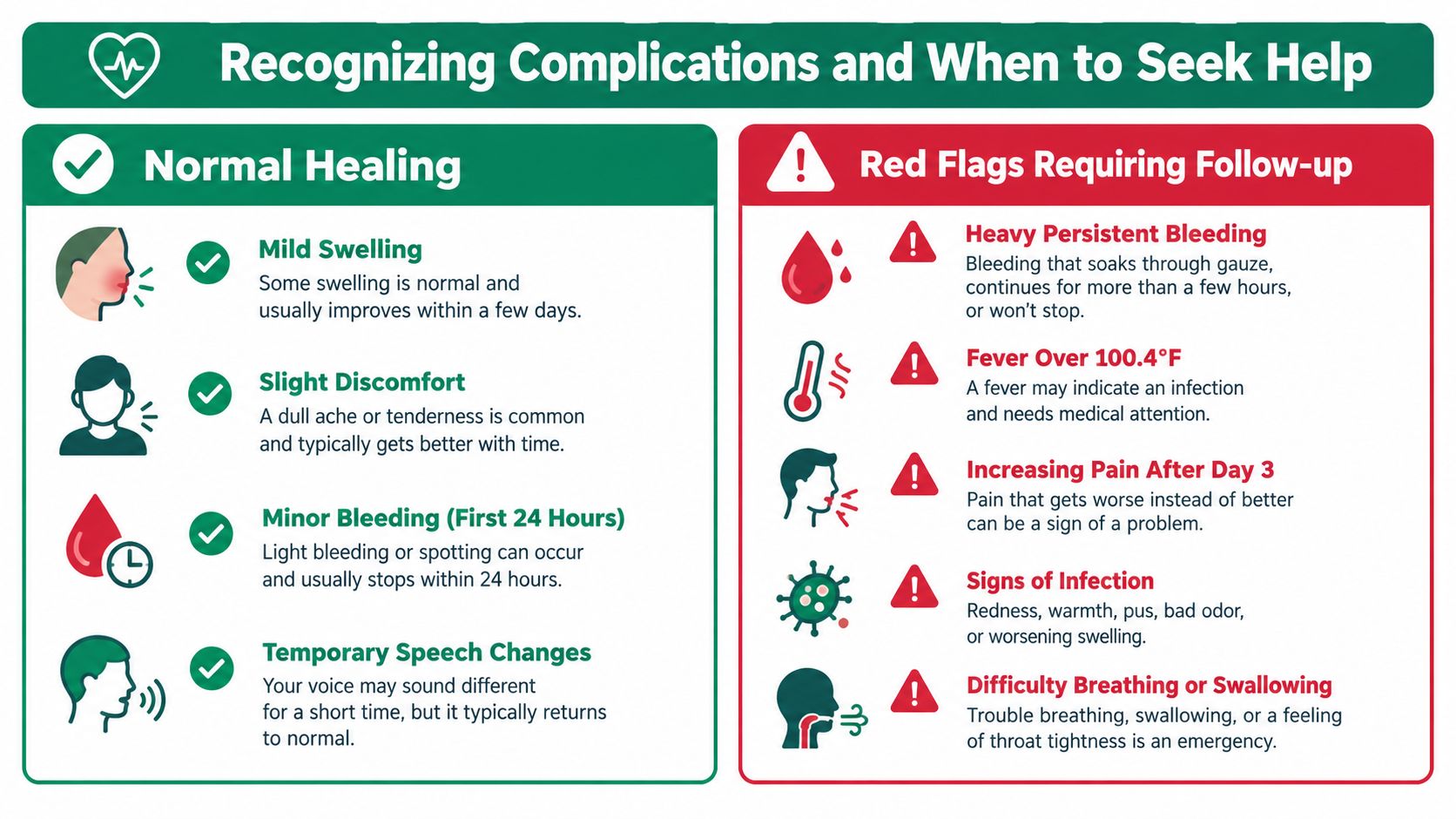
Recovery should include a clear way to distinguish expected discomfort from a problem that needs review. Mild soreness, temporary swelling, a healing-colored change beneath the tongue, and short-term difficulty with speech or eating may occur during normal healing. The clinical team should still receive questions when a patient is unsure, especially because an examination can identify issues that aren't obvious at home.
Absorbable sutures are commonly used and generally dissolve as the tongue heals. Tongue exercises may be recommended to improve movement and reduce the chance that scar tissue will limit mobility, as described by Mayo Clinic's tongue-tie treatment guidance.
Symptoms that deserve prompt attention
A patient should contact the treating clinician if symptoms are severe, worsening, or inconsistent with the recovery instructions provided after the procedure. Urgent care is appropriate when breathing or swallowing becomes difficult, when bleeding doesn't settle, or when the person feels medically unstable.
Follow-up is particularly important for:
- Persistent or heavy bleeding: Bleeding that continues despite the clinician's recommended measures needs prompt assessment.
- Worsening pain or swelling: Increasing symptoms after an initial improvement may indicate irritation or another complication.
- Possible infection: Fever, foul drainage, spreading redness, or worsening swelling should be reported.
- Functional restriction: A tongue that becomes less mobile as healing progresses may need an examination and adjustment of the rehabilitation plan.
- Airway concerns: Any difficulty breathing requires immediate medical attention.
Building a complete care plan
The most responsible adult tongue tie surgery recovery plan begins before the procedure. A clinician may evaluate tongue movement, jaw function, facial pain, breathing habits, sleep symptoms, and the patient's specific goals. Conservative and non-invasive options should be considered before surgery when they may address the problem appropriately.
When surgery is appropriate, aftercare may include myofunctional therapy, speech support, sleep evaluation, jaw treatment, or other coordinated care. Cold laser therapy may also be considered as an adjunct for pain modulation or tissue healing when clinically appropriate, but it shouldn't be presented as a substitute for diagnosis, surgical judgment, or rehabilitation.
Pain and Sleep Therapy Center offers root-cause evaluation for TMJ and craniofacial pain, sleep-related concerns, and tongue-tie conditions, with care led by Dr. Ryan Robinson, a triple board-certified specialist in craniofacial pain and dental sleep medicine. The practice serves adults in Newark and Wilmington, Delaware, as well as Bryn Mawr and the Philadelphia Main Line, with treatment planning that may include conservative care, oral appliance therapy, sleep evaluation, laser frenectomy, and coordinated functional rehabilitation.
Adults considering tongue-tie treatment can visit Pain and Sleep Therapy Center for an individualized evaluation that connects tongue mobility with jaw comfort, breathing, sleep, and long-term function. The Newark office can be reached at (302) 239-1757, and adults who aren't ready to schedule can take the practice's Sleep Quiz as a first step.