Waking up tired, with a dry mouth and a partner who says the snoring kept getting louder, is usually the moment the search starts. The phone comes out, the query gets typed, and the goal feels simple, find a nearby place that can make a sleep apnea mouth guard and help sleep finally feel normal again. That search makes sense, but the key decision is bigger than proximity. It's about finding a clinician who can connect airway health, jaw function, and long-term follow-up, not just a shop that hands over a device.
Sleep apnea is common enough that local care matters. A large global analysis estimated 936 million adults ages 30 to 69 had mild-to-severe obstructive sleep apnea, and 425 million had moderate-to-severe disease, which helps explain why a “near me” search often feels urgent rather than casual (PMC review on global OSA burden). In practice, the best local search result is rarely the closest office. It's the one that can work with a physician-diagnosed sleep study, fit a custom device when it's appropriate, and keep checking whether the treatment is helping.
Table of Contents
- Why Your Search for Local Sleep Apnea Care Matters
- Understanding Oral Appliance Therapy for Sleep Apnea
- The Required Evaluation and Sleep Study Process
- Choosing a Dental Sleep Medicine Specialist Over a General Dentist
- The Critical Role of Follow-Up Care and Device Titration
- Comprehensive Airway and Root-Cause Care in Delaware and Pennsylvania
- Next Steps to Reclaim Your Sleep and Health
Why Your Search for Local Sleep Apnea Care Matters
A tired adult in Newark, Wilmington, Bryn Mawr, or along the Philadelphia Main Line is usually not looking for a long research project at 2 a.m. The immediate need is relief from snoring, fragmented sleep, and that heavy daytime fog. That urgency is real, but the first office that says “we make mouth guards” isn't always the right answer.
A sleep apnea oral appliance is medical treatment, not a convenience item. It's meant for people whose airway collapses during sleep, and that collapse has to be confirmed through proper medical evaluation first. A simple over-the-counter guard may protect teeth from grinding, but it doesn't diagnose apnea, open an airway, or replace coordinated care.
Practical rule: A local office is only a good fit if it can connect the device to the diagnosis, the fit, and the follow-up.
That distinction matters because obstructive sleep apnea is often underrecognized. The American Dental Association has estimated prevalence at 3% to 7% in men and 2% to 5% in women in the U.S., which is one reason local access to dental sleep medicine has become so important (PMC review on OSA prevalence and burden). The search should therefore focus less on convenience alone and more on whether the provider understands airway anatomy, dental suitability, and ongoing monitoring.
For a plain-language overview of the airway side of the problem, a useful starting point is what is sleep-disordered breathing. That kind of education helps separate a temporary fix from care that looks at the root cause. A nearby clinic can be helpful, but a qualified dental sleep medicine team is what makes the treatment pathway safe and meaningful.
Understanding Oral Appliance Therapy for Sleep Apnea
Many people hear “mouth guard” and think of a sports shield or a basic night guard. A custom mandibular advancement device is different. It's a medical oral appliance that gently holds the lower jaw forward so the tongue and soft tissues are less likely to block the airway during sleep.
How the device works
The easiest way to picture it is as a precise repositioning tool. When the lower jaw moves slightly forward, the space behind the tongue opens more, and that can help reduce airway collapse. In research and guideline summaries, custom appliances have been shown to reduce key breathing measures and improve oxygenation, which is why they're used as a CPAP alternative for selected adults (AASM and AADSM guideline summary; evidence review on oral appliance outcomes).
The phrase “custom” matters. These devices are not one-size-fits-all retail products. They're made from impressions or scans, adjusted over time, and chosen based on the person's airway needs and dental health. That's also why the fit has to be checked carefully, because jaw comfort, tooth stability, and bite changes all affect whether the treatment remains tolerable.
Here's the practical part many patients overlook. A mouth guard for sleep apnea isn't just a night-time accessory. It's part of a treatment plan that depends on diagnosis, precise fit, and objective reassessment. If a person grinds teeth as well as snores, the appliance plan also has to account for bruxism, because jaw clenching can change how comfortably any device feels at night. A helpful resource for that overlap is effective remedies for bruxism.
For readers who want a focused overview of this treatment category, the practice's oral appliance resource page is available at oral appliance therapy. That kind of education helps patients ask better questions before they ever sit in the chair.
The Required Evaluation and Sleep Study Process
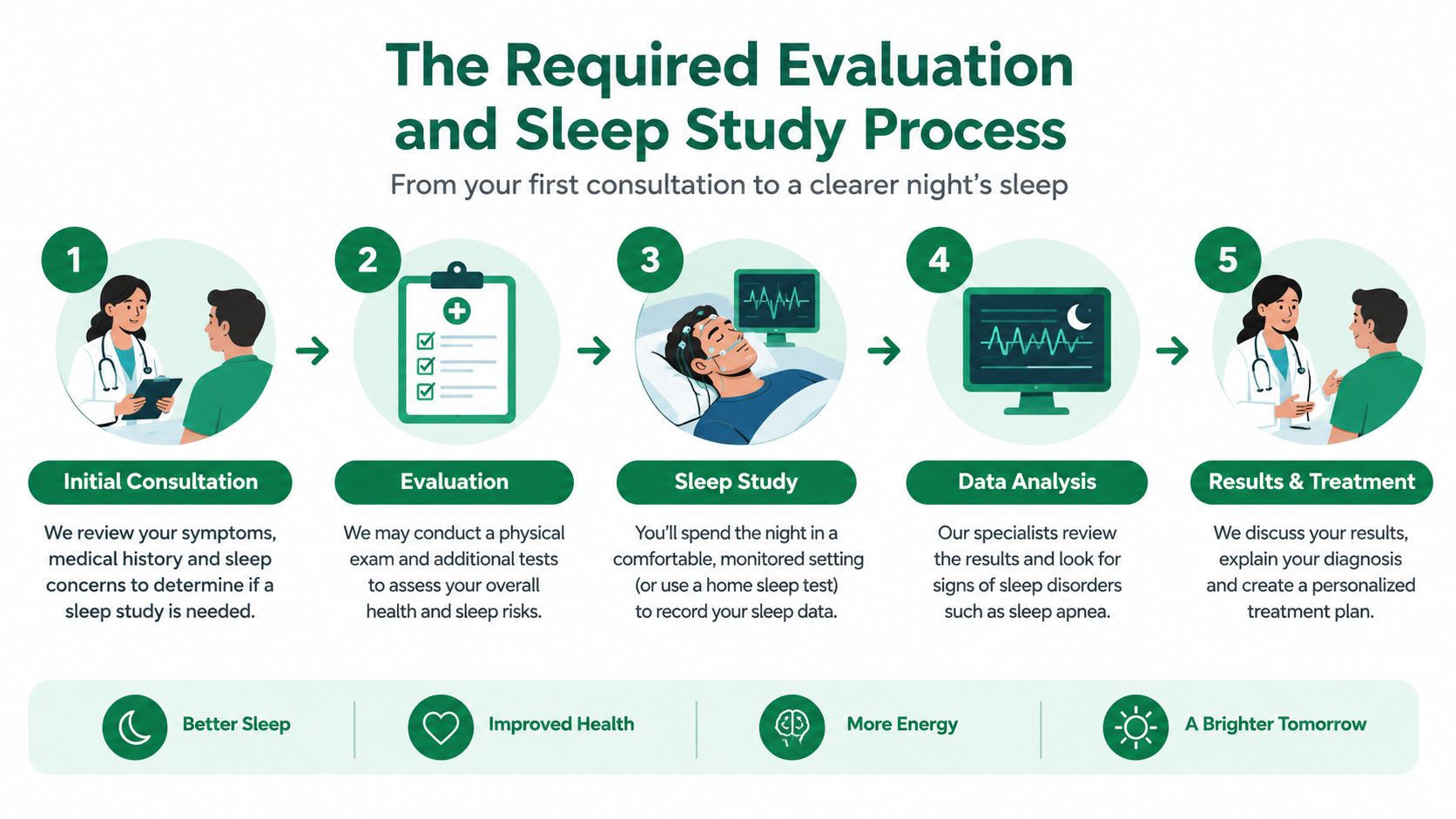
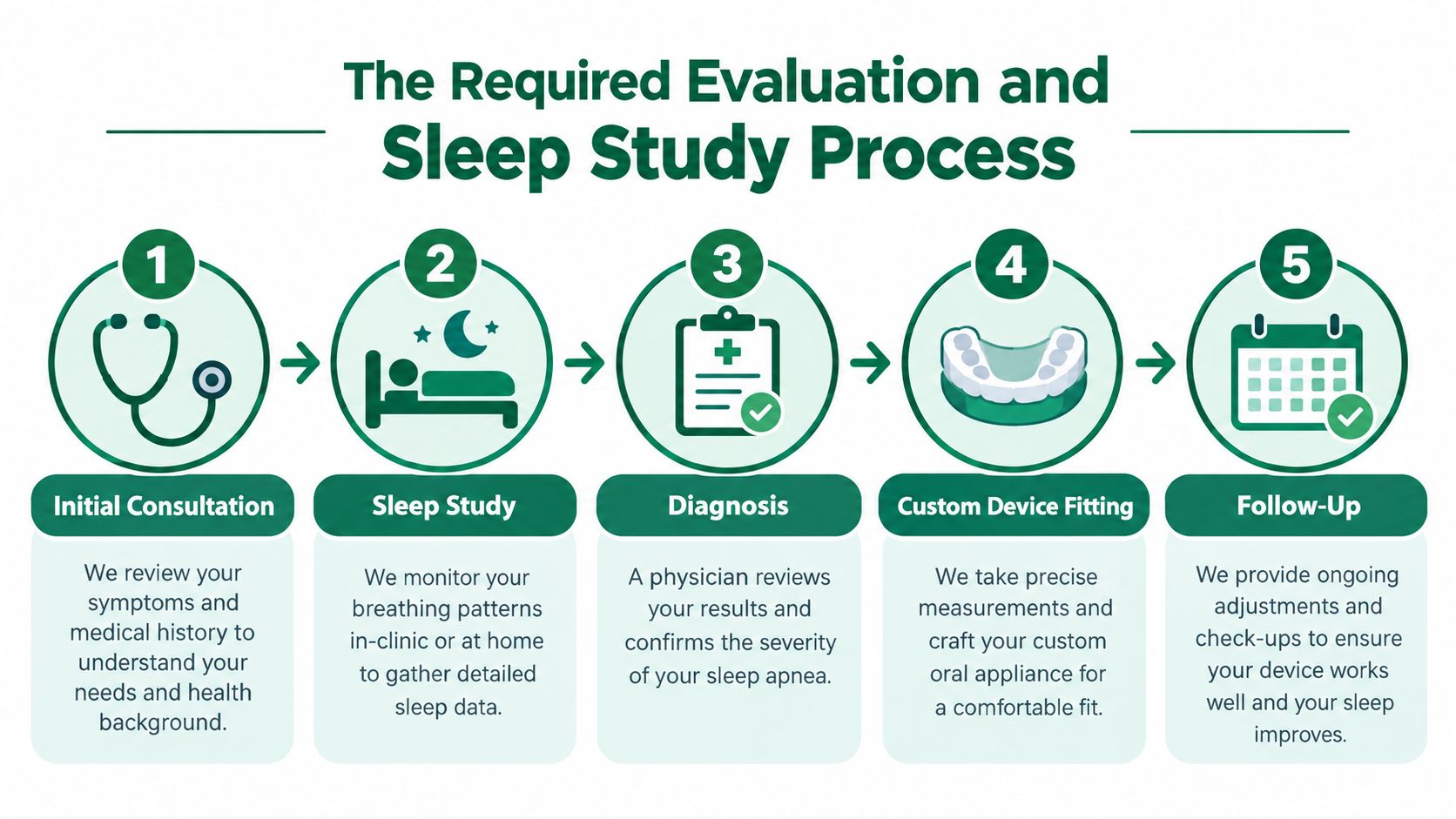
Sleep apnea treatment starts with a physician, not with a dental fitting. The National Heart, Lung, and Blood Institute says sleep apnea should be diagnosed by a physician using a sleep study, because that's how the type and severity of the disorder are determined (NHLBI diagnosis guidance). In-lab polysomnography remains the gold standard for sleep-disordered breathing testing, and common severity thresholds place 5 or fewer events per hour in the normal range, 5 to 14 in mild OSA, 15 to 30 in moderate OSA, and more than 30 in severe OSA (NCBI sleep study reference).
Why the diagnosis comes first
A dental sleep specialist can't diagnose sleep apnea from snoring alone. Snoring may appear with apnea, but it doesn't tell the whole story. A sleep study gives the physician the data needed to decide whether oral appliance therapy is appropriate, whether another treatment should be considered, or whether the person may need combination care.
After diagnosis, the dental evaluation focuses on whether the mouth and jaw can safely support the appliance. Stable teeth, healthy gums, adequate jaw movement, and a careful review of temporomandibular joint, or TMJ, symptoms all matter. The device works by moving the lower jaw forward, so the foundation has to be sound.
A good evaluation protects the patient from a device that fits poorly, causes avoidable discomfort, or delays the right treatment.
That's also where the internal sleep-study pathway matters for local patients. A clinic that understands both medicine and dentistry can coordinate with the physician, review the sleep results, and decide whether a custom titratable appliance is suitable. Readers who want a more detailed look at the testing side can review the practice's sleep-study resource at sleep study.
The clean sequence is simple. Physician diagnosis first. Dental assessment second. Appliance fabrication only after those steps are complete. That order is a sign of safe care, not a delay.
Choosing a Dental Sleep Medicine Specialist Over a General Dentist
Not every dental office that offers a snoring appliance is equipped to manage airway disease. A general dentist may do excellent routine care and still not have the training, systems, or follow-up structure needed for sleep apnea treatment. A dental sleep medicine specialist is trained to think about the airway, the bite, jaw joint stress, and physician coordination as one connected plan.
General dentist vs. dental sleep specialist
| Care Aspect | General Dentist | Dental Sleep Specialist |
|---|---|---|
| Sleep apnea diagnosis | Usually refers out for diagnosis | Works with a physician-diagnosed sleep study |
| Device selection | May offer a basic snoring appliance | Chooses a custom, titratable oral appliance when appropriate |
| Follow-up | Often limited to the fit appointment | Plans ongoing review and objective reassessment |
| TMJ awareness | May address it separately | Integrates jaw and facial pain concerns into treatment planning |
| Physician collaboration | Varies widely | Built into the treatment process |
That difference shows up in the questions a patient asks before scheduling. What kind of sleep study is required? How is the appliance titrated? What happens if the bite changes or the jaw feels sore? Does the office coordinate with the prescribing physician?
Administrative systems matter too. Offices that use dentistry clinical documentation AI may improve consistency in records and follow-up notes, but the bigger issue is still clinical judgment. Patients need a team that can document the diagnosis, monitor the response, and adjust care over time.
Ask about this directly: Who manages the appliance after delivery, and how is treatment success verified?
That question filters out a lot of generic “near me” listings. It also helps patients find a local provider who understands that sleep apnea treatment is not a one-visit event. The right specialist should be able to explain why the device was chosen, how it will be checked, and how the plan changes if the jaw, teeth, or symptoms change later.
The Critical Role of Follow-Up Care and Device Titration
Getting the appliance is only the beginning. The work happens afterward, when the clinician makes small adjustments, or titrations, to improve airway opening while keeping the jaw comfortable. Oral appliances are meant to be fine-tuned, not handed over and forgotten.
Why feeling better is not enough
Some people do feel less tired after starting therapy, but symptom relief alone doesn't prove the apnea is controlled. Follow-up testing is important because the airway can still be partially blocked even when snoring improves. Guidelines for oral appliance therapy emphasize ongoing dental review and periodic sleep testing to confirm effectiveness (AASM and AADSM guideline summary).
That follow-up becomes even more important because adherence can change over time. In a 2025 objective-adherence study, 80.0% of patients were adherent at 1 month, dropping to 67.3% by 6 months, and psychological comorbidities were linked to lower adherence (PubMed study on objective adherence). Those numbers show why long-term support matters. A device that sits in a drawer helps no one.
What ongoing care usually watches for
- Bite changes: Teeth can shift gradually, especially with long-term use.
- Morning jaw stiffness: This may happen early and often needs minor adjustment.
- Tooth or gum discomfort: Pressure points can usually be modified.
- Residual snoring or fatigue: These can signal that the device needs titration or the treatment plan needs reassessment.
A careful office doesn't treat adjustment visits as a nuisance. It treats them as part of the therapy. That's especially true for patients with TMJ symptoms, because the jaw joint and the airway both influence comfort and function.
The best local care feels steady, not rushed. It includes scheduled review during the first year and at least annual follow-up after that, so the device keeps matching the person's anatomy and symptoms. That's what turns a mouth guard into a real treatment plan.
Comprehensive Airway and Root-Cause Care in Delaware and Pennsylvania
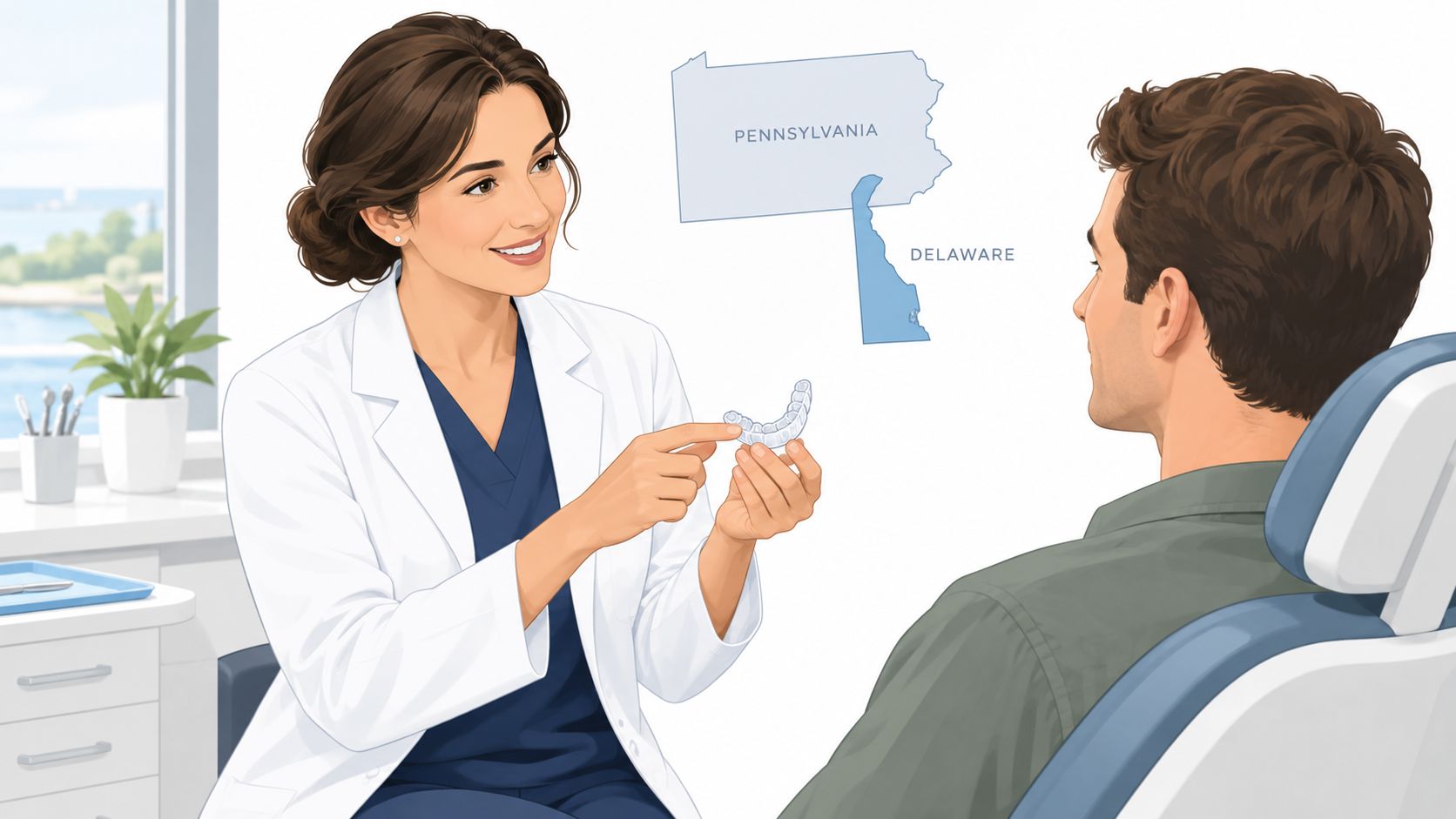
In Newark and Wilmington, Delaware, and in Bryn Mawr and along the Philadelphia Main Line, a local search can lead to very different kinds of care. Some offices focus narrowly on a device. Others look at the jaw, airway, pain patterns, and oral function together. That broader approach matters for patients whose sleep problems overlap with TMJ symptoms, headaches, facial pain, or restricted oral anatomy.
Pain and Sleep Therapy Center, led by Dr. Ryan Robinson, a triple board-certified specialist in craniofacial pain and dental sleep medicine, fits into that broader model. The practice describes a root-cause approach that can include at-home sleep testing, oral appliance therapy, TMJ stabilization, cold laser therapy, and tongue-tie evaluation when indicated. Those services matter because sleep-disordered breathing rarely exists in isolation.
A local practice can also coordinate with the physician who diagnosed the sleep disorder. That collaboration helps keep care grounded in the medical findings rather than in guesswork. For some adults, the right answer may be a custom oral appliance. For others, it may be a different path or a combined approach. The point is to evaluate the airway carefully, not force every patient into the same solution.
The practice also offers Snorelase for snoring management and conservative therapies that aim to reduce strain before anyone talks about more invasive options. That patient-centered style is useful for people who want a careful, non-surgical route first. It also makes the local search more meaningful, because the office is not just making a mouth guard, it is managing the anatomy and symptoms that created the problem in the first place.
For readers in Delaware and Pennsylvania, that kind of structure can make the next step feel less overwhelming. The goal is a plan that respects the sleep study, the jaw joint, and the long-term stability of the bite, while still keeping treatment practical and local.
Next Steps to Reclaim Your Sleep and Health
A good local search result should answer three questions clearly. Was sleep apnea diagnosed with a proper sleep study. Is the appliance custom and titratable. Will the office stay involved long enough to confirm that treatment is working. If any of those answers are unclear, the fit may not be right.
A practical next step is to gather the sleep study results, review jaw or bite concerns, and ask whether the office provides ongoing objective follow-up. If the search started with loud snoring, restless sleep, or morning fatigue, the next conversation should be about airway care, not just convenience. For readers comparing options, a directory listing such as Wispra's Sleepwalker listing can help organize names, but the final decision should still come back to training, diagnosis, and follow-up.
For people in Newark, DE, the contact line is (302) 239-1757. The same applies to patients coming from Wilmington, Bryn Mawr, or the Philadelphia Main Line, because local care only helps when it's connected to the right medical pathway.
Request an Appointment or take the Sleep Quiz if sleep apnea is part of the picture. Pain and Sleep Therapy Center helps patients evaluate airway concerns, TMJ-related pain, and oral appliance options with a root-cause, conservative approach. Visit Pain and Sleep Therapy Center to begin the process with a team that can guide diagnosis, treatment, and follow-up.