Snoring can turn a quiet bedroom into a place where nobody rests well. A partner may nudge, kick the sheets, or hear the same rough breathing pattern night after night, and the next morning the apology doesn't fix the sleep debt. For adults in Newark, Wilmington, Bryn Mawr, or along the Philadelphia Main Line, that pattern is often the moment they start wondering whether laser therapy for snoring is a reasonable next step, or whether something deeper is going on.
Table of Contents
- Why Snoring Matters and What Laser Therapy Offers
- How Laser Snoring Therapy Actually Works
- What the Clinical Evidence Shows
- How Laser Therapy Compares to Other Snoring Treatments
- Who Is a Candidate and What to Expect
- Common Misconceptions and Real Limitations
- Finding the Right Next Step for Better Sleep
Why Snoring Matters and What Laser Therapy Offers
Snoring is more than a noise problem. It usually means air is moving through a narrowed, relaxed upper airway, so the soft tissues at the back of the mouth vibrate instead of staying stable. That vibration can leave both people in the room tired, frustrated, and short on patience.
When snoring happens night after night, it can also be a clue that the airway deserves a closer look. In some people, the issue is primary snoring, which means loud breathing noise without clear obstructive sleep apnea. In others, snoring is one part of sleep-disordered breathing, which is why a proper evaluation matters before anyone chooses treatment.
A non-surgical laser approach aims to stiffen soft palate tissue, not remove it. That makes it attractive to adults who want an office-based option and who are trying to avoid jumping straight to invasive procedures. It's also why the conversation should stay grounded in two separate questions, how much the noise might improve, and whether the airway problem itself has been checked.
Practical rule: quieter snoring does not automatically mean healthier breathing. The airway needs a proper diagnosis, not just a volume change.
For readers who want a broader explanation of airway-related snoring, the background on sleep-disordered breathing helps frame why a bedside annoyance sometimes points to a medical issue. Laser treatment may fit as one option, but it works best when it's matched to the right kind of snoring, the right anatomy, and the right expectations.
How Laser Snoring Therapy Actually Works
Think of the soft palate like a soft rubber band that's been warmed just enough to firm up. Non-ablative laser treatment uses controlled heat to trigger collagen contraction, which is the tissue's natural tightening response, without cutting the surface. Over time, that can reduce vibration at the back of the throat.
What Happens During Treatment
The light energy is delivered inside the mouth to the soft palate and nearby tissue. The goal is not to burn away tissue, but to nudge the body into a remodeling response that makes the palate less floppy. That's why many protocols are described as non-ablative, meaning the tissue surface stays intact.
Older laser approaches were ablative, which means they removed tissue and usually demanded more healing time. Modern outpatient protocols are designed to be gentler and easier to fit into a regular dental or sleep medicine visit. In practical terms, patients are usually talking about a sequence of sessions rather than a single dramatic procedure.
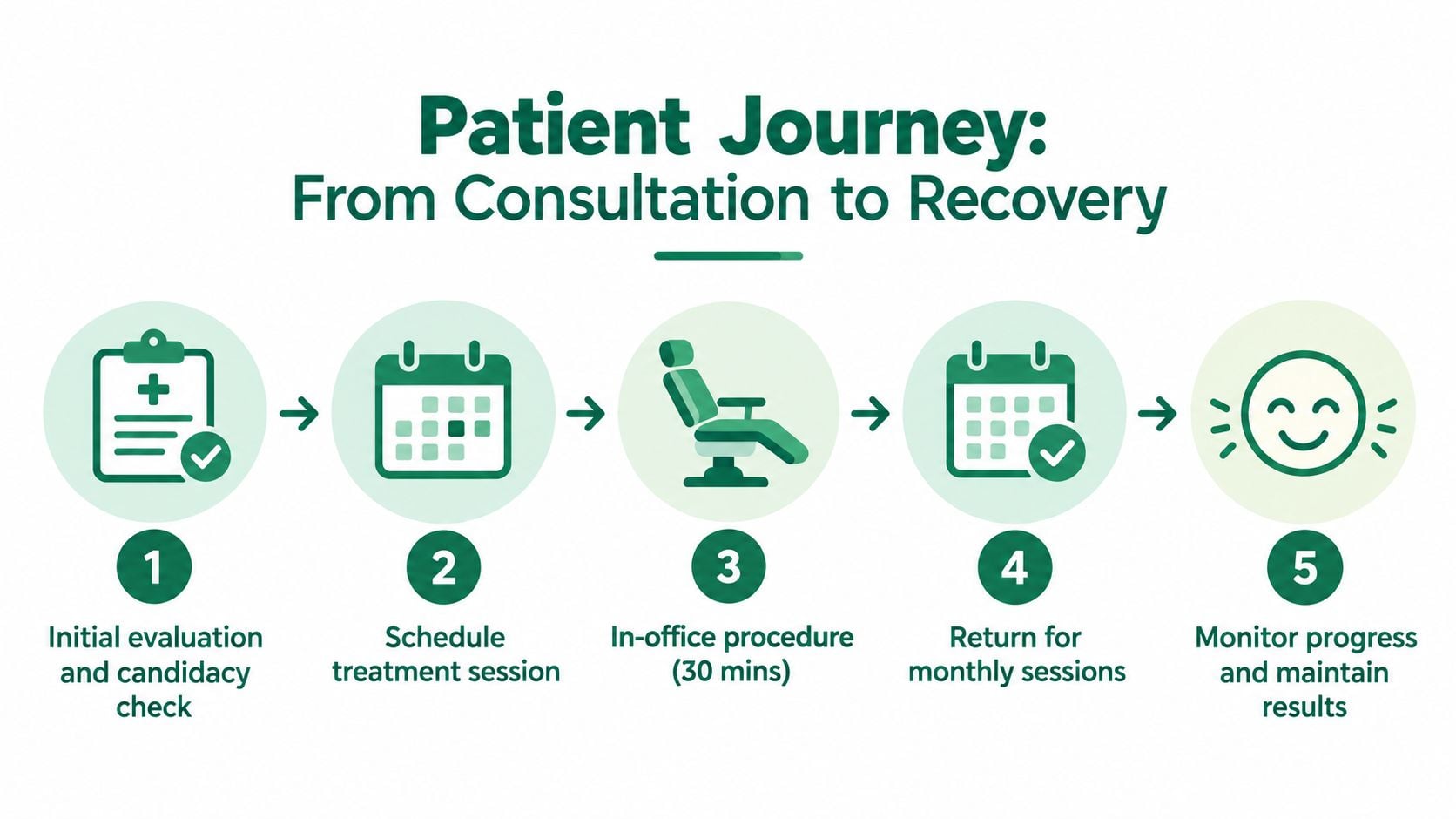
The body of evidence includes Er:YAG and CO2 wavelengths, and the treatment style often follows a staged plan rather than a one-time fix. For readers who want a simple explanation of light-based tissue care, the Omega Lasers LLLT guide offers a general overview of how laser energy can be used in soft tissue applications. A separate clinical discussion of low-level laser therapy and TMJ care also shows how dental teams think about conservative, tissue-focused treatment.
What the Clinical Evidence Shows
The published research points in a clear direction, but not in an overhyped one. The strongest pattern is that laser treatment can reduce snoring intensity and improve how patients and bed partners describe the sound, while objective sleep apnea measures do not consistently improve in the same way. That difference matters because noise relief is not the same as disease treatment.
Key Findings From Published Studies
A 2020 systematic review and meta-analysis reported a statistically significant pooled reduction in snoring VAS of -6.89 points with about 80% patient satisfaction PubMed. A 2022 randomized controlled study of NightLase reported improvements in snoring-related scores, with the SOS score rising from 33.7±14.1 to 56.2±16.1, the SBPS score rising from 35.0±17.1 to 61.5±16.4, and the VAS snoring score dropping from 7.9 to 2.9 after treatment PMC.
That same body of evidence also shows limits. A separate study of 45 patients treated with an 808 nm diode laser found statistically significant improvement in multiple measures, cessation of choking in 89% of patients, and sustained benefits at one year PMC. Other work on non-ablative Er:YAG protocols reported snoring severity falling from 8.0±1.9 to 1.6±1.1 at one month, alongside better sleepiness and oral-health scores PMC.
| Study / Year | Protocol | Snoring Reduction | Follow-Up | Sample Size |
|---|---|---|---|---|
| 2020 systematic review | Er:YAG laser treatment | Pooled VAS reduction of -6.89 points PubMed | Varied across included studies | Not stated in the verified data |
| 2022 randomized controlled study | NightLase | SOS, SBPS, and VAS all improved PMC | Post-treatment assessment | Not stated in the verified data |
| Prospective pilot study | 808 nm diode laser | Choking stopped in 89% of patients PMC | One year | 45 patients |
| Interventional study | Non-ablative Er:YAG | Severity fell from 8.0±1.9 to 1.6±1.1 PMC | One month | Not stated in the verified data |
The main takeaway is simple. Laser treatment can help with snoring noise, but the evidence does not support treating it as a substitute for diagnosing sleep apnea.
How Laser Therapy Compares to Other Snoring Treatments
Patients usually want to know where laser treatment fits among the options that dentists and sleep physicians actually use. The answer depends on the cause of the snoring, how severe it is, and whether the person is trying to treat simple noise or a true sleep-breathing disorder.
Matching the Treatment to the Problem
Oral appliance therapy works by holding the lower jaw in a forward position so the airway stays more open during sleep. It has stronger long-term support for primary snoring and for some people with obstructive sleep apnea who can't tolerate CPAP or prefer an alternative AASM and AADSM guideline. CPAP, meanwhile, treats the airway with pressurized air and is generally used when sleep apnea has been diagnosed.
Lifestyle changes matter too. Weight management, alcohol reduction, and side-sleeping can all help some snorers, especially when the problem is mild or position-related. Those steps don't require a device, and they often fit well with a broader airway plan.
| Treatment | How It Works | Best For | Commitment |
|---|---|---|---|
| Laser therapy for snoring | Tightens soft palate tissue with focused light energy | Adults with primary snoring and suitable anatomy | A short in-office series with later maintenance |
| Oral appliance therapy | Moves the jaw forward to open the airway | Primary snoring and selected sleep apnea cases AASM and AADSM guideline | Nightly use and follow-up |
| CPAP | Delivers pressurized air to keep the airway open | Diagnosed obstructive sleep apnea | Nightly machine use |
| Lifestyle measures | Reduces airway stress and vibration triggers | Mild or position-related snoring | Daily habit change |
For people who want a conservative care path, oral appliance therapy often deserves a serious look. The same is true for a practice such as oral appliance therapy, which can be part of a broader sleep-medicine plan. Laser therapy can still have a place, but it tends to be most appealing when the main goal is noise reduction and the airway evaluation does not point to more significant apnea.
Who Is a Candidate and What to Expect
The best candidate is usually an adult with primary snoring, not moderate-to-severe obstructive sleep apnea. Screening matters first, because sleep apnea is diagnosed by a physician, often with a sleep study, and loud snoring alone doesn't tell the full story. A home sleep test may be used when the risk picture needs sorting out before any laser treatment is considered.
The Usual Screening Questions
The clinical team typically looks at body habitus, nasal airflow, mouth-breathing, and whether there's visible collapse or vibration in the soft palate region. Adults with a BMI generally under 30, non-smokers, and people without significant nasal obstruction are often closer to the ideal profile. Those details matter because the treatment is aimed at a specific anatomy, not every kind of snoring.
A typical visit starts with an airway-focused exam and a discussion of sleep habits, medical history, and symptoms such as choking, gasping, or morning headaches. If the story suggests more than simple snoring, the next step is usually sleep testing rather than a procedure. That's the safer sequence, and it keeps treatment aligned with the actual problem.
Practical rule: if apnea hasn't been ruled out, the right next step is testing, not a laser session.
Treatment sessions are usually spaced over several visits, often three to four sessions with a few weeks between them. Patients commonly describe a warm sensation or mild pressure during the procedure, then little downtime afterward. The point of the maintenance plan is to keep the tissue response going, because the palate can relax again over time.
Common Misconceptions and Real Limitations
The biggest misconception is that laser treatment somehow cures sleep apnea. It doesn't. The evidence is clear that symptom improvement doesn't reliably translate into better AHI or RDI, so a quieter room should never be mistaken for resolved airway disease AASM and AADSM guidance.
What Patients Often Miss
Results are also not usually permanent. Some patients do well for months, then need a maintenance visit as the tissue loosens again. That is one reason the treatment should be discussed as a management option, not a one-time fix.
The research has real limitations too. Many studies are small, follow-up is often limited, and long-term randomized data are still thin PMC. In practice, that means the evidence supports a reasonable expectation of snoring reduction, but not a promise that every patient will respond the same way.
Common reasons to avoid or delay treatment include pregnancy, active oral lesions, and more serious sleep apnea. Practical concerns matter as well, including out-of-pocket cost, variable insurance coverage, and the need to coordinate any medication pauses with the treating clinician. A careful consultation should cover those details before anyone books a procedure.
Finding the Right Next Step for Better Sleep
Good snoring care starts with the cause, not the gadget. A careful evaluation looks at the sound itself, the sleep pattern around it, and the anatomy behind it, because the same noise can come from very different problems. That is why a root-cause approach usually serves people better than a quick fix.
A smart next step often includes a few simple pieces of information:
- Track the pattern: note whether snoring is nightly, positional, or paired with choking or pauses.
- Rule out apnea: ask whether a home sleep study or physician referral is needed before any treatment.
- Check nasal airflow: congestion and blockage can change how the mouth and throat behave at night.
- Match the therapy to the diagnosis: laser treatment, an oral appliance, positional therapy, or combined care may fit better depending on what the evaluation shows.
For some people, laser therapy for snoring is a reasonable option because they mainly want noise reduction and their screening does not suggest significant apnea. For others, oral appliance therapy or sleep testing should come first, especially when the story sounds more like airway collapse than simple vibration. The right answer is usually the one that fits the cause, not the trend.
Pain and Sleep Therapy Center provides airway-focused dental sleep medicine, oral appliance therapy, home sleep testing, and laser-based snoring care when indicated, along with TMJ and craniofacial pain evaluation. For adults in Newark, DE, Bryn Mawr, PA, Wilmington, or the Philadelphia Main Line who want a conservative, root-cause discussion about snoring, the next step can be as simple as a visit or a sleep quiz.
Pain and Sleep Therapy Center offers root-cause evaluation for snoring, sleep apnea, TMJ pain, and tongue-tie concerns, with care centered on conservative options and coordinated testing. To talk through whether laser therapy for snoring, oral appliance therapy, or a sleep study makes the most sense, visit Pain and Sleep Therapy Center or call Newark at (302) 239-1757.