

Office-based laser tongue-tie release typically costs between $500 and $800, but the final price depends on several key factors, including the treatment setting, anesthesia, technique, and follow-up care.
A parent may begin researching after a pediatrician or lactation consultant notices a possible tongue tie in a baby. An adult may start looking after experiencing snoring, jaw discomfort, or difficulty with tongue movement. In both situations, the financial question is understandable: how much will the procedure cost, and what might be added to the initial quote?
Table of Contents
- What Affects Tongue Tie Laser Surgery Cost
- Where You Have the Procedure Changes the Price
- Laser Versus Traditional Technique Cost Differences
- Insurance Coverage and Out-of-Pocket Expectations
- Additional Costs Beyond the Procedure Fee
- When Conservative Options May Reduce Need for Surgery
- Taking the Next Step with a Qualified Evaluation
What Affects Tongue Tie Laser Surgery Cost
The phrase tongue tie laser surgery cost sounds as if it should have one simple answer. In practice, the quoted price reflects several decisions made before treatment begins. The patient's age, the complexity of the tissue restriction, the clinical setting, the type of anesthesia, and the amount of aftercare can all change the total.
For an office-based laser release, the commonly reported range is $500 to $800. A broader frenectomy, meaning removal or release of a restrictive fold of tissue, may range from $250 to $800. Infant laser releases are often listed around $450 to $850, according to a 2026 pricing guide for frenectomy procedures. These figures offer a starting point, not a personal estimate.

Why the first quote may not tell the whole story
A practice may include the examination, procedure, local anesthetic, and a follow-up visit in one fee. Another practice may list each part separately. Two quotes can therefore look very different even when the clinical treatment appears similar.
The technique also matters. Laser equipment and provider training can increase the procedure fee, while the setting may have an even larger effect. A procedure performed in a dental office with local anesthetic has a different cost structure from one performed in a hospital with an anesthesia team and facility charges.
Practical rule: A useful estimate should explain what the fee includes, not just state a number.
Parents and adult patients can ask whether the quote covers the consultation, the release itself, post-procedure instructions, follow-up care, and any recommended functional therapy. That conversation helps separate the cost of the release from the cost of the broader care plan.
The most important question also isn't purely financial. A tongue tie should be treated when restricted movement is connected to a meaningful functional problem, not because the tissue looks unusual. A careful evaluation helps determine whether a procedure is appropriate and which technique fits the patient's needs.
Where You Have the Procedure Changes the Price
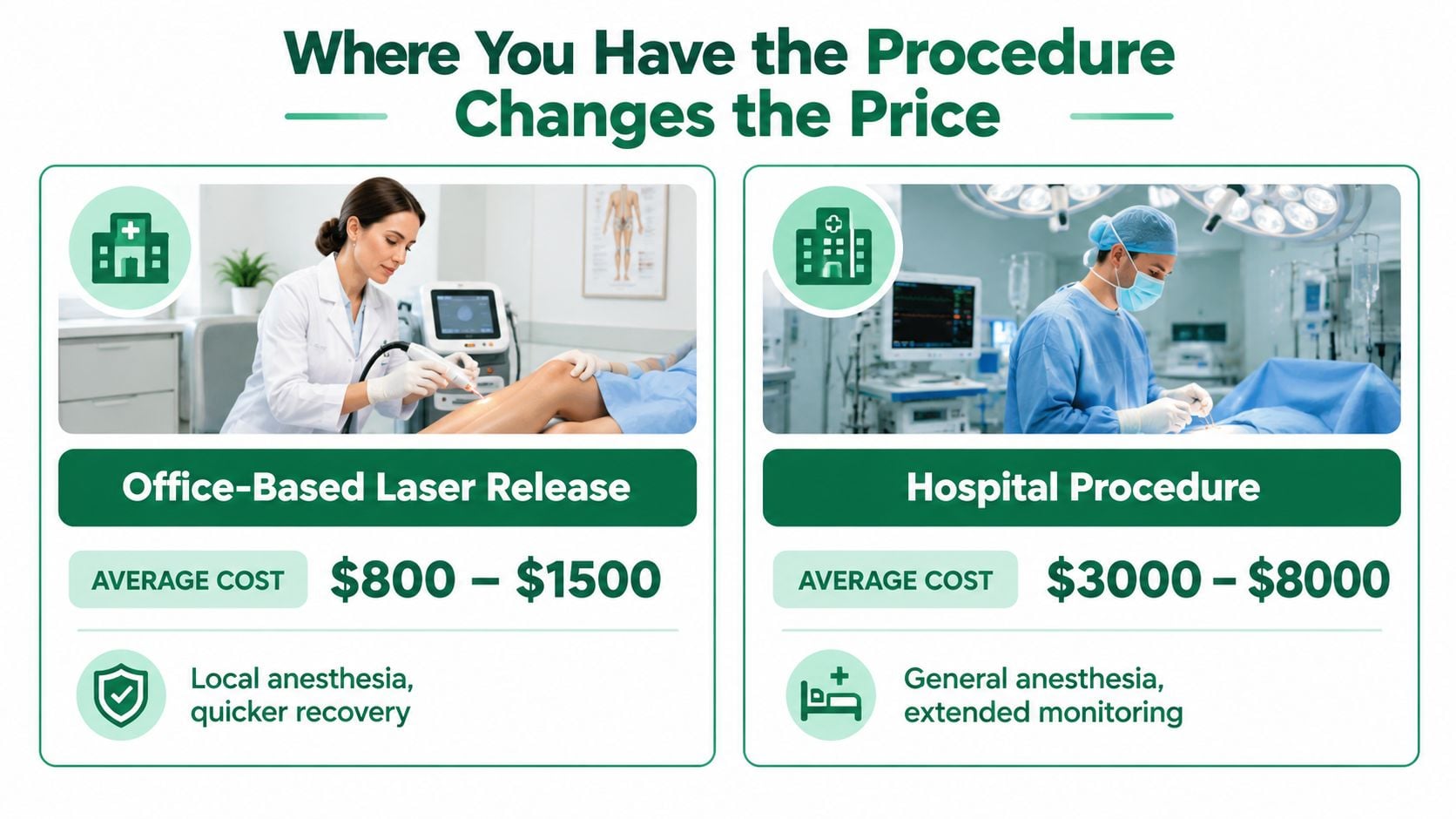
The location of treatment often explains the largest difference between two frenectomy estimates. An office-based procedure may use local anesthesia, limited facility resources, and a short appointment. A hospital procedure may involve an operating room, an anesthesia professional, monitoring, recovery staff, and separate facility charges.
A consumer health guide reports that frenectomy costs may be around $850 in a doctor's or dentist's office, while hospital treatment under general anesthesia may reach $8,000. A peer-reviewed review also describes an average private-practice price of about $1,000 and notes that laser-specific national pricing is not available. These figures are discussed in frenectomy cost guidance from Humana, and they illustrate why the setting can matter more than the word “laser” on the estimate.
What creates the hospital difference
Hospital-based care can include several charges that aren't present in a routine office visit:
- Anesthesia services: General anesthesia requires specialized personnel, medications, monitoring, and recovery supervision.
- Facility expenses: Operating rooms, hospital equipment, nursing support, and recovery areas add costs beyond the clinician's procedure fee.
- Medical complexity: Some patients need hospital care because of age, health conditions, inability to tolerate an office procedure, or the need for another treatment at the same time.
- Extended observation: Recovery and monitoring can be more involved when general anesthesia is used.
A hospital setting isn't automatically excessive or inappropriate. It can be the safer choice for a patient who needs that level of support. The financial difference comes from the additional services surrounding the release, not just from the tissue being treated.
For many infants, children, and adults, an office-based release may be clinically suitable when a qualified provider can safely complete the procedure with local anesthesia. That decision depends on the patient, not on cost alone.
Families in Newark and Wilmington, Delaware, as well as Bryn Mawr and the Philadelphia Main Line, can review location and scheduling information through the practice's office locations page. Before scheduling, the patient or parent should ask whether the procedure will occur in an office, ambulatory surgical center, or hospital, and whether anesthesia and facility fees are included.
A lower office estimate and a higher hospital estimate may both be reasonable when the care settings are different.
Laser Versus Traditional Technique Cost Differences
Laser release is often presented as the premium option, but a higher fee doesn't automatically mean a better clinical result. Traditional frenotomy uses scissors or a scalpel, while laser frenectomy uses focused energy to release soft tissue. Each approach has different equipment, training, and procedural considerations.
Laser treatment may cost more because the practice must invest in the device, maintenance, and specialized training. Laser techniques are also commonly marketed as causing less bleeding and reducing the need for sutures. Those features may reduce chair time or immediate wound management in some cases, but they don't prove that laser is the right choice for every patient.
A 2024 pediatric hospital guidance page states that there is no evidence that laser is better than standard lingual frenotomy. It also describes laser procedures as commonly costing around $500 and notes that they are typically paid out of pocket in that setting. The guidance distinguishes this from medically diagnosed ear, nose, and throat releases that may qualify for coverage. The clinical comparison appears in pediatric guidance on tongue-tie surgery.
Questions to ask before choosing a technique
A consultation should compare the clinical reasoning behind each option rather than treating laser as an automatic upgrade.
- What functional problem is the release intended to address? Feeding, oral function, speech, snoring, and jaw symptoms may require different assessments.
- Why is laser recommended for this patient? The provider should explain the expected benefits and limitations in plain language.
- What would traditional release involve? A lower-cost technique may be reasonable if it addresses the same functional restriction.
- What does the fee include? The quote should identify the examination, anesthesia, procedure, follow-up, and recommended aftercare.
- What training does the provider have? Experience with the patient's age group and clinical concern matters more than the technology label alone.
A patient considering laser treatment for snoring should also understand that a snoring procedure isn't the same as diagnosing obstructive sleep apnea. Sleep apnea requires evaluation by a physician and confirmation through a sleep study. Information about laser-based snoring services is available through the practice's laser therapy for snoring page, but treatment decisions should follow an appropriate sleep evaluation.
The most financially sensible technique is the one that fits the patient's diagnosis, anatomy, tolerance, and aftercare needs. Paying more for laser may make sense for some patients, but cost alone cannot establish superiority.
Insurance Coverage and Out-of-Pocket Expectations
Insurance questions can feel as complicated as the medical terminology. Coverage may vary according to the health plan, dental plan, provider, procedure code, clinical documentation, and whether the insurer considers the release medically necessary.
An office-based laser release is often paid out of pocket, especially when an insurer classifies it as elective or cosmetic. A procedure may be considered differently when a physician documents a functional problem involving feeding or another medical concern. The classification isn't determined by the laser itself. It depends on the patient's symptoms, the provider's documentation, and the plan's rules.
What the insurance call should clarify
Before scheduling, the patient or parent can ask the insurer and the practice to review the same set of details:
- Medical necessity: Does the plan require documentation of impaired feeding, restricted function, or another qualifying concern?
- Procedure coding: Which CPT code or related billing code will the provider submit?
- Plan responsibility: Will the claim be handled under medical coverage, dental coverage, or neither?
- Prior authorization: Does the plan require approval before the procedure?
- Network status: Is the provider or facility in network?
- Patient balance: What deductible, copayment, coinsurance, or noncovered amount may remain?
The practice may be able to request a benefits check, but an eligibility check isn't a guarantee of payment. Insurers can make final decisions after reviewing the claim and supporting documentation.
Before scheduling: A written estimate should separate the provider's fee from any anesthesia, facility, laboratory, or follow-up charges.
Families and patients can use the practice's insurance navigation resources to prepare questions and organize documents. It helps to keep the name of the insurance representative, the date of the call, and the reference number for the conversation.
A traditional release may also be handled differently from a laser release, even when both address similar tissue restriction. Patients shouldn't assume that one technique is covered or excluded without asking how the insurer defines the service. Verification before the appointment can reduce financial surprises and give the clinical team time to discuss alternatives.
Additional Costs Beyond the Procedure Fee
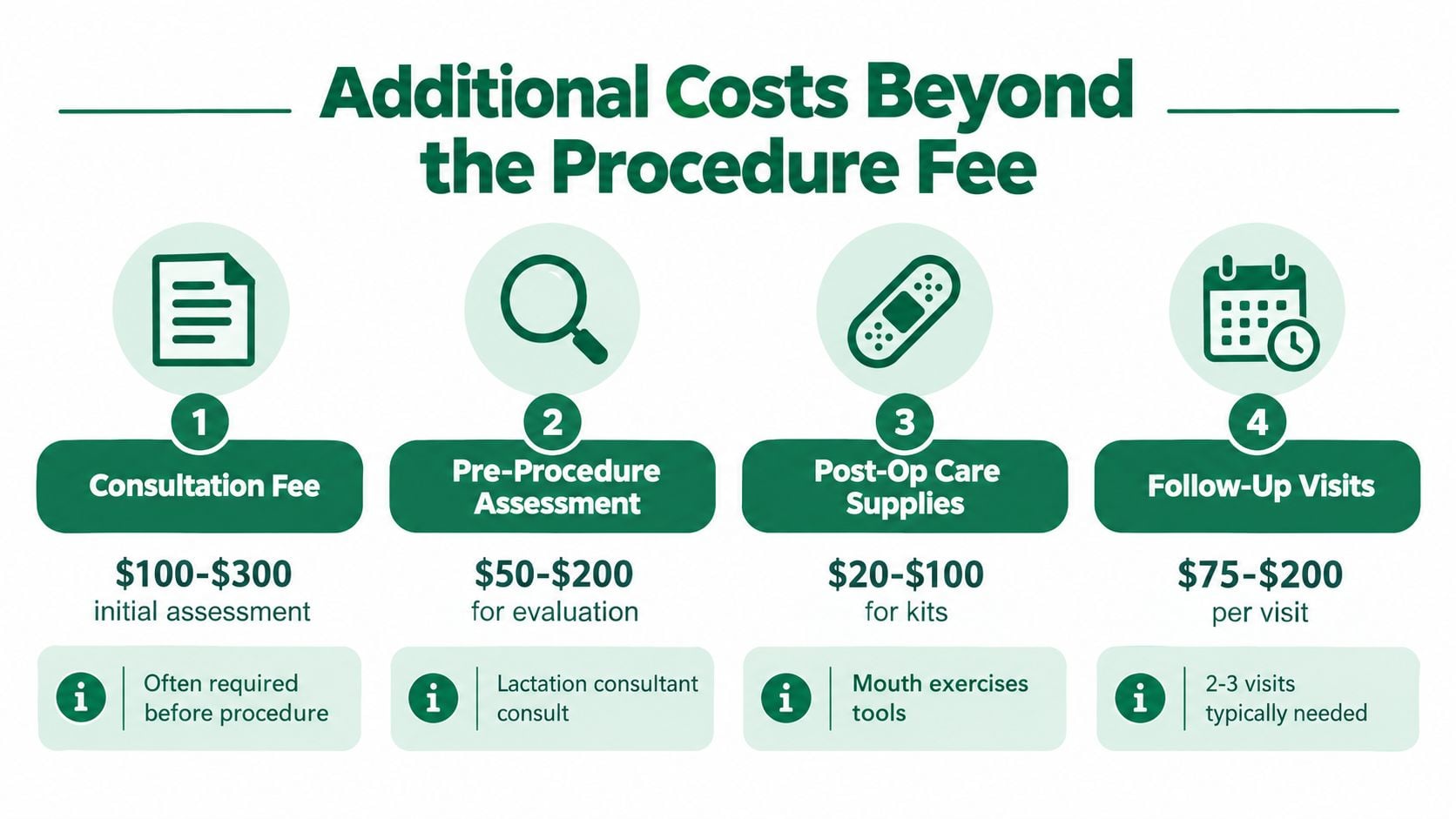
The procedure fee is only one part of the possible investment. A thorough tongue-tie plan may include an initial examination, functional assessment, preparation, aftercare instructions, and follow-up. Some practices bundle these services, while others bill them separately.
Aftercare may also involve professionals outside the surgical practice. An infant with feeding difficulty may benefit from coordination with a lactation consultant. A child with oral or speech concerns may need assessment by a speech-language therapist. An adult with breathing, jaw, or oral-function symptoms may be referred for myofunctional therapy or other supportive care.
A practical cost checklist
The following questions can make a financial estimate easier to understand:
- Consultation: Is the first examination included, or is it billed separately?
- Functional assessment: Will feeding, tongue movement, breathing, speech, or jaw function be evaluated?
- Procedure preparation: Are local anesthetic, protective equipment, and written instructions part of the fee?
- Follow-up: Is a healing check included, and how are additional visits billed?
- Home care: Will the practice recommend exercises, supplies, or other tools that have separate costs?
- Collaborative care: Are lactation, speech, breathing, or myofunctional therapy visits provided by another professional?
- Unexpected needs: What happens financially if the provider decides that a different setting or additional evaluation is safer?
The lowest initial quote may not represent the lowest total cost if important assessments and follow-up visits are excluded. Conversely, a broader fee may include services that another practice lists separately.
Why clinical completeness matters financially
A root-cause evaluation can prevent a patient from paying for a procedure that doesn't address the main problem. A restricted frenulum may be relevant, but feeding mechanics, nasal breathing, muscle coordination, sleep-disordered breathing, jaw function, and other factors can also influence symptoms.
A complete plan may therefore involve conservative care before or after a release. That broader process can require more coordination, but it gives the patient a clearer basis for deciding whether surgery is appropriate and what care will be needed afterward.
When Conservative Options May Reduce Need for Surgery
A visible tongue tie doesn't automatically require a release. Evidence-based guidance emphasizes that treatment decisions should focus on restricted function and meaningful symptoms. When feeding or other problems can be managed without surgery, conservative care may be considered first.
For breastfeeding concerns, guidance from the Academy of Breastfeeding Medicine position statement recommends assessing other feeding issues and offering frenotomy when tongue restriction significantly affects breastfeeding. This approach protects families from treating anatomy in isolation.
What conservative care may include
Depending on the patient's symptoms, a qualified team may consider:
- Feeding support: A lactation consultant can assess latch, positioning, milk transfer, and parental discomfort.
- Oral function therapy: Exercises may help a patient develop coordination and strength, when clinically appropriate.
- Breathing retraining: An adult with mouth breathing or snoring may need an airway and sleep assessment rather than an immediate tissue release.
- Lifestyle measures: Sleep position, nasal health, daytime breathing habits, and other contributors may deserve attention.
- Speech evaluation: A child with speech concerns may need assessment by a speech-language therapist before surgery is considered.
One assessment pathway uses the Hazelbaker Assessment Tool for Lingual Frenulum Function, or HATLFF. In that pathway, function scores below 11 and appearance scores below 8 are associated with a greater likelihood that division may be needed, although age, feeding impact, and clinical judgment still affect timing. The assessment and division pathway should be understood as one clinical assessment framework, not a diagnosis by itself.
When surgery may not solve the concern
Tongue-tie release isn't a guaranteed way to prevent future speech problems. Cleveland Clinic states that there is no evidence for performing frenotomy in babies solely to prevent later speech difficulties. Speech-related surgery is generally considered later only when speech is clearly affected, a speech-language therapist has evaluated the child, and conservative therapy is unlikely to help, as described in clinical information about frenotomy.
Frenotomy is generally considered low risk, but complications can include bleeding, infection, injury to nearby structures, scarring, and reattachment. Bleeding is commonly identified as the most frequent complication and is usually manageable with local pressure, according to NIH clinical reference information.
Avoiding an unnecessary procedure can reduce immediate expense, but conservative care shouldn't be used to dismiss a release when restricted function is significant. The financially and clinically responsible path is an evaluation that matches treatment intensity to the actual problem.
Taking the Next Step with a Qualified Evaluation
An individualized estimate requires more than a photograph or a short description of symptoms. A qualified provider should examine tongue movement, tissue restriction, oral function, feeding or breathing concerns, and the patient's broader goals before discussing laser frenectomy.
A practical appointment plan includes three steps:
- Bring the main concern: Parents can describe feeding difficulty, latch problems, or discomfort. Adults can note snoring, jaw pain, fatigue, or restricted movement.
- Ask for alternatives: The provider should explain whether conservative care, traditional release, or laser treatment is reasonable.
- Request a written estimate: The estimate should identify what is included and which services may be billed separately.
Pain and Sleep Therapy Center, led by Dr. Ryan Robinson, a triple board-certified specialist in craniofacial pain and dental sleep medicine, evaluates TMJ and facial pain, sleep concerns, and tongue-tie conditions. The practice serves patients in Newark, Delaware, and Bryn Mawr, Pennsylvania, with care centered on root-cause evaluation and conservative options before surgery when appropriate.
Questions about tongue tie laser surgery cost, insurance, technique, and aftercare are normal and worthwhile. A careful evaluation can help parents and adult patients make a decision based on function, safety, and the full expected cost rather than on the word “laser” alone.
Pain and Sleep Therapy Center offers tongue-tie evaluation and treatment planning, including laser frenectomy when clinically appropriate, along with care for TMJ symptoms, facial pain, snoring, and sleep-disordered breathing. Readers can learn more and visit Pain and Sleep Therapy Center to request an appointment or explore the Sleep Quiz, or call Newark at (302) 239-1757.